Summary

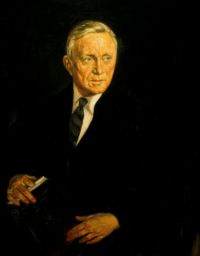
Portrait of William O. Douglas William O. Douglas,  Wright v. Rockefeller — Dissent

“ The racial electoral register system weights votes along one racial line more heavily than it does other votes. That system, by whatever name it is called, is a divisive force in a community, emphasizing differences between candidates and voters that are irrelevant in the constitutional sense. Of course race, like religion, plays an important role in the choices which individual voters make from among various candidates. [12] But government has no business designing electoral districts along racial or religious lines. ”
Source: Wikisource

Portrait of William O. Douglas William O. Douglas,  Wright v. Rockefeller — Dissent

“ The fact that Negro political leaders find advantage in this nearly solid Negro and Puerto Rican district is irrelevant to our problem. Rotten boroughs were long a curse of democratic processes. Racial boroughs are also at war with democratic standards.
What we have in the Seventeenth and Eighteenth Districts in Manhattan is comparable to the Electoral Register System which Britain introduced into India. That system gave a separate constituency to Sikhs, Muslims, Anglo-Indians, Europeans, and Indian Christians.
”
Source: Wikisource

Portrait of William O. Douglas William O. Douglas,  Wright v. Rockefeller — Dissent

“ We have not only inferences from conceded facts but also New York's frank concession that it is not possible to say 'that race is irrelevant to districting.'
Racial segregation that is state-sponsored should be nullified whatever may have been intended. In Johnson v. Virginia, 373 U.S. 61, 83 S.Ct. 1053, 10 L.Ed.2d 195, we held segregation of a courtroom audience by race to be unconstitutional, without stopping to inquire what the motive may have been.
”
Source: Wikisource

Get perspective with Kwize: daily news enlightened by great literature