Summary

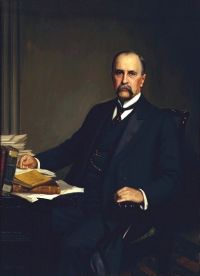
Portrait of William Osler William Osler An Address on the Hæmatozoa of Malaria (1887)

Nature of the Organisms.—It is very evident that we are dealing here with structures unlike any others which have been described in human blood, and with bodies which have no relation whatever to the spirilla, micrococci, and bacteria of certain acute diseases. I would call attention to the remarkable unanimity in the description of these parasites by Laveran, Richard, Marchiafava and Celli, Councilman, Golgi, and myself.
Source: Wikisource

Portrait of William Osler William Osler An Address on the Hæmatozoa of Malaria (1887)

I lay no special stress on the three cases in which I did not find the parasites, as the patients were not followed from day to day with the accuracy necessary to give any value to the observations. It must be borne in mind that hæmatozoa are not uncommon in animals, and, as in the rat, do not appear to interfere seriously with the health of their hosts. Under these circumstances, the association of a specific form with a definite disease in an animal makes it all the more probable that the species is pathogenic.
Source: Wikisource

Portrait of William Osler William Osler An Address on the Hæmatozoa of Malaria (1887)

He states that Trypanosoma, the well known flagellate organism of frog's blood is polymorphic, and occurs in an amœboid form, and also produces spores; and, further, he has found in the red blood-corpuscles of birds a pigmented protoplasmic body, which subsequently appears in the plasma as a pigmented flagellate organism. In a later communication, [15] he suggests the identity of the pathogenic blood parasites of man with the hæmatozoa of healthy animals, and refers specially to the similarity of the forms which he has found in birds to certain of those described by Laveran in malaria.
Source: Wikisource

Get perspective with Kwize: daily news enlightened by great literature