Summary

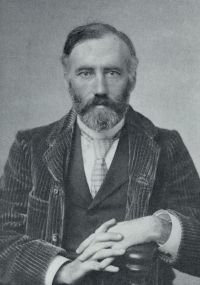
Portrait of William Quan Judge William Quan Judge Echoes From The Orient: A Broad Outline of Theosophical Doctrines

In the East the life of man is held to be a pilgrimage, not only from the cradle to the grave, but also through that vast period of time, embracing millions upon millions of years, stretching from the beginning to the end of a Manvantara, or period of evolution, and as he is held to be a spiritual being, the continuity of his existence is unbroken. Nations and civilizations rise, grow old, decline and disappear
Source: Gutenberg

Portrait of William Quan Judge William Quan Judge Echoes From The Orient: A Broad Outline of Theosophical Doctrines

Adepts and Mahâtmas are not a miraculous growth, nor the selfish successors of some who, accidentally stumbling upon great truths, transmitted them to adherents under patent rights. They are human beings trained, developed, cultivated through not only a life but long series of lives, always under evolutionary laws and quite in accord with what we see among men of the world or of science. Just as a Tyndall is greater than a savage, though still a man, so is the Mahâtma, not ceasing to be human, still greater than a Tyndall.
Source: Gutenberg

Portrait of William Quan Judge William Quan Judge Echoes From The Orient: A Broad Outline of Theosophical Doctrines

Souls differ as men do. In Devachan each one receives that degree of bliss which it can assimilate; its own development determines its reward. The Christian places all the snuffy old saints as high as other holy souls, sinking genius to the level of the mediocre mass, while the Hindû gives infinite variety of occupation and existence suited to grave and gay, the soul of genius or of poetry. No one sits in undesired seats, nor sings psalms he never liked, nor lives in a city which might pall upon him if he were forever compelled to walk its pearly streets.
Source: Gutenberg

Get perspective with Kwize: daily news enlightened by great literature