Summary

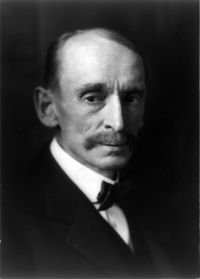
Portrait of William R. Day William R. Day Computing Scale Company of America v…

There is no suggestion that Hayden's invention has been the last step between an inoperative machine and one practically operative and useful. There is no showing that it has been generally accepted in the trade and displaced the former machines used for the same purpose. Without resort to the record in the Patent Office, we think it is plain that the invention is but a small advance upon others already in use.
Broadly considered, the elements of Hayden's invention were in the horizontal machines, and the idea of vertical construction was old.
Source: Wikisource

Portrait of William R. Day William R. Day Computing Scale Company of America v…

And we believe it would be a more reasonable construction of the letter of the applicant to say that he rocognized that his invention, 'as constructed in practice,' must have read into it to sustain the claim, the specific means shown for translating the vertical movement of the runner into the rotary movement of the chart drum, rather than as saving a right to construe a claim broadly as including in one claim what had just been refused in another.
Source: Wikisource

Portrait of William R. Day William R. Day Computing Scale Company of America v…

The general rule, as stated, as to the effect of a patentee striking out a broad claim and accepting a narrow one, is conceded by the learned counsel for appellant, but it is contended that if an inventor presents a broad claim and strikes it out and then presents and obtains an equally broad claim, he loses no right by such action, and may justly claim his allowed claim to be a broad one and have relief accordingly.
Source: Wikisource

Get perspective with Kwize: daily news enlightened by great literature