Summary

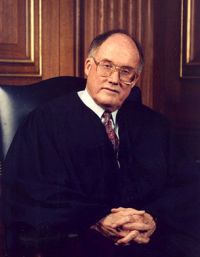
Portrait of William Rehnquist William Rehnquist Board of Education of Oklahoma City Public Schools…

A district court need not accept at face value the profession of a school board which has intentionally discriminated that it will cease to do so in the future. But in deciding whether to modify or dissolve a desegregation decree, a school board's compliance with previous court orders is obviously relevant. In this case the original finding of de jure segregation was entered in 1961, the injunctive decree from which the Board seeks relief was entered in 1972, and the Board complied with the decree in good faith until 1985.
Source: Wikisource

Portrait of William Rehnquist William Rehnquist Board of Education of Oklahoma City Public Schools…

Not only do the personnel of school boards change over time, but the same passage of time enables the District Court to observe the good faith of the school board in complying with the decree. The test espoused by the Court of Appeals would condemn a school district, once governed by a board which intentionally discriminated, to judicial tutelage for the indefinite future.
Source: Wikisource

Portrait of William Rehnquist William Rehnquist Board of Education of Oklahoma City Public Schools…

The court concluded that the previous injunctive decree should be vacated and the school district returned to local control.
The Court of Appeals again reversed, 890 F.2d 1483 (CA10 1989) , holding that " 'an injunction takes on a life of its own and becomes an edict quite independent of the law it is meant to effectuate.' " Id., at 1490 (citation omitted) . That court approached the case "not so much as one dealing with desegregation, but as one dealing with the proper application of the federal law on injunctive remedies."
Source: Wikisource

Get perspective with Kwize: daily news enlightened by great literature