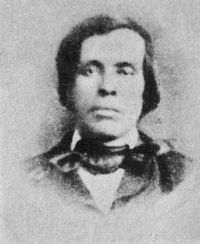
William Whipple Warren

William Whipple Warren

Summary

Portrait of William Whipple Warren William Whipple Warren History of the Ojibway Nation (1885)

With their mode of transmitting traditions from father to son orally, it is natural to suppose that their present belief in the westward destination of the soul has originated from the above-surmised era in their ancient history. And the tradition of a once happy home and country, being imperfectly transmitted to our times through long lines of generations, has at last merged into the simple and natural belief of a future state, which thoroughly pervades the Indian mind, and guides, in a measure, his actions in life, and enables him to smile at the approach of death.
Source: Wikisource

Portrait of William Whipple Warren William Whipple Warren History of the Ojibway Nation (1885)

For no sooner than spring and summer again came around, the time of pastime and recreation for the red hunters, than a longing desire seized the warriors for blood and renown, or revenge for old injuries, or to wipe away the paint of mourning for the death of some near relative. The villagers of either tribe never considered the pleasures of the general summer season as complete, without the enjoyment of dancing and singing merrily around the scalp lock of an enemy.
Source: Wikisource

Portrait of William Whipple Warren William Whipple Warren History of the Ojibway Nation (1885)

Determined to save some of his fellows, if possible, the old warrior called out in a voice distinctly heard above the din of battle, "Let those who wish to live, escape by retreating, while singly I shall stand in the path of our enemies!" The surviving Pillagers, all but his three brave sons, took him at his word, and leaving them to withstand the pursuit of the Dakotas, they turned and fled. For a long time the yells of those devoted warriors could be heard, as, at each crack of their guns, an enemy bit the dust.
Source: Wikisource

Get perspective with Kwize: daily news enlightened by great literature