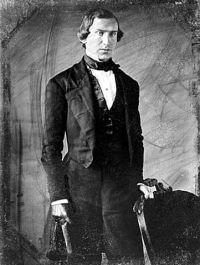
Edward Duffield Neill

Edward Duffield Neill

Summary

Portrait of Edward Duffield Neill Edward Duffield Neill History of the Ojibway Nation (1885)

I don't keep this prisoner out of any ill-will to you, nor out of any ill-will to my Great Father at Washington; nor out of ill-will to these men [gracefully waving his hand back and around the circle] , but I hate the Sioux. They have killed my relatives, and I'll have revenge. You call me chief, and so I am, by nature, as well as by office, and I challenge any of these men to dispute my title to it. If I am chief, then my word is law, otherwise you might as well put this medal [showing the one received from Governor Cass] upon an old woman.' He then threw himself upon a pile of brush.
Source: Wikisource

Portrait of Edward Duffield Neill Edward Duffield Neill History of the Ojibway Nation (1885)

On the 16th of February, 1806, as the first representative of the United States who had visited them, he held a council with the Ojibways at Leech Lake, and in his opening speech said: "I was chosen to ascend the Mississippi to bear to his red children the words of their father, and the Great Spirit has opened the eyes and ears of all the nations to listen to my words. The Sauks and Reynards are planting corn and raising cattle. The Winnebagoes continue peaceable as usual, and even the Sioux have laid by the hatchet at my request.
Source: Wikisource

Portrait of Edward Duffield Neill Edward Duffield Neill History of the Ojibway Nation (1885)

I am come with this belt, from our great Father, Sir William Johnson. He desired me to come to you, as his ambassador, and tell you that he is making a great feast, in common with your friends, the Six Nations, who have all made peace with the English. He advises you to seize this opportunity of doing the same, as you cannot otherwise fail of being destroyed; for the English are on their march, with a great army, which will be joined by different nations of Indians.
Source: Wikisource

Get perspective with Kwize: daily news enlightened by great literature