Summary

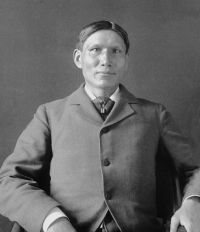
Portrait of Charles A. Eastman Charles A. Eastman Indian Heroes and Great Chieftains

Now the hunters crouched upon their horses’ necks like an army in line of battle, while behind them waited the boys and old men with pack ponies to carry the meat. “Hukahey!” shouted the leader as a warning. “Yekiya wo!” (Go) and in an instant all the ponies leaped forward against the cutting wind, as if it were the start in a horse race. Every rider leaned forward, tightly wrapped in his robe, watching the flying herd for an opening in the mass of buffalo, a chance to cut out some of the fattest cows.
Source: Gutenberg

Portrait of Charles A. Eastman Charles A. Eastman Indian Heroes and Great Chieftains

It was a point of honor in the old days to treat a captive with kindness. The common impression that the Indian is naturally cruel and revengeful is entirely opposed to his philosophy and training. The revengeful tendency of the Indian was aroused by the white man. It is not the natural Indian who is mean and tricky; not Massasoit but King Philip; not Attackullakulla but Weatherford; not Wabashaw but Little Crow; not Jumping Buffalo but Sitting Bull! These men lifted their hands against the white man, while their fathers held theirs out to him with gifts.
Source: Gutenberg

Portrait of Charles A. Eastman Charles A. Eastman Indian Heroes and Great Chieftains

Thus he associated himself in his maiden battle with the wizard of Indian warfare, and Hump, who was then at the height of his own career, pronounced Crazy Horse the coming warrior of the Teton Sioux.
At this period of his life, as was customary with the best young men, he spent much time in prayer and solitude. Just what happened in these days of his fasting in the wilderness and upon the crown of bald buttes, no one will ever know; for these things may only be known when one has lived through the battles of life to an honored old age.
Source: Gutenberg

Get perspective with Kwize: daily news enlightened by great literature