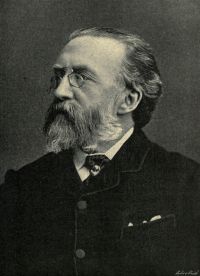
William Johnson

Definition and stakes

F. Marion Crawford,  The Three Fates

“ He envied the man his belief in himself and his certainty of slow but sure success. Slow, indeed, it must be. Johnson had toiled for many years at his writing to attain the position he occupied, to be considered a good judge and a ready writer by the few who knew him, to gain a small but solid reputation in a small circle. He had worked much harder than George himself, and yet to-day, George Wood was known and read where William Johnson had never been heard of. ”
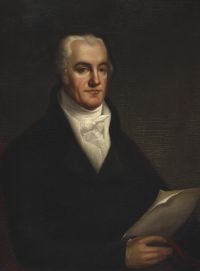
Source: Gutenberg

Charles H. L. Johnston,  Famous Indian Chiefs

“ Thay-en-da-negea means a bundle of sticks, but why the future Chieftain of the Mohawks was called by this name it is difficult to know. Sir William Johnson naturally took a great interest in him and sent him to school at Lebanon, Connecticut, where he was taught by a good old minister, called the Rev. Eleazer Wheelock, and received a thorough knowledge of the English language. "Joseph is indeed an excellent youth," wrote the aged minister to Sir William. "He is always well, is studious and diligent." ”
Source: Gutenberg

Reginald W. Jeffery,  The History of the Thirteen Colonies of North America 1497-1763

“ William Johnson was a man who had lived a semi-savage life and who had gained remarkable influence over the Iroquois, particularly the Mohawks. Governor Shirley had recognised this man's gifts, and had appointed him commander of the Massachusetts, New England, and New York levies, consisting of about 6000 men. In the early summer of 1755 Johnson rapidly constructed Fort Lyman, and in August moved slowly forward to the southern extremity of Lake George, with the intention of taking Crown Point. The French, hearing of these warlike preparations, despatched Baron Dieskau to Ticonderoga ”
Source: Gutenberg

Get perspective with Kwize: daily news enlightened by great literature