Summary

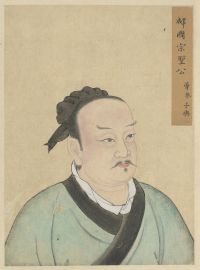
Portrait of Zengzi Zengzi The Classic of Filial Piety

Above others, and yet free from pride, they dwell on high, without peril. Adhering to economy and carefully observant of the rules and laws, they are full, without overflowing. To dwell on high without peril is the way long to preserve nobility; to be full without overflowing is the way long to preserve riches. When their riches and nobility do not leave their persons, then they are able to preserve the altars of their land and grain, and to secure the harmony of their people and men in office. This is the filial piety of the princes of states.
Source: Wikisource

Portrait of Zengzi Zengzi The Classic of Filial Piety

The disciple Zeng said, "I venture to ask whether in the virtue of the sages there was not something greater than filial piety."
The Master replied, "Of all (creatures with their different) natures produced by Heaven and Earth, man is the noblest. Of all the actions of man there is none greater than filial piety. In filial piety there is nothing greater than the reverential awe of one's father. In the reverential awe shown to one's father there is nothing greater than the making him the correlate of Heaven.
Source: Wikisource

Portrait of Zengzi Zengzi The Classic of Filial Piety

As they serve their fathers, so they serve their mothers, and they love them equally. As they serve their fathers, so they serve their rulers, and they reverence them equally. Hence love is what is chiefly rendered to the mother, and reverence is what is chiefly rendered to the ruler, while both of these things are given to the father. Therefore when they serve their ruler with filial piety, they are loyal; when they serve their superiors with reverence, they are obedient.
Source: Wikisource

Get perspective with Kwize: daily news enlightened by great literature