Alexander Csoma de Körös

Definition and stakes

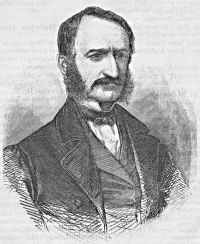
Portrait of Theodore Duka Theodore Duka,  Life and works of Alexander Csoma de Körös (1885)

“ Alexander Csoma de Körös, a Hungarian philologer, native of Transylvania, having obtained the permission of the Honourable the Governor-General of India in Council, to prosecute his studies in Oriental languages in Hindustan for three years, I am directed by his Honour in Council to desire all officers of the British Government, whether civil or military, and to request all chiefs of Hindustan in alliance and amity with the British Government, to afford such protection to Mr. Csoma as may be necessary to facilitate the object of his researches. ”
Source: Gutenberg

Portrait of Theodore Duka Theodore Duka,  Life and works of Alexander Csoma de Körös (1885)

“ It is hoped that the reader will follow with sympathy the details of an arduous scientific career, the best years of which were offered to the service of the British Government, and will agree with us also in thinking that Alexander Csoma de Körös attained in some measure the reward he looked for, in so far that his name will never be omitted from any work bearing upon Tibetan literature or Buddhistic learning. ”
Source: Gutenberg

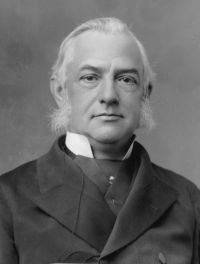
Portrait of F. Max Müller F. Max Müller,  Chips from a German Workshop, Volume 1

“ Hodgson's discoveries began to attract the attention of Oriental scholars at Calcutta, a Hungarian, of the name of Alexander Csoma de Körös, arrived there. He had made his way from Hungary to Tibet on foot, without any means of his own, and with the sole object of discovering somewhere in Central Asia the native home of the Hungarians. Arrived in Tibet, his enthusiasm found a new vent in acquiring a language which no European before his time had mastered, and in exploring the vast collection of the canonical books of the Buddhists, preserved in that language. ”
Source: Gutenberg

Get perspective with Kwize: daily news enlightened by great literature