Ladakh

Definition and stakes

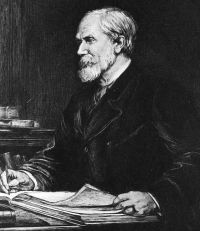
Portrait of Thomas Hungerford Holdich Thomas Hungerford Holdich,  1911 Encyclopædia Britannica (1911)

“ For another 230 m., in a north-westerly direction, the Indus pursues a comparatively gentle and placid course over its sandy bed between the giant chains of Ladakh to the north and Zaskar (the main “snowy range” of the Himalaya) to the south, amidst an array of mountain scenery which, for the majesty of sheer altitude, is unmatched by any in the world. Then the river takes up the waters of the Shyok from the north (a tributary nearly as great as itself) , having already captured the Zasvar from the south, together with innumerable minor glacier-fed streams. ”
Source: Wikisource

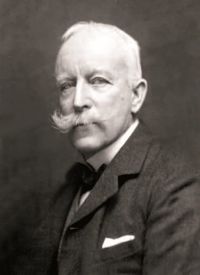
Portrait of Thomas Hungerford Holdich Thomas Hungerford Holdich,  1911 Encyclopædia Britannica (1911)

“ They work in winter, chiefly because of the binding power of frost on the friable soil, suffering great hardships and obtaining but a poor return for their labour. But the remoteness of Ladakh and its extreme altitude still continue to bar the way to substantial progress, though its central position naturally entitles it to be a great trade mart. ”
Source: Wikisource

Various,  Encyclopaedia Britannica, 11th Edition…

“ Next year they invaded eastern Tibet, where nearly all perished from the effects of the climate.
Early in the 17th century Ladakh was invaded by its Mahommedan neighbours of Baltistan, who plundered and destroyed the temples and monasteries; and again, in 1685-1688, by the Sokpa, who were expelled only by the aid of the lieutenant of Aurangzeb in Kashmir, Ladakh thereafter becoming tributary. The gyalpo or king then made a nominal profession of Islam, and allowed a mosque to be founded at Leh, and the Kashmiris have ever since addressed his successors by a Mahommedan title.
”
Source: Gutenberg

Get perspective with Kwize: daily news enlightened by great literature