“ She was always unstudied and unaffected, and in her person and appearance were combined ease and elegance, with the irresistible charm of the most engaging feminine softness. Her understanding was excellent, and well cultivated, her manners correct, and her heart the seat of virtue and purity. Perfectly free from any meanness of temper, she felt no envy at the beauty of Amaranthé, but was, on the contrary, an unfeigned admirer of it, and eagerly sought her friendship. ”
Quotes about “Amara”
1911 Encyclopædia Britannica, Volume 22… (1911)
“ The fruit consists of black shining drupes about the size of a pea. It is found also in other West Indian islands, as Antigua and St Vincent. Quassia amara is a shrub or small tree belonging to the same natural order as Picraena, viz. Simarubaceae, but is readily distinguished by its large handsome red flowers arranged in terminal clusters. It is a native of Panama, Venezuela, Guiana and northern Brazil. Jamaica quassia is imported into England in logs several feet in length and often nearly one foot in thickness, consisting of pieces of the trunk and larger branches. ”
Edward George Earle Lytton Bulwer, Eugene Aram (1832)
“ Woman, too, whose love is so much the creature of her imagination, always asks something of mystery and conjecture in the object of her affection. It is a luxury to her to perplex herself with a thousand apprehensions; and the more restlessly her lover occupies her mind, the more deeply he enthrals it. Mingling with her pure and tender attachment to Aram, a high and unswerving veneration, she saw in his fitfulness, and occasional abstraction and contradiction of manner, a confirmation of the modest sentiment that most weighed upon her fears ”
Edward George Earle Lytton Bulwer, Eugene Aram (1832)
“ Here Aram paused abruptly, and then renewed: "It is true! I ought to weave my lot with none. Memory sets me apart and alone in the world; it seems unnatural to me, a thought of dread—to bring another being to my solitude, to set an everlasting watch on my uprisings and my downsittings; to invite eyes to my face when I sleep at nights, and ears to every word that may start unbidden from my lips. But if the watch be the watch of love—away! does love endure for ever? He who trusts to woman, trusts to the type of change. Affection may turn to hatred, fondness to loathing, anxiety to dread ”
 Marie Louise de la Ramée,
In Maremma
(1882)
Marie Louise de la Ramée,
In Maremma
(1882)
“ If she had but been as other women are, captious, changeful, impatient, uncertain, he would not have felt this vague fear of her which seldom left him, blindly subject to him though she was. Her patience was so perfect, her love was so intense, that at times he felt humbled and unworthy before her, and would cry to her angrily, 'Why make a god of me? I have brought you nothing but woe. Chafe me, deride me, upbraid me, then perhaps I shall love you always—men are made so.' Those bitter words hurt her without her understanding them. ”
conte Baldassarre Castiglione, The Book of the Courtier (1901)
“ My lady Emilia replied:“He who begins to love ought also to begin to please his beloved and bend himself wholly to her wishes, and govern his by hers; and make his own desires her slaves, and his very soul like unto an obedient handmaid, nor ever think of aught but to let it be transformed, if possible, into that of his beloved, and to account this as his highest happiness; for they do thus who love truly.” ”
Baron Edward Bulwer Lytton Lytton, Eugene Aram — Complete
“ It was impossible that a love of this order, and from one so richly gifted as Aram; a love, which in substance was truth, and yet in language poetry, could fail wholly to subdue and inthral a girl so young, so romantic, so enthusiastic, as Madeline Lester. How intense and delicious must have been her sense of happiness! In the pure heart of a girl loving for the first time—love is far more ecstatic than in man, inasmuch as it is unfevered by desire—love then and there makes the only state of human existence which is at once capable of calmness and transport! ”
Baron Edward Bulwer Lytton Lytton, Eugene Aram — Volume 04
“ ITS GODLIKE NATURE.—THE CONVERSATION BETWEEN ARAM AND MADELINE.—THE FATALIST FORGETS FATE. Hope is a lover's staff; walk hence with that, And manage it against despairing thoughts. —Two Gentlemen of Verona.If there be any thing thoroughly lovely in the human heart, it is Affection! All that makes hope elevated, or fear generous, belongs to the capacity of loving. For my own part, I do not wonder, in looking over the thousand creeds and sects of men, that so many religionists have traced their theology,—that so many moralists have wrought their system from— Love. ”
Baron Edward Bulwer Lytton Lytton, Eugene Aram — Volume 01
“ We will not tax the patience of the reader, who seldom enters with keen interest into the mere dialogue of love, with the blushing Madeline's reply, or with all the soft vows and tender confessions which the rich poetry of Aram's mind made yet more delicious to the ear of his dreaming and devoted mistress. ”
 W. H. Hudson,
Green Mansions: A Romance of the Tropical Forest
W. H. Hudson,
Green Mansions: A Romance of the Tropical Forest
“ They are lost, Rima—your people—but I am with you, and know what you feel, even if you have no words to tell it. But what need of words? It shines in your eyes, it burns like a flame in your face; I can feel it in your hands. Do you not also see it in my face—all that I feel for you, the love that makes me happy? For this is love, Rima, the flower and the melody of life, the sweetest thing, the sweet miracle that makes our two souls one. ”
Edward George Earle Lytton Bulwer, Eugene Aram — Book 2, Chapter I.
“ THE MARRIAGE SETTLED.—LESTER'S HOPES AND SCHEMES.—GAIETY OF TEMPER A GOOD SPECULATION.—THE TRUTH AND FERVOUR OF ARAM'S LOVE. "Love is better than a pair of spectacles, to make every thing seem greater which is seen through it." ”
Baron Edward Bulwer Lytton Lytton, Eugene Aram — Complete
“ It may be noted, that the enthusiasts of learning and reverie have, at one time or another in their lives, been, of all the tribes of men, the most keenly susceptible to love; their solitude feeds their passion; and deprived, as they usually are, of the more hurried and vehement occupations of life, when love is once admitted to their hearts, there is no counter-check to its emotions, and no escape from its excitation. Aram, too, had just arrived at that age when a man usually feels a sort of revulsion in the current of his desires. ”
Edward George Earle Lytton Bulwer, Eugene Aram — Book 3, Chapter IX.
“ Leave it to time and your love to win their inevitable way. Ask not too much from me now. And mark, mark, I pray you, whenever, in spite of myself, these moods you refer to darken over me, heed not, listen not—Leave me! solitude is their only cure! promise me this, love—promise." "It is a harsh request, Eugene, and I do not think I will grant you so complete a monopoly of thought;" answered Madeline, playfully, yet half in earnest. "Madeline," said Aram, with a deep solemnity of manner, "I ask a request on which my very love for you depends. ”
The German Classics of the Nineteenth and Twentieth Centuries
“ Had I the right to let my pain at Mara's disappearance pass away in this rapture? Was the pain not just and rightful? Every love is a test of love, and one must meet the test! What must I nourish and justify within me, Mara's love or my love? If I yield and bow to the will of her love, how can I be faithful to mine? The love of man and woman shall be like two linden-trees which grow separately side by side, their tops only forming a single indistinguishable dome; but if one trunk leans upon the other, they will wound each other in the storm and will become crippled. ”
Edward George Earle Lytton Bulwer, Eugene Aram (1832)
“ Aram's return was now daily, nay, even hourly expected. Nothing disturbed the soft, though thoughtful serenity, with which his betrothed relied upon the future. Aram's letters had been more deeply impressed with the evidence of love, than even his spoken vows: those letters had diffused not so much an agitated joy, as a full and mellow light of happiness over her heart. Every thing, even Nature, seemed inclined to smile with approbation on her hopes. ”
Baron Edward Bulwer Lytton Lytton, Eugene Aram — Complete
“ At that age, those who have hitherto pursued love, begin to grow alive to ambition; those who have been slaves to the pleasures of life, awaken from the dream, and direct their desire to its interests. And in the same proportion, they who till then have wasted the prodigal fervours of youth upon a sterile soil; who have served Ambition, or, like Aram, devoted their hearts to Wisdom; relax from their ardour, look back on the departed years with regret, and commence, in their manhood, the fiery pleasures and delirious follies which are only pardonable in youth. ”
 Sir Richard Francis Burton,
Vikram and the Vampire; or, Tales of Hindu Devilry
Sir Richard Francis Burton,
Vikram and the Vampire; or, Tales of Hindu Devilry
“ What said Rama of Sita his wife? ‘If I chanced to be angry, she bore my impatience like the patient earth without a murmur; in the hour of necessity she cherished me as a mother does her child; in the moments of repose she was a lover to me; in times of gladness she was to me as a friend.’ And it is said, ‘a religious wife assists her husband in his worship with a spirit as devout as his own. She gives her whole mind to make him happy; she is as faithful to him as a shadow to the body, and she esteems him, whether poor or rich, good or bad, handsome or deformed. ”
Baron Edward Bulwer Lytton Lytton, Eugene Aram — Complete
“ Aram had long noted with admiration a beauty which he had never seen paralleled, and certain vague and unsettled feelings had preluded the deeper emotion that her image now excited within him. But the main cause of his present and growing attachment, had been in the evident sentiment of kindness which he could not but feel Madeline bore towards him. So retiring a nature as his, might never have harboured love, if the love bore the character of presumption ”
Marie Louise de la Ramée,
In Maremma
(1882)
“ All that was violent, imperious, and sinful in her sided with the mighty passion she bore her lover, and urged her to bury for ever this secret, which would put an end to all her joy, and give him to the world. All that was noble, tender, and full of the impulse of self-sacrifice in her heart told her that to be false to him, to deceive him, to destroy his life that it might slowly consume itself away within her arms, would be as base as though she killed him sleeping. The darkness and the light strove for the mastery over her. ”
 William Henry Hudson,
Green Mansions
(1904)
William Henry Hudson,
Green Mansions
(1904)
“ My love, my life, my sweet Rima, I know that you will understand me now as you did not before, on that dark night—do you remember it, Rima?—when I held you clasped to my breast in the wood. How it pierced my heart with pain to speak plainly to you as I did on the mountain to-night—to kill the hope that had sustained and brought you so far from home! But now that anguish is over; the shadow has gone out of those beautiful eyes that are looking at me. ”
Marie Louise de la Ramée,
In Maremma
(1882)
“ Dear, men are not faithful so; why will you speak of her? The grave has her; her lord has heaped up marble over her; she is nothing, nothing, as the fruit 1s that rots and drops away. Why will you put her ever between yourself and me? We live, you and I; we are all alone, and the earth is above us, and we have nothing to do with it; we are alone, and we love one another———' His eyes poured their beseeching passion into hers, his hands held her, his lips approached her ”
Baron Edward Bulwer Lytton Lytton, Eugene Aram — Complete
“ Neque se nimium erigere, nec subjacere serviliter.” “Cicero loved philosophizing better than philosophy,” said Aram, coldly; “but surely, my Lord, the affections give us pain as well as pleasure. The doubt, the dread, the restlessness of love,—surely these prevent the passion from constituting a happy state of mind; to me one knowledge alone seems sufficient to embitter all its enjoyments,—the knowledge that the object beloved must die. What a perpetuity of fear that knowledge creates! The avalanche that may crush us depends upon a single breath!” ”
Frank Frankfort Moore, A Gray Eye or So. In Three Volumes…
“ He caught her by the arm. “Yes, Harold—husband,” said she. He started. “Husband! Husband!” he said. “I never thought of that. Oh, my beloved—my beloved!” He stood irresolute for a moment. Then he gave a curious laugh, and she felt his hand tighten upon her arm for a moment. “Yes,” he whispered. “You heard the words that—that man said while our hands were together? ‘Whom God hath joined’—God—that is Love. Love is the bond that binds us together. Every union founded on Love is sacred—and none other is sacred—in the sight of heaven.” ”
Marie Louise de la Ramée,
In Maremma
(1882)
“ She was ready, indeed, to escape by any means of her own, in any way, at any hour of the night or day, but she did not accept his help. It seemed to her, without her reasoning out her instinct, that to take any benefit from any man was in a measure to be false to her lover. He waited with beating heart and longing ear ”
 Mary E. Waller,
Flamsted quarries
Mary E. Waller,
Flamsted quarries
“ Aileen Armagh heard that call, and doubt, suspicion, anger dropped away from her. Instead, trust, devotion, anticipation clothed her thought of him; he was coming to speak the "word" that was to make her future fair and plain—the one "word" that should set him forever in her heart, enthrone him in her life. That word was not "love", but the sacrament of love; the word of four letters which a woman writes large with legitimate loving pride in the face of the world. ”
Edward George Earle Lytton Bulwer, Eugene Aram (1832)
“ Madeline, I have asked myself again and again, is this suspicion the effect of jealousy? do I scan his bearing with the jaundiced eye of disappointed rivalship? And I have satisfied my conscience that my judgment is not thus biassed. Stay! listen yet a little while! You have a high—a thoughtful mind. Exert it now. Consider your whole happiness rests on one step! Pause, examine, compare! Remember, you have not of Aram, as of those whom you have hitherto mixed with, the eye-witness of a life! ”
Olive Tilford Dargan, Lords and Lovers, and Other Dramas
“ You love me, Aratea. Ara. Fare you well. Aris. [Against the curtains] First say thou lovest me!Dost thou not hearA voice at night when calm Eirene leadsSleep to all eyes but thine? Ara. Have mercy, sir! Aris. What leap of soul or dream of sense hast thouThat is not sweeter for you hold me dear?When Theia's daughter, priestess gray, unhoodsHer morning face, and all her clouds of roseWith flying petals light the waking world,Does not your ecstasy swim on the floodOf my remembered eyes, and their delightRe-jewel beauty's diadem? Ara. I beg—— Aris. ”
Edward George Earle Lytton Bulwer, Eugene Aram (1832)
“ But Walter is young and high-spirited; nor do I think he is of a nature to love long where there is no return!" "And what," said Aram, sorrowfully,—"what deduction from reason can ever apply to love? Love is a very contradiction of all the elements of our ordinary nature,—it makes the proud man meek,—the cheerful, sad,—the high-spirited, tame; our strongest resolutions, our hardiest energy fail before it. Believe me, you cannot prophesy of its future effect in a man from any knowledge of his past character. ”
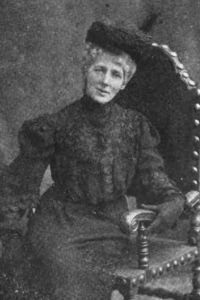 Mrs. Hugh Fraser,
Italian Yesterdays, vol. 1
Mrs. Hugh Fraser,
Italian Yesterdays, vol. 1
“ I could not help reflecting how few direct ways true love has of manifesting itself—for one and the same was the thought of Abraham, insisting on buying and holding for his very own the field of Mamre, to bury Sara in—and the preoccupation of the highly cultured Greek to enshrine the remains of his beloved Annia, where, by all human prevision, they could never be disturbed. ”
“ Who could insure that the love which beauty had awakened would not be perishable as that beauty? It had not that firmness which arises from steady principle, that element of immortality which religion alone can give. Flora was painfully aware that many, and amongst them members of Sir Amery's own family, had deemed his marriage far below the expectations which such a man might have formed. Was it quite impossible that the same thought might sometimes cross the mind of her husband! ”
Marie Louise de la Ramée,
In Maremma
(1882)
“ All she asked of fate was to be for ever together thus, till age or death should find them, and lay them gently down, folded in each other's arms, still in the place of their refuge where men would never behold them, but only the wandering wind would sometimes bring the flowers' message to them, and sometimes a ray of the sun would come and kiss them where they slumbered. ”
