Anglican liturgy

Definition and stakes

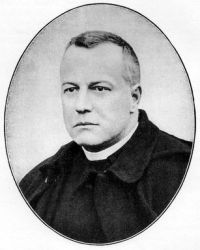
Portrait of Adrian Henry Timothy Knottesford Fortescue Adrian Henry Timothy Knottesford Fortescue,  The Lesser Eastern Churches (1913)

“ They pray much for the dead and give alms for them; though they are quite willing to assure their Anglican benefactors that they do not hold with the Pope about Purgatory. [100] They honour relics and use dust from the tombs of saints (called ḥnâna, "grace") as a kind of charm. [101] They invoke our Lady and other saints constantly in their liturgy and prayers. They are (like most Easterns) rather vague as to the number of the Sacraments, inasmuch as they have not yet conceived a special class of rites distinct from the large number of what we call Sacramentals. ”
Source: Wikisource

1911 Encyclopædia Britannica (1911)

“ It was founded in 1844 in opposition to the Tractarian movement, and embodies the distinctively evangelical elements of the Reformation. It preserves and maintains to the letter all that is Protestant and evangelical in the liturgy and services of the Anglican church, while its free constitution and revised formularies meet the needs of members of that communion who resent sacerdotal and ritualistic tendencies. ”
Source: Wikisource

Various,  The Catholic World, Vol. 07, April 1868 to September…

“ Though his Christian Year is adapted to the services of the Church of England, and though its chief purpose, as stated in the preface, is "to exhibit the soothing tendency of the Prayer-Book," the author's sympathies are with the Book of Common Prayer in its Catholic, and not in its Protestant aspects. During more than forty years it has been chiselling the Anglican mind into a more orthodox shape. It moulds the chaotic elements of faith into substance, form, and life. It supplies the lost sense of Scriptures, and lays the foundation of towers and bulwarks it cannot build. ”
Source: Gutenberg

Get perspective with Kwize: daily news enlightened by great literature