Anglo-Norman invasion of Ireland

Definition and stakes

American-Irish Historical Society The journal of the American-Irish Historical Society…

But it was not until the Norman invasion and complete subjugation of England, and Norman laws, customs and ideals had completely dominated that country and the semi-Latin tongue now known as English had taken the place of the Anglo-Saxon spoken till the Normans came, that the real breach of amity between the English and Irish happened.
It was against the aggressive spirit of this Anglo-Norman power that Ireland first rebelled and rebels to this day. The Normans 432found the conquest of Ireland a far more difficult undertaking.
Source: Gutenberg

Various The Catholic World, Vol. 13, April to September…

Had the Norman invasion ended with Strongbow and Henry II., or had it been more general and successful, as in England, the evil would have been limited; but as every decade poured into Ireland its hordes of ambitious, subtle, and landless adventurers, who looked upon Ireland as the most fitting place to carve their way to fame and fortune, new wars of extermination were fomented, and the wounds that afflicted the country were kept constantly open.
Source: Gutenberg

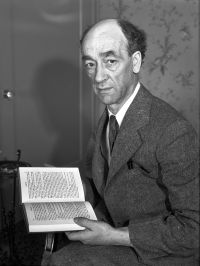
Portrait of Alice Stopford Green Alice Stopford Green Irish Nationality

A greater empire-maker, Henry II, lord of a vast seacoast from the Forth to the Pyrenees, holding both sides of the Channel, needed Ireland to round off his dominions and give him command of the traffic from his English ports across the Irish Sea, from his ports of the Loire and the Garonne over the Gaulish sea. The trade was well worth the venture.
Norman and French barons, with Welsh followers, and Flemings from Pembroke, led the invasion that began in 1169. They were men trained to war, with armour and weapons unknown to the Irish.
Source: Gutenberg

Get perspective with Kwize: daily news enlightened by great literature