Arabian Sea

Definition and stakes

The Commerce and Navigation of the Erythræan Sea

“ Altogether, therefore, the navigation of this part of the Arabian coast is very dangerous: for, apart from the barbarity of its people, it has neither harbours nor good roadsteads, and it is foul with breakers, and girdled with rocks which render it inaccessible. For this reason when sailing south we stand off from a shore in every way so dreadful, and keep our course down the middle of the gulf, straining our utmost to reach the more civilized part of Arabia, which begins at Burnt Island. ”

Source: Gutenberg

The Commerce and Navigation of the Erythræan Sea

“ So far are the parts lying beyond this region, which we have spoken of as an isthmus extending from the Arabian Gulf to the Erythræan Sea [Pg 223] from being inhabited, that even the parts which run up further to the north are a desert of sand. Moreover, men setting forth from the Arabian Gulf in Egypt, after having sailed round the greater part of Arabia to reach the sea which washes the shores of Persis and Sousa, have returned, after sailing as far along the coast of Arabia as the water they had on board lasted them, and no further. ”
Source: Gutenberg

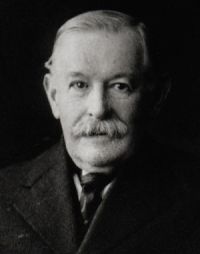
Portrait of James Bruce James Bruce,  Travels to Discover the Source of the Nile (1790)

“ The Arabian Gulf, however, or what we call the Red Sea, lies from nearly north-west to south-east, from Suez to Mocha. It then turns nearly east and west till it joins the Indian Ocean at the Straits of Babelmandeb, as we have already said, and may be further seen by consulting the map. Now, the Etesian winds, which are due north in Egypt, here take the direction of the Gulf, and blow in that direction steadily all the season, while it continues north in the valley of Egypt; that is, from April to October the wind blows north-west up the Arabian Gulf towards the Straits ”
Source: Wikisource

Get perspective with Kwize: daily news enlightened by great literature