“ The great feature of the town of Suez is its donkeys; wonderfully knowing creatures, who, with their masters, look upon every visitor, as in duty bound, to engage their services. To say them nay, and to suggest that your legs are quite capable of bearing you to the town, is only provocative of an incredulous smile, or a negative shake of the head. ”
Suez
Definition and stakes
Suez, an Egyptian governorate located in the northeastern part of the country, is distinguished by its urban development, industrial operations, and crucial ports, including the historic Suez Canal. This area, abundant in natural resources such as oil and limestone, has long served as a center of economic and logistical importance.
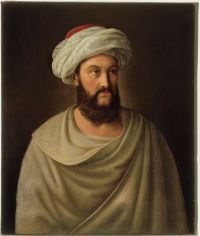
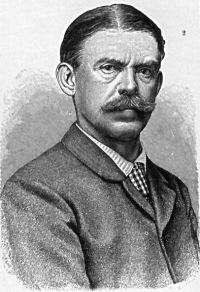
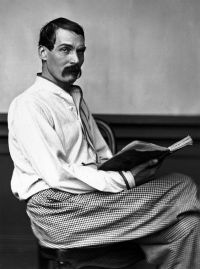
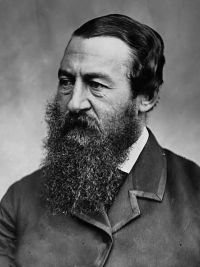
Travelers and writers, such as Ferdinand de Lesseps, who highlighted the canal’s role in global communication, or Emma Roberts, who portrayed Suez as a “barren and desolate” town, present differing views of its character. Meanwhile, Georg August Schweinfurth observed its demographic changes linked to military endeavors, while Anthony Trollope condemned its unforgiving environment. These diverse descriptions emphasize Suez’s dual nature as both a key economic conduit and a location marked by stark, contrasting human experiences.
Quotes about “Suez”
Emma Roberts, Notes of an Overland Journey Through France and Egypt to Bombay
“ Distance lends no enchantment to the view of Suez. It is difficult to fancy that the few miserable buildings, appearing upon the margin of the sea, actually constitute a town; and the heart sinks at the approach to a place so barren and desolate. My donkeys carried me through a gap in the wall, which answered all the purposes of a gateway, and we passed along broken ground and among wretched habitations, more fit for the abode of savage beasts than men. ”
Anthony Trollope,
Tales of All Countries
“ GEORGE WALKER AT SUEZ. Of all the spots on the world’s surface that I, George Walker, of Friday Street, London, have ever visited, Suez in Egypt, at the head of the Red Sea, is by far the vilest, the most unpleasant, and the least interesting. There are no women there, no water, and no vegetation. It is surrounded, and indeed often filled, by a world of sand. A scorching sun is always overhead; and one is domiciled in a huge cavernous hotel, which seems to have been made purposely destitute of all the comforts of civilised life. ”
Georg August Schweinfurth,
The heart of Africa, Vol. 1 (of 2…
(1873)
“ Since my first visit five years ago, in January 1864, the population of Suez had increased threefold. The Abyssinian campaign alone had been the means of almost doubling the number of its inhabitants. A portion of the camp formed for the marching troops, and an immense depôt for trusses of hay, seeming well nigh like a large village in itself, were now the sole relics of that successful enterprise. ”
Edward Carpenter,
From Adam's Peak to Elephanta
(1892)
“ Gulf of Suez.—The town of Suez is a tumbledown little place, narrow lanes and alleys; two-storied stone houses mostly, some with carved wooden fronts, and on the upper floors lattice-work, behind which I suppose the women abide. Some nice-looking faces in the streets, but a good many ruffians; not so bad though as Port Said, where the people simply exist to shark upon the ships. In both places an insane medley of Arabs, fellahs, half-castes and Europeans, touts, guides, donkey-boys, etc., and every shade of dress and absurd hybrid8 costume, from extreme Oriental to correct English ”
Richard Francis Burton,
Personal Narrative of a Pilgrimage to Al Madinah and Meccah
“ The people of Suez are a finer and fairer race than the Cairenes. The former have more the appearance of Arabs: their dress is more picturesque, their eyes are carefully darkened with Kohl, and they wear sandals, not slippers. ”
Ferdinand de Lesseps, The Isthmus of Suez Question
“ The work of cutting through the Isthmus of Suez is certainly destined, more than any other, to contribute to the preservation of the Ottoman Empire, and to demonstrate to those who have been wont to proclaim its decay and ruin, that it still has a productive existence, and that it is capable of adding a brilliant page to the history of the world’s civilization. ”
active 1837-1839 James Barber, The Overland Guide-book
“ Quitting Aden, the shores of the Red Sea are frequently seen, but rarely approached during the upward voyage. In six days Suez is reached, and, as soon as boats can come off to the steamer, the passengers are landed and almost immediately conveyed by van (see previous details on this head) across the desert.The town of Suez offers no kind of inducement to prolong one's stay. Small, dirty and destitute of any architectural beauties or antique remains, it exhibits the worst specimen of a Mahomedan city in the whole Ottoman empire. ”
The World's Greatest Books — Volume 19…
“ I accomplished the journey to Suez after an exciting adventure in the desert. There are two opinions as to the point at which the Israelites passed the Red Sea. One is that they traversed only the very small creek at the northern extremity of the inlet, and that they entered the bed of the water at the spot on which Suez now stands. The other is that they crossed the sea from a point eighteen miles down the coast. ”
Robert Kerr, A General History and Collection of Voyages and Travels…
“ Suez stands in a desert place, where grows no herb of any kind. At this place the ships are built which are designed for India. All the timber of which they are built, with the iron work, and every kind of tackle, are brought from Satalia and Constantinople to Alexandria; whence they are carried on the Nile in jerbs or barks to Cairo, and thence on the backs of camels to Suez, where Pharaoh was drowned. ”
1911 Encyclopædia Britannica, Volume 26… (1911)
“ Kolzum retained some of the trade of Egypt with Arabia and countries farther east long after the canal was closed, but by the 13th century it was in ruins and Suez itself, which had supplanted it, was also, according to an Arab historian, in decay. On the Ottoman conquest of Egypt in the 16th century Suez became a naval as well as a trading station, and here fleets were equipped which for a time disputed the mastery of the Indian Ocean with the Portuguese. ”
Lady Isabel Burton, The Life of Captain Sir Richard F. Burton…
“ Poor Suez is the sole exception to the general rule of gaiety and merry-making in Egypt. She is actually in the throes of house-changing. She knows that the flitting must be done, but she has no heart to do it. This will be her third remove: even as Heroöpolis on the Bitter Lakes shifted to Arsinoë and Arsinoë migrated to Suez, so Suez must transfer herself to the New Docks—Waghorntown. She must rebuild herself, hotel and inns, Consulates and offices, agencies and counting-houses, leaving the-present tenement to Egyptian officials and native population. ”
Ferdinand de Lesseps, The Isthmus of Suez Question
“ In the wake of commerce, enlightenment and civilization will penetrate, by degrees, that dreary night which envelopes the Mussulman world.”The advantage of the new track being thus sufficiently proved from a general point of view, we shall now enter into the details of the scheme with regard to its execution. We will begin with the levelling of the line from Pelusium to Suez. These levels were taken by some engineers attached to the French expedition, and the difference between the level of high water at Suez, and of low water at Tineh, was found to be 9 met., 90, in favour of the Red Sea. ”
Richard Francis Burton,
The Land of Midian — Conclusion
“ After another stormy day, we again got up steam; and, fighting hard against adverse winds and waves, greatly to the distress of the unfortunate mules and gazelles, we reached Suez on April 20th.At Suez my wife had been awaiting me for long weeks, preferring the simplicity of the Desert to the complex life of Cairo. Some delay was again necessary in order to telegraph our arrival, to apply for a special train, and to sort and pack in the travelling-cases our twenty-five tons of specimens. As often happens, the return to civilization was in nowise cheery. ”
Richard Francis Burton,
Personal Narrative of a Pilgrimage to Al Madinah and Meccah
“ The Suez ship-builders are an influential body of men, originally Candiots and Alexandrians. When Mohammed Ali fitted out his fleet for the Hijaz war, he transported a number of Greeks to Suez, and the children now exercise their fathers' craft. ”
Lina Eckenstein, A History of Sinai
“ Odoardo Barbosa, who was sent to Egypt to report on matters of navigation to the merchants of Italy in 1516, mentioned Suez as the station for spicery, but added that the traffic had almost ceased. [283] Certainly the Ottoman Sultan, roused to the needs of the hour, made the attempt to facilitate the transit of Eastern goods by cutting through the isthmus of Suez. He also built a castle at Suez in order to defend himself against the Portuguese. But the centre of the Ottoman rule was no longer Cairo, but Constantinople, to which the wealthy more and more migrated. ”
Robert Kerr, A General History and Collection of Voyages and Travels…
“ One of these by the breach of the mountains on the Egyptian coast 17 leagues above Toro, and 11 short of Suez; and the other by the end of the nook or bay on which Suez stands; as at this place the hills on both sides end, and all the land remains quite plain and low, without hillocks or any other impediment. This second appears to me to be much more convenient for so great a work than the other, because the land is very low, the distance shorter, and there is a haven at Suez. All the rest of the coast is lined by great and high mountains of hard rock. ”
Anthony Trollope,
The Bertrams
“ Suez is indeed a triste, unhappy, wretched place. It is a small oriental town, now much be-Europeanized, and in the process of being be-Anglicized. It is not so Beelzebub-ridden a spot as Alexandria, nor falling to pieces like Cairo. But it has neither water, air, nor verdure. No trees grow there, no rivers flow there. Men drink brine and eat goats; and the thermometer stands at eighty in the shade in winter. The oranges are the only luxury. There is a huge hotel, which contains long rows of hot cells, and a vast cave in which people eat. ”
Ferdinand de Lesseps, The Isthmus of Suez Question
“ Russia will find in the opening of the Canal of Suez a just satisfaction of that national aspiration towards the East which led her on one occasion to extend the limits of her vast Empire to the confines of British India, and, on another, to threaten the integrity of Turkey. The mission of civilization devolving upon the Czar over the numerous tribes of whom he is arbiter, may yet suffice the noblest ambition ”
Sir Samuel White Baker,
In the Heart of Africa
“ This was a transport, with troops. As she was to return immediately to Suez, I preferred the dirty transport rather than incur a further delay. We started from Souakim, and after five days' voyage we arrived at Suez. Landing from the steamer, I once more found myself in an English hotel. The hotel was thronged with passengers to India, with rosy, blooming English ladies and crowds of my own countrymen. I felt inclined to talk to everybody. Never was I so in love with my own countrymen and women; but they (I mean the ladies) all had large balls of hair at the backs of their heads! ”
Josiah Williams, Life in the Soudan
“ Blind to their own interest, the Egyptian Government obstructs traffic by the heavy duties which it levies. Cattle and sheep, which can be obtained from the tribes in the neighbourhood, are sent by hundreds annually to Suez by sea. Were it not for the heavy duties imposed, I should say that a large trade ought to be done with Suez, which is but three and a half days from Souâkin. There is a telegraph line to Kassala. ”
John Lewis Burckhardt,
Travels in Syria and the Holy Land
“ The men who take care of the wheels and the oxen remain constantly shut up in the building for fear of the Bedouins. The water is brackish, but it serves for drinking, and the Arabs and Egyptian peasants travelling between Cairo and Suez, who do not choose to pay a higher price for the sweet water of the latter place, are in the habit of filling their water skins here, as do the people of Suez for their cooking provision. From an inscription on the building, it appears that it was erected in the year of the Hedjra 1018. We reached Suez about sunset, at the end of eleven hours and a half. ”
Ferdinand de Lesseps, The Isthmus of Suez Question
“ The editor of the Engineers’ and Architects’ journal (1844) in giving an account of the labours of these engineers, adopts in starting from Suez, the line of the ancient canal as far as the Bitter Lakes, and from the head of these lakes at Katieh he takes the direction of the Mediterranean in passing by the great lake Sulak el Bardoil.The author adds, “It is hardly reasonable to reckon upon a union of the European powers to [119] effect an undertaking in which England has such a preponderating interest, in the point of view of our domination in India. ”
Henry William Harper, Letters from New Zealand, 1857-1911… (1914)
“ At Suez we took on board some homeward-bound passengers, and there was much talk of the state of affairs in Egypt, the abandonment of the Sudan, the tragedy of Gordon's death at Khartoum, and the possible danger of a Dervish invasion of Egypt. ”
James Bruce,
Travels to Discover the Source of the Nile…
“ P. S. "I send you a copy of the firman; also letters for the governors of Bombay and Bengal, inclosing the same; you will see the translator be a person of trust, and have no interest in deceiving you. If I did not think you very safe at Suez I would not write you. You are to bring no coffee, or any produce of Arabia, at least the first voyage, till you make your terms here. I inclose you a letter from the chief of the customhouse.J. B." Copy of Instructions from the Managers of the Suez Adventure, to Mr John Shaw, and Captain William Greig. ”
W. G. Burn Murdoch, From Edinburgh to India & Burmah
“ Times have changed and sea routes, so the name should be passed east to this Gulf of Suez, where ladies and parasols look at their best and the appearance of a man in oilskins would be positively alarming. ”
Rudyard Kipling,
Verses 1889-1896
“ Ship me somewheres east of Suez, where the best is like the worst, Where there aren't no Ten Commandments an' a man can raise a thirst; ”
active 1837-1839 James Barber, The Overland Guide-book
“ Arrived at Suez, it will be for the passenger who has not contracted for the entire trip home, to select his own method of getting to Cairo. The vans of the Transit Company offer unquestionably the most convenient and expeditious mode of carrying the traveller across the desert; but there are not wanting persons who prefer the romance and independence of a tedious trip on the back of a horse, donkey or camel. If there were any objects of interest worthy of an occasional halt in the desert, the inconvenience of this slow progress would have its counterpoise ”
Anthony Trollope,
The Bertrams
“ In these days men go from Cairo to Suez as they do from London to Birmingham—by railway; in those days—some ten or twelve years back, that is—they went in wooden boxes, and were dragged by mules through the desert. ”
Various, The Atlantic Monthly, Volume 07…
“ As you walk across the little valley which stretches down from the hills to the lake where Brunnen is, you remember that it is the town of Schwyz you come to, where dwelt once the hardy, valorous little colony which gave its name to Switzerland,—famous in the annals of this stout-hearted mountain-land for the "peculiar fire" with which they have always fought for their ancient freedom,—worthy to leave their name, in lasting token of the service they did to their fellows and to mankind. ”
Lina Hug, The Story of Switzerland
“ Zurich, now the greatest authority on the subject in Switzerland, the lakemen left their watery settlements about the date just given, and began to fix their habitations on terra firma. Various tombs already found on land would bear witness to this change. When these peculiar people had once come on shore to live they would be gradually absorbed into neighbouring and succeeding races, no doubt into some of the Celtic tribes, and most likely into the Helvetian peoples. Thus they have their part, however small it may be, in the history of the Swiss nation. ”
Edith Elmer Wood, An Oberland Châlet (1910)
“ Among the rank and file of the people in the German cantons of Switzerland, there seem to be three classes:—those who have come in contact overmuch with tourists and have been spoiled by it; the low-browed, stupid type, surly and hostile; and the honest, intelligent, fresh-cheeked, unspoiled, who are never effusive, but frank always and friendly to those who seem to deserve it, staunch, reliable, independent, self-respecting, in every way admirable,—the bone and sinew and hope of Switzerland. ”
Lina Hug, The Story of Switzerland
“ We may perhaps do well to pause here awhile before proceeding to show how the various Swiss cantons were gathered into the fold of the Eidgenossenschaft—a long process, as a matter of fact—and devote a short chapter to a glance at an aristocratic city whose polity and development contrast with those of the Forest lands. Zurich presents a fair example of a city whose origin dates back to a remote age, and whose transition from the condition of a feudal territory into the position of an independent commonwealth can be clearly followed. ”
Nathan Haskell Dole,
The Spell of Switzerland
“ When one speaks of Switzerland one instinctively thinks of Mont Blanc, and it seems an unfair advantage which France has taken to keep possession of Savoy, which used to belong to Switzerland, and the crown of the Swiss Alps. History has made strange partitions of territories; but the more one sees of Switzerland [Pg 167] the more one wonders that it could have ever become a united country, composed as it is of isolated valleys, separated by lofty mountain-walls, intercommunicable only by treacherous passes. ”