“ Soon after the battle of Shiloh began my service with the Army of Tennessee. How shall I make you understand, dear friends, how strong, how dear, how imperishable are the ties which bind me to these grand and noble heroes,—the true, brave boys with whom I shared until the bitter end their trials and glory. Heroic souls who bore with equal fortitude and transcendent bravery alike the shock of battle, the pangs of "hope deferred," the untold hardships which soon became their daily portion. Their bleeding feet dyed alike the snows of Georgia and the rocky mountain paths of Tennessee. ”
Army of Tennessee
Definition and stakes
The Army of Tennessee was a key field force within the Confederate States Army during the Western Theater of the American Civil War, established in 1862 and involved in major engagements such as Stones River, Chickamauga, and Chattanooga. Writers such as Samuel R. Watkins and George B.
Guild recorded its challenges and valor through personal narratives, while scholars like Alfred J. Vaughan examined its decline. The army’s final surrender in 1865 highlighted both its perseverance and the strategic constraints encountered by Confederate troops, as illustrated by the diverse accounts of its soldiers and leaders.
Quotes about “Army of Tennessee”
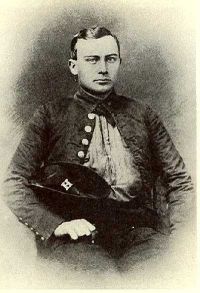
Samuel R. Watkins,
"Co. Aytch," Maury Grays, First Tennessee Regiment
“ Soon we commence our march to Kentucky and Tennessee. Be of good cheer, for within a short while your faces will be turned homeward, and your feet will press Tennessee soil, and you will tread your native heath, amid the blue-grass regions and pastures green of your native homes. We will flank General Sherman out of Atlanta, tear up the railroad and cut off his supplies, and make Atlanta a perfect Moscow of defeat to the Federal army. ”
George B. Guild, A brief narrative of the Fourth Tennessee Cavalry Regiment…
“ A more daring exhibition of soldiers’ courage was never made on any field or by any army than that of the Army of Tennessee at Franklin on that chilly afternoon in November, 1864. General Hood was an eyewitness to all this, and I regretted and was surprised to read in his book the assertion that the Army of Tennessee had been so accustomed to fighting behind breastworks under General Johnston that they would not fight any other way. ”
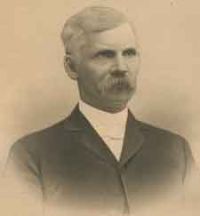
Alfred J. Vaughan,
Personal record of the Thirteenth Regiment…
“ When the great soldier and leader, Joseph E. Johnston, surrendered the remnant of the Army of Tennessee, on April 26, 1865, there were left of the gallant old Thirteenth less than fifty officers and men. More than twelve hundred men had once mustered in its ranks. Throughout the four years they had fallen in battle, been stricken in camp, died on the march, and sometimes, alas! ”
George B. Guild, A brief narrative of the Fourth Tennessee Cavalry Regiment…
“ He was young, active, and brave as a soldier, and was in every engagement of his company during the war. Perhaps he was absent for a short time, but only when suffering from wounds received in battle. He has the distinction to have been in command of those soldiers who fired the last guns before the surrender of the Army of Tennessee at Greensboro, N. C., April 26, 1865, which occurred but a few days afterwards. He is as worthy and honorable as a citizen as he was brave and true as a soldier. ”
George B. Guild, A brief narrative of the Fourth Tennessee Cavalry Regiment…
“ Joseph E. Johnston in North Carolina, a large proportion of Tennesseeans answered to roll call, participated in the unequal battle at Bentonville, and surrendered at Greensboro. Nor would we forget to mention in this connection the brave sons of Tennessee who fought in the Army of Virginia, who fought at Manassas under Stonewall Jackson, at Chancellorsville, at Gettysburg, and on other fields, and who, when overwhelmed in numbers, surrendered with Lee at Appomattox. The glory they so nobly won is a part of the immortal heritage of Tennesseeans. ”
George B. Guild, A brief narrative of the Fourth Tennessee Cavalry Regiment…
“ They do not admit of a comparison. I would not rob the Federal soldier of a single laurel, but what are the facts? After the battle of Chickamauga, Longstreet had left, taking with him General Bushrod Johnson’s Division of the Army of Tennessee, and other troops had returned to their stations; and General Bragg was holding Missionary Ridge with a force not exceeding 25,000 men, who were clamoring for a change of commanders. What could they now promise themselves with a smaller army against a heavily reënforced enemy? ”
George B. Guild, A brief narrative of the Fourth Tennessee Cavalry Regiment…
“ It is not within my province to speak at length of the soldiers—old and young, rich and poor—that crowded into the ranks of the Confederate armies. Tennessee furnished one hundred and eighteen regiments—about one hundred thousand soldiers, nearly one-sixth of the entire Confederate force. Many counties had more soldiers in the army than their voting population. For four years upon hundreds of battle fields they helped maintain the unequal contest. With resources exhausted and their armies depleted to skeletons, they lost all save honor. ”
Jefferson Davis,
The Rise and Fall of the Confederate Government…
“ If the Army of Tennessee was found to be unable to hold positions of great strength like those at Dalton, Resaca, Etowah, Kenesaw, and on the Chattahoochee, I could not reasonably hope that it would be more successful in the plains below Atlanta, where it would find neither natural nor artificial advantages of position. ”
Samuel Gibbs French,
Two Wars: An Autobiography of General Samuel G. French
“ And the best reason I can give that the remnant of the grand Army of Tennessee so successfully crossed the Tennessee river is that Gen. Thomas always rode his horse at a walk. This is no reflection on the defense of our rear guard. I remained in Columbus, Ga., and on the 12th of January, 305 1865, married Miss Mary F. Abercrombie, daughter of Gen. Anderson Abercrombie, a planter in Russell County, Ala. [37] Sherman had now captured Savannah, and was marching to join Grant. Then came the surrender of Gen. Lee. And now Gen. J. H. Wilson was nearing Columbus. ”
Bennett H. Young,
Confederate wizards of the saddle
(1914)
“ The Mississippi, the Ohio, Cumberland, Barren, Tennessee and Yazoo Rivers penetrated or skirted the regions this army was required to defend, and rendered defense not only more difficult, but made the movements of the armies more hazardous.No such disaster as at Fort Donelson or Vicksburg was possible save in the territory defended by the Army of Tennessee. ”
Alfred J. Vaughan,
Personal record of the Thirteenth Regiment…
“ Upon the fall of Lieutenant-Colonel W. E. Morgan and Major P. H. Cole, R. F. Lanier, senior Captain, the bravest of the brave, took command of the regiment and led it throughout the remainder of the fight with skill and judgment, and made for himself a character for dash and daring that followed him throughout the war; no man in the army of Tennessee was more devoted to the Southern cause.The regiment went into this battle with two hundred and twenty-six officers and men, and lost in killed and wounded one hundred and ten. ”
“ Past them on the Lafayette road marched endlessly the Army of Tennessee. Tanned and gaunt, ragged and cheerful, moving out from Chattanooga, but moving out, there was assurance, to give fight, by went the grey, patient, hardy legions, corps of Hill, Polk, Buckner, and Walker, divisions of Cheatham, Cleburne, Breckinridge, Liddell, Hindman, 226Bushrod Johnson, Preston, and Stewart. Colours, mounted officers, grey foot soldiers and grey foot soldiers and grey foot soldiers, the rumbling guns, old, courageous battalions, on they went, endlessly. ”
Jacob D. Cox, Military Reminiscences of the Civil War…
“ The advent of the army into East Tennessee was, to its loyal people, a resurrection from the grave. Their joy had an exultation which seemed almost beyond the power of expression. Old men fell down fainting and unconscious under the stress of their emotions as they saw the flag at the head of the column and tried to cheer it! Women wept with happiness as their husbands stepped out of the ranks of the loyal Tennessee regiments when these came marching by the home. [Footnote: Temple's East Tennessee and the Civil War, pp. 476, 478. Humes's The Loyal Mountaineers, pp. 211, 218.] ”
George B. Guild, A brief narrative of the Fourth Tennessee Cavalry Regiment…
“ Our own loss in men, from all causes, was eleven hundred, which loss was replaced to a great extent by new recruits and absentees we brought out with us. CHAPTER IV. In East Tennessee. We remained a short time in the vicinity of Bainbridge, Ala., getting horses shod, etc. Many soldiers who had been cut off while in Tennessee crossed the river at different points and rejoined their command. In rejoining the Army of Tennessee we again passed through the field of the battle of Chickamauga. ”
George B. Guild, A brief narrative of the Fourth Tennessee Cavalry Regiment…
“ In the War between the States the official rolls of the Northern army show a total enlistment of 2,850,000 men. Allowing 700,000 men for the South—which would be the extreme limit for a white population of 6,000,000, of which 3,000,000 were women and more than 2,000,000 males under age, not to mention the 200,000 Southern men who went into the Union army and the men past military age and disabled—it would have been impossible for the South to have had more than 700,000 on its rolls, and these fought four to one. ”
George B. Guild, A brief narrative of the Fourth Tennessee Cavalry Regiment…
“ At General Forrest’s suggestion, they remained with him, participated in his engagements around Selma, Ala., and surrendered with General Forrest’s command, receiving their paroles at Gainesville, Ala., in May, 1865, as members of Company G, Fourth Tennessee Regiment. The sixteen young men are certainly entitled to be named in the list of living in Company G at this time, for they gave the best evidence of their manhood and patriotism by leaving voluntarily their homes behind the lines under the forlorn and desperate circumstances surrounding them and the Confederate army. ”
George B. Guild, A brief narrative of the Fourth Tennessee Cavalry Regiment…
“ We reached the gap at daylight. Burbridge’s rear guard was passing through, and we killed and wounded a few of them. We asked an old citizen if any one had ever traveled over the pathway before. He replied: “Occasionally I have seen citizens going over it and coming back with a bag of salt on a lead horse, but nobody that I have ever heard of would dare to do so at nighttime. It is a wonder that half of you were not killed.” When General Williams left Sparta for the Army of Tennessee, at Atlanta, all of the independents and bushwhackers in that part of the State went out with him. ”
Alfred J. Vaughan,
Personal record of the Thirteenth Regiment…
“ But they met intrenched infantry, and the concentrated fire of musketry, canister, grapeshot and shell mowed them down at every step. Yet they still struggled forward, but every Confederate stood at his post, and in a short time it was more than mortals could stand and they broke and fled, leaving eight hundred of their dead. The Thirteenth and One Hundred and Fifty-fourth were in the angle, supported on the right and left by the veterans of the Army of Tennessee. ”
George B. Guild, A brief narrative of the Fourth Tennessee Cavalry Regiment…
“ More than thirteen years have passed away since, in the Old North State, by order of superior officers, you laid aside the equipments of war and furled forever the flag you have loved and followed—often in victory, sometimes in disaster, but always in honor and with a soldier’s devotion to duty. It is meet and proper, fellow soldiers, that our reunion should be inaugurated at Woodbury. For here, under these towering hills and along the meanderings of the beautiful little river that laves your green and fertile valleys, were enacted many of the stirring scenes through which the Regiment passed. ”
John Randolph Neal,
Disunion and Restoration in Tennessee
“ After the intense excitement created by the bridge-burning had somewhat subsided, the Confederate and State authorities again manifested a desire to win over, or at least conciliate, the Union element. The commander at Knoxville issued a proclamation to the “Disaffected People of East Tennessee,” and assured “all those interested who have fled to the enemy’s lines, and who are actually in their army, that he will welcome their return to their homes and their friends; they are offered amnesty and protection, if they come to lay down their arms, and act as loyal citizens.” ”
Selden Connor,
Campfire and Battlefield
“ The troops were in fine spirits, and the whole Army of West Tennessee seemed eager to emulate the armies of the Potomac and Kentucky. No army ever marched to battle with prouder steps, more hopeful countenances, or with more courage, than marched the Army of West Tennessee out of Ripley on the morning of September 29th, on its way to Corinth. ”
Jacob D. Cox, Military Reminiscences of the Civil War…
“ It was utterly impossible to keep up a line of supply for an army in East Tennessee by the wagon roads over the mountains. The railroad through Chattanooga was indispensable for this purpose. But Mr. Lincoln had not fully appreciated this, and was discontented that both Buell and Rosecrans had in turn paid little attention, as it seemed, to his desire to make the liberation of East Tennessee the primary and immediate aim of their campaigns. ”
Samuel R. Watkins,
"Co. Aytch," Maury Grays, First Tennessee Regiment
“ SOLDIERS OF THE FIRST TENNESSEE REGIMENT:—I should have said captains, for every man among you is fit to be a captain. I have heard of your acts of bravery on every battlefield during the whole war, and 'captains,' so far as my wishes are concerned, I today make every man of you a captain, and I say honestly today, were I a private soldier, I would have no higher ambition on earth than to belong to the First Tennessee Regiment. You have been loyal and brave; your ranks have never yet, in the whole history of the war, been broken, even though the army was routed ”
George B. Guild, A brief narrative of the Fourth Tennessee Cavalry Regiment…
“ Some were killed and wounded, and a few prisoners were taken. We lost a few men ourselves. At this juncture of affairs a line of our infantry appeared in our rear; and before the enemy could recover from their surprise we had a sufficient force to hold the position till General Johnston’s army passed over the bridge that night. Undoubtedly this charge of the Eighth Texas and the Fourth Tennessee saved the bridge and made certain the escape of Johnston’s little army at Bentonville, for at that time the enemy numbered six to our one. ”
George B. Guild, A brief narrative of the Fourth Tennessee Cavalry Regiment…
“ The first and greatest object of a general is to crush and destroy all armed opposition to constituted authority. Why, then, was it that Sherman did not turn and follow Hood into Middle Tennessee when he and Thomas, who had a large army at Nashville, could have crushed the little army of General Hood, as it were, between the upper and nether millstones and thus end the war—anyhow in the Middle West? ”
Basil Wilson Duke,
History of Morgan's Cavalry
“ The force with which he crossed the Tennessee river was a little over twenty thousand men. It was composed of the troops which had held the lines in Kentucky—those which had been stationed at Bowlinggreen, all that was left of Crittenden's command, all that were left of the garrisons of Donelson and Henry. The garrisons of minor importance in Tennessee contributed, as the State was evacuated, to strengthen the army. He was very soon joined by the forces from Pensacola, about ten thousand strong, and a splendid body of men. ”
George B. Guild, A brief narrative of the Fourth Tennessee Cavalry Regiment…
“ Its volume is large enough to supply a great city, and the stream that flows from it is that of a small river. After detailing a guard to hold the captives, the remainder of the command were marched back to their horses. The road was full of our ambulances, litters, etc., bearing off the dead and wounded. Here was presented that other phase of grim-visaged war, sickening to look upon: friends and comrades dead and dying who a few hours before were full of life and soldierly enthusiasm; men with their pale, ashy countenances turned toward the sky. ”
Albert Dillahunty, Shiloh National Military Park, Tennessee
“ Don Carlos Buell, commander of the Department of the Ohio, reinforced his line so that Johnston had to keep his main force at Bowling Green, Ky., to guard the important railroads which penetrated Middle and West Tennessee. Commodore Foote’s gunboats ascending the Tennessee to attack Fort Henry.Various plans for an attack upon the Confederate line were considered by the Federals. General Halleck, commander of the Department of the Missouri, believed that it would take an army of not less than 60,000 men, under one commander, to break the well-established line. ”
George B. Guild, A brief narrative of the Fourth Tennessee Cavalry Regiment…
“ His cavalry were kept busy all winter in scouting and fighting back the enemy. Some of his encounters approached the dignity of a battle, in which he lost in killed and wounded a good many men and inflicted a like loss upon the enemy. The country surrounding Tunnel Hill and Dalton was thin, mountainous land and very poor in production and sparse in population. The subsistence of the army had to be brought there by railway. The soldiers always say that they went hungry longer there than at any other encampment during the war. ”