Austria-Hungary, a dual monarchy that existed from 1867 to 1918, was a multinational empire that brought together Austria (Cisleithania) and Hungary (Transleithania) under a single ruler. This intricate system, characterized by shared defense and foreign policy but distinct internal administration, faced significant ethnic conflicts among Germans, Magyars, Slavs, and Italians. Scholars such as Francesco Saverio Nitti emphasized the empire’s difficulty in preserving cohesion, while Logan Marshall focused on the racial hostilities between Austria and Hungary.
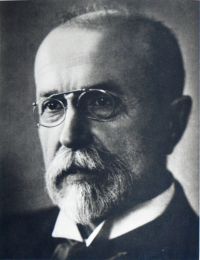
Tomáš Masaryk criticized it as an artificial entity that stifled self-determination, in contrast to Arthur Greenwood’s perspective, which viewed its diversity as a possible blueprint for freedom. The empire’s collapse following World War I, as discussed in the Czechoslovak Review, illustrated the tension between its divided reality and the principle of national sovereignty, leaving behind a legacy of political innovation and the emergence of modern nation-states.
 Francesco Saverio Nitti,
Peaceless Europe
Francesco Saverio Nitti,
Peaceless Europe