“ But when Axayacatl, king of the Aztecs, sent demanding the same tribute and obedience from them which the other people of the country paid him, threatening, if they refused, to destroy their cities, and give their land to their enemies, they answered proudly, 'Neither they nor their forefathers had ever paid tribute or homage to a foreign power, nor ever would pay it. ”
Axayacatl
Definition and stakes
The theme of “Axayacatl” has been addressed by authors such as Hubert Howe Bancroft, Alfred Percival Maudslay, Susan Hale, Brantz Mayer and Thomas A. Joyce. It is often associated with terms like Aztecs, Quetzalcoatl, Tezcuco, Tezcatlipoca and Aztec.
Quotes about “Axayacatl”
 Frederick Albion Ober,
Young Folks' History of Mexico
(1895)
Frederick Albion Ober,
Young Folks' History of Mexico
(1895)
“ Now a slave, Montezuma had done his best to rivet the fetters upon the limbs of his faithful subjects. Low, indeed, had now sunk the great and terrible Montezuma! Other indignities were in store for him and for his people. The treasure of Axayacatl, his revered father, was now requested of him, as tribute to that unknown being beyond the sea; he gave it. "Take it," said he, when Cortez informed him that some of the soldiers had been pilfering from it—"take it all; provided they do not touch the images of the gods, nor anything destined for their worship, they may take as much as they please." ”
Narrative and Critical History of America…
“ He made Tlatelulco tributary, and a Mexican governor took the place there of an independent sovereign. He annexed the Matlaltzinca provinces on the west. So Axayacatl, dying in 1481, bequeathed an enlarged kingdom to his brother and successor, Tizoc, who has not left so warlike a record. According to some authorities, however, he is to be credited with the completion of the great Mexican temple of Huitzilopochtli. ”
 Hubert Howe Bancroft,
The Native Races [of the Pacific states…
Hubert Howe Bancroft,
The Native Races [of the Pacific states…
“ Before the coronation of the new monarch could be [425] celebrated with fitting solemnity, and in a manner worthy of his predecessors, victims for sacrifice must be captured in large numbers; and it had now become an established custom for each newly elected king to undertake in person a campaign with the sole object of procuring captives. Axayacatl, in complying with the usage, distinguished himself by the most daring raid yet undertaken by Aztec valor. ”
Hubert Howe Bancroft,
History of Mexico
(1882)
“ The spirit of Axayacatl had evidently not survived in the son, and the prestige of his early career as military leader had dwindled to a mere shadow in the effeminate lap of court-life. [26] Summoning his attendants, he ordered a litter brought. ”
Brantz Mayer, Mexico, Aztec, Spanish and Republican (1852)
“ On the contrary, active preparations were made to assault the irregular pile of stone buildings which formed the Palace of Axayacatl, in which the Spaniards were lodged. The furious populace rushed through every avenue towards this edifice, and encountered with wonderful nerve and endurance, the ceaseless storm of iron hail which its stout defenders rained upon them from every quarter. Yet the onset of the Aztecs was almost too fierce to be borne much longer by the besieged, when the Spaniards resorted to the lingering authority of Montezuma to save them from annihilation. ”
Thomas A. Joyce, Mexican archaeology
“ Axayacatl died in 1469, and Tizoc in 1482, and Auitzotl became the Aztec ruler. He continued the strenuous foreign policy of his predecessors, and proved a vigorous conqueror, though he was passionate and often cruel in administration. His armies conquered many cities in the Zapotec country, including Mitla (1494) , Teozapotlan (1495) and Tehuantepec, and after seizing Tonala, the key to the country further south and east, pursued their victorious course through Soconusco, via Mapaxtepec, Escuintla and Huiztla, as far as Huehuetlan. ”
 Guillermo Marín Ruiz,
Translation:True History of the Profound Mexico
(2010)
Guillermo Marín Ruiz,
Translation:True History of the Profound Mexico
(2010)
“ With the aztecs victorious, Tlacaelel took several measures that transformed the thinking and the life of his people. Tlacaelel never wanted to be king. He preferred to act only as an adviser, first to Itzcóatl and then Moctezuma Ilhuicamina and Axayacatl... The happy Tlacaelel conjunction and these two extraordinary monarchs, Itzcóatl and Moctezuma Ilhuicamina, certainly were the beginning and consolidation of the ancient mexicas. ”
Hubert Howe Bancroft,
The Native Races [of the Pacific states…
“ But the Tarasco monarch was unused to the celerity of Mexican tactics, and Axayacatl's army, thirty-two thousand strong, had entered Matlaltzinco, re-captured Xiquipilco and other principal towns, crossed the frontiers of Michoacan, and captured and burned several cities, including Tangimaroa, or Tlaximaloyan, an important and strongly fortified place, before the news of their departure reached Tzintzuntzan, the Tarasco capital. ”
Hubert Howe Bancroft,
The Native Races [of the Pacific states…
“ He was a warlike and ambitious prince, and succeeded in adding Jalapa and the valley of Nexapa to his kingdom, driving the Huave population into the less desirable region on the frontiers of Chiapas and Soconusco. During the later years of his reign Zaachilla, with the assistance of the Miztec king of Tilantongo, succeeded in regaining possession of Tehuantepec and the other places in that region which Axayacatl had garrisoned with Mexican troops. ”
 Susan Hale,
The Story of Mexico
(1889)
Susan Hale,
The Story of Mexico
(1889)
“ The immediate successor of Axayacatl was his brother, Tizoc, who, as was the custom, left the position of general-in-chief to become king. He was a brave warrior, stern and uncompromising in character, zealous in gathering victims to sacrifice to his gods. In the museum of Mexico is a monument which preserves the name and deeds of this great warrior king. It is a large carved stone, which was found in the course of excavation for a sewer, almost a hundred years ago in the principal plaza of the city of Mexico. It is called the Cuauhxicalli of Tizoc, which means the Drinking-cup of the Eagle. ”
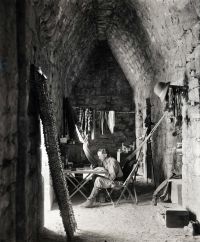 Alfred Percival Maudslay,
A note on the position and extent of the great temple enclosure of Tenochtitlan…
(1912)
Alfred Percival Maudslay,
A note on the position and extent of the great temple enclosure of Tenochtitlan…
(1912)
“ The Arzobispado, which still occupies the same site in the street of that name, must therefore have been originally built on the solid foundation formed by the base of the Teocalli of Tezcatlipoca.The Palace of Axayacatl. (Tracing A2.) (‘Descripción de las dos Piedras, etc.,’ 1790, by Don Antonio de Leon y Gama. Bustamante, Edition ii. p. 35.) ”
Susan Hale,
The Story of Mexico
(1889)
“ He was of a different stock, the sons of Axayacatl all being destroyed, of the family of the friendly kings of the little neighboring state of Tlaltelolco. He embraced with enthusiasm the cause of his country, and attacked vigorously the work of restoration. ”
Hubert Howe Bancroft,
The Native Races [of the Pacific states…
“ The ambassadors were to include the Totonac territory in their demands, but were seized and murdered in Cuetlachtlan, their dead bodies being subjected to great indignities, at the instigation of the Tlascaltecs. The army immediately dispatched from the lake cities was one of the strongest which had yet fought for the glory of the Aztec alliance, and numbered among its leaders three Mexican princes, Ahuitzotl, Axayacatl, and Tizoc, who afterwards occupied the throne, and Moquihuix the ruler of Tlatelulco. ”
Brantz Mayer, Mexico, Aztec, Spanish and Republican (1852)
“ But this time the invaders advanced more cautiously into the heart of the city, where they fired and destroyed their ancient quarters in the old palace of Axayacatl and the edifices adjoining the royal palace on the other side of the square. These incursions into the capital were frequently repeated by Cortéz, nor were the Mexicans idle in their systematic plans to defeat the Spaniards. All communication with the country, by the causeways was permanently interrupted ”
Hubert Howe Bancroft,
The Native Races [of the Pacific states…
“ The sacrifice of captives from distant and strange lands, together with the rich spoils brought back from the south-sea provinces, imparted unusual éclat to the coronation ceremonies; the successful warrior was congratulated by his colleagues at Tezcuco and Tlacopan; and the people felt assured that in Axayacatl they had a monarch worthy of his subjects' admiration. [VIII-34] [426] During the same year, perhaps, a battle was fought against Huexotzinco and Atlixco on the frontier, in which the three kings took part personally ”
Alfred Percival Maudslay,
A note on the position and extent of the great temple enclosure of Tenochtitlan…
(1912)
“ This would bring it sufficiently near to the Palace of Axayacatl for the Mexicans to have been able to discharge missiles into the quarters of the Spaniards. It would also occupy the site of the Solar de Alonzo de Avila, and might be considered to face the Solar of Cristóbal Flores and his neighbours, and we should naturally expect to find it in line with the Calle de Tacuba. Sahagun’s plan is not marked with the points of the compass, but if we should give it the same orientation as Tracing A2, the Great Teocalli falls fairly into its place. ”
V. V. Vide, Sketches of Aboriginal Life
“ Are not the millions of Anahuac a match for a few hundred of their enemies, in whatever form they come? Be they gods, or be they demons, they belong not to this soil, nor this soil to them, and, by all our altars and all our gods, they must retire or perish, though we, and our wives, and our children perish with them.”“Give us your hand, brave Axayatl,” exclaimed Cuitlahua and Guatimozin, at the same instant, “be that our vow in life and in death, and wo to the base Aztec, that abandons the standard of Montezuma, or whispers of submission to the haughty stranger.” ”
Frederick Albion Ober,
Young Folks' History of Mexico
(1895)
“ The others, led by the old chief, Xicotencatl, whose son was commander of the armies, counselled opposition to them from the very beginning. Maxacatzin had suggested that these were probably the messengers sent from the god of the air, but the wise and sagacious Xicotencatl repelled this insinuation with scorn. "Those men," he said, "who demand entrance into our city appear to be rather monsters cast up by the sea, because it could not endure them in its waters, than gods descended from heaven, as some have vainly imagined. ”
Albert Réville, The Native Religions of Mexico and Peru (1884)
“ A special aversion to human sacrifice, and especially to the frightful abuse of the practice amongst the Aztecs, was attributed to this god and his priests, in passive protest, as it were, against the sanguinary rites to which the Aztecs attributed the prosperity of their empire. The legend of Quetzalcoatl, as the Aztecs transmitted it to the Spaniards, is a motley concatenation of euhemerized myths. Its historical basis is the continuous retreat of the Toltecs before the northern invaders, with their god Tezcatlipoca. ”
Guillermo Marín Ruiz,
Translation:True History of the Profound Mexico
(2010)
“ The gods talked again and concluded that all of them should be sacrificed, jumping into the fire, to give life and movement to the Fifth Sun. The only that did not want to jump was Xólotl, but was chased by Quetzalcoatl and even tried to evade his destiny by turning into corn, maguey and Axolotl. The sacrifice of gods resulted in the creation and the life of the Fifth Sun. The divinities had to be sacrificed so that humans could live. Hence the name given to the macehualli people or macehual, which means in Nahuatl "Deserving of the Gods sacrifice". ”
 Lewis Spence,
The Mythologies of Ancient Mexico and Peru
Lewis Spence,
The Mythologies of Ancient Mexico and Peru
“ I have previously alluded to the myth of Quetzalcoatl. Quetzalcoatl was a Mexican deity, but in reality he was one of the older pre-Aztecan gods of Anahuac. He is sometimes represented as a being of white complexion and fair-bearded, with blue eyes, and altogether of European appearance. It will be remembered that on the [74] entrance into Anahuac of Tezcatlipoca he waged a war with that god in which he was worsted, and eventually forced to depart for 'Tlapallan' in a canoe, promising to return at some future date. ”
Thomas A. Joyce, Mexican archaeology
“ The names of the ancestors of the Xahila division of the Kakchiquel are given as Gagavitz and Zactecauh, and after the creation they brought tribute to Tulan together with the Zotzil, the other division, consisting of jade, silver, feather-work and carvings. All that they brought away with them were their arms, bows and shields, and throughout the early portion of the annals insistence is continually being made on the fact that the Kakchiquel were warriors of the hills. “Let your rounded shields be your riches, your bows, your bucklers ... there in the hills shall you lift up your faces.” ”
 Andrew Lang,
Myth, Ritual And Religion, Vol…
Andrew Lang,
Myth, Ritual And Religion, Vol…
“ As a matter of fact, the Aztec gods, though bedizened with the attributes of mortal conjurors, and with the fur and feathers of totems, are, for the most part, the departmental deities of polytheism, each ruling over some province of nature or of human activity. Combined with these are deities who, in their origin, were probably ideal culture-heroes, like Yehl, or Qat, or Prometheus. The long and tedious myths of Quetzalcoatl and Tezcatlipoca appear to contain memories of a struggle between the gods or culture-heroes of rival races. ”
Lewis Spence,
The gods of Mexico
(1923)
“ For even if the tonalamatl were introduced from the Zapotec or Mixtec country or the Maya region, as is generally supposed, it required skilful arrangement to make it subserve the purposes of Aztec religion. The priesthood and cultus of Quetzalcoatl were widespread throughout Central America and Mexico, and its ministers appear to have adapted themselves with skill and patience to the conditions of the various regions to which they penetrated, the result of their labours never being quite the same in any two regions. ”
Frederick Albion Ober,
Young Folks' History of Mexico
(1895)
“ The fifth King of Mexico, successor to Montezuma, was Axajacatl, a valiant general of the army. Having received news of his election he marched into the south upon the terrible mission of securing prisoners to grace by their sacrifice his coronation. In this expedition his troops penetrated as far south as Tehuantepec, many miles from the capital. Tehuantepec is the narrowest portion of Mexican territory, only about a hundred miles here intervening between the waters of the Gulf of Mexico and those of the Pacific. ”
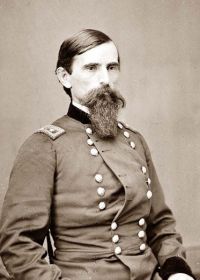 Lew Wallace,
The Fair God; or, The Last of the 'Tzins…
Lew Wallace,
The Fair God; or, The Last of the 'Tzins…
“ Silently they marched, in silence the populace received them. The spectacle reminded very old men of the day the great Axaya’ was borne in mournful pomp to Chapultepec. Once only there was a cheer, or, rather, a war-cry from the warriors looking down from the terraces of a temple. So the cortege passed from the city; so, through a continuous lane of men, they moved along the causeway; so they reached the gates of Xoloc, at which the two dikes, one from Iztapalapan, the other from Cojohuaca, intersected each other. There they halted, waiting for Cortes. ”
Robert Montgomery Bird, The Infidel; or, the Fall of Mexico…
“ The preparations for the assault, and long before it began, were surveyed by the Captain-General from the terrace of the palace of Axajacatl, the famous scene of his sufferings, when besieged therein by the Mexicans, a year before. It was in the quarter of Tlatelolco, midway between the great pyramid and the market-place, and commanded, from its turrets, not only a view of the palace of Guatimozin, but of the whole surrounding city and lake. ”
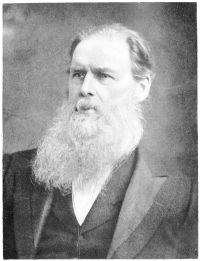 Edward B. Tylor,
Anahuac : or, Mexico and the Mexicans…
Edward B. Tylor,
Anahuac : or, Mexico and the Mexicans…
“ The Aztec historians ascribe the building of the Pyramid of Cholula to the prophet Quetzalcoatl. The legends which relate to this celebrated personage are to be found in writers on Mexican history, and, more fully than elsewhere, in the Abbé Brasseur de Bourbourg’s work. I am inclined to consider Quetzalcoatl a real personage, and not a mythical one. He is said to have been a white, bearded man, to have come from the East, to have reigned in Tollan, and to have been driven out from thence by the votaries of human sacrifices, which he opposed. ”
 Daniel G. Brinton,
American Hero-Myths: A Study in the Native Religions of the Western Continent
Daniel G. Brinton,
American Hero-Myths: A Study in the Native Religions of the Western Continent
“ The culture hero of the Aztecs was Quetzalcoatl, and the leading drama, the central myth, in all the extensive and intricate theology of the Nahuatl speaking tribes was his long contest with Tezcatlipoca, "a contest," observes an eminent Mexican antiquary, "which came to be the main element in the Nahuatl religion and the cause of its modifications, and which materially influenced the destinies of that race from its earliest epochs to the time of its destruction." ”
Hartley Burr Alexander, The Mythology of All Races, Vol…
“ He was a penance-inflicting god, perhaps particularly a deity of priests and their lore; yet he was also associated with education and the rearing of the young. He is named as the patron of the arts, the teacher of metallurgy and of letters, and in tradition he is the god of the cultured people of yore from whom the Aztec derived their civilization. A part of the story, as narrated by Sahagun, has been told: how Quetzalcoatl was the aged and wise priest-king of Tollan, driven thence by the magic and guile of Tezcatlipoca and his companions. ”