Battle of Little Bighorn

Definition and stakes

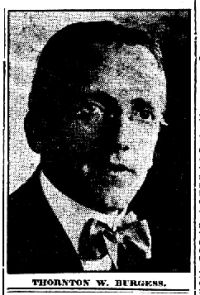
Portrait of Thornton W. Burgess Thornton W. Burgess The Burgess Animal Book for Children

Only when driven to the lower slopes and hills by storms and snow does Bighorn have cause to fear four-footed enemies. Then Puma the Panther must be watched for, and lower down Howler the Wolf. But Bighorn's greatest enemy, and one he fears most, is the same one so many others have sad cause to fear—the hunter with his terrible gun. The terrible gun can kill where man himself cannot climb, and Bighorn has been persistently hunted for his head and wonderful horns.
Source: Gutenberg

Inez Bigwood Lest We Forget: World War Stories

Moreover, at the Second Battle of the Marne, orders were issued to the German soldiers, who were being driven back with great loss, that seemed too inhuman even for the modern Huns. They were as follows: "Henceforth the enemy is not to be allowed to recover his dead and wounded except behind his own position, even under the Red Cross flag. If stretcher bearers go out, a warning shot is to be fired. If no attention is paid to the shot, the enemy must be thoroughly engaged at once."
Source: Gutenberg

Hugh M. Cole The Ardennes: Battle of the Bulge… (1965)

But try as they might the German paratroopers could not get past the American armored infantry and at the tanks-only one was knocked out by German bazooka fire. The result was slow to be seen but none the less certain. At noon, when the battle ended, the Americans had killed one hundred and thirty-five Germans and taken an equal number of prisoners. The little village cost them sixty-eight officers and men, dead and wounded.
Chaumont, on the 23d, and Warnach, on the 24th, are tabbed in the journals of the 4th Armored as "hot spots" on the march to Bastogne.
Source: Wikisource

Get perspective with Kwize: daily news enlightened by great literature