“ We live in an atmosphere of nationality; we have seen it create the German Empire and the kingdom of Italy, and the Welsh University; we see it now labouring to break up the Austrian Empire, and perhaps changing the unchanging East. But the whole history of Europe shows that it is an idea of slow and comparatively late growth. The first appearance of nationality as a conscious principle of political action is found in England—and possibly in France—at the beginning of the thirteenth century, and in Wales about the same time ”
A. G. Little
Biographical details
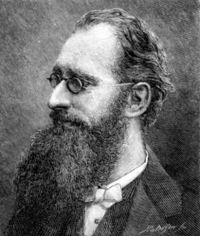
Andrew George Little (1863–1945), a British historian celebrated for his specialization in medieval Franciscan studies, devoted his career to investigating the Greyfriars’ impact in England. As a professor and scholar at institutions such as the University of Manchester and Oxford, he wrote foundational works including The Grey Friars in Oxford and Mediæval Wales, analyzing topics such as religious renewal, national identity, and the relationship between church and state.
His research highlighted the development of medieval organizations and the significance of Wales in forming early European nationalism, leaving a legacy that connects ecclesiastical history with wider socio-political themes.
Quotes by A. G. Little
A. G. Little, The Grey Friars in Oxford
“ The school which he built at Oxford has already been noticed:‘but afterwards,’ adds Bartholomew of Pisa [191] , ‘he had reason for regret, when he saw the friars bestowing their time on frivolities and neglecting needful things; for one day when he wished to see what proficiency they were making, he entered the schools whilst a disputation was going on, and hearing them wrangling and questioning, Utrum sit Deus, he cried: “Woe is me, woe is me! Simple brothers enter Heaven, and learned brothers dispute whether there is a God at all!” ”
“ In English history we study primarily the growth of the principle of Representative Government, which we can trace for centuries through a long series of authoritative records. That is the great gift of England to the world. Not only has Wales entered on this inheritance; it helped to create it. It was Llywelyn ap Iorwerth who began the revolt against John which led to the Great Charter, and the clauses of the Great Charter itself show that it was the joint work of English and Welsh. ”
“ So the psalmist says: ‘The bloodthirsty and deceitful men shall not live out half their days,’ because they do no work to keep their bodies healthy. Nothing is so healthful for body and soul as honest work. Work is the life of man, the guardian of health; work drives away sin, and makes people sleep well at night. Work is the strength of feebleness, the health of sickness, the salvation of men,—quickener of the senses, foe of sloth, nurse of happiness, a duty in the young and in the old a merit. ”
A. G. Little, The Grey Friars in Oxford
“ With all their poverty and holiness they were singularly free from that form of piety which consists in wearing a sad countenance and appearing unto men to fast. We hear indeed of strict silence, of constant prayer, of vigils that lasted the whole night [34] .‘Yet,’ continues Eccleston [35] , ‘the brethren were so full of fun among themselves, that a mute could hardly refrain from laughter at the sight. So when the young friars of Oxford laughed too frequently, it was enjoined on one that as often as he laughed he should be punished. ”
“ The monasteries were the hotels of the Middle Ages, except that they made no charges, and Margam was celebrated for its hospitality for centuries. Gerald, the enemy of monks, says: “This noble abbey was more celebrated for its charitable deeds than any other of that order in Wales. And as a reward for that abundant charity which the monastery had always, in times of need, exercised towards strangers and the poor, in a season of approaching famine their corn and provisions were divinely increased, like the widow’s cruse of oil.” ”
A. G. Little, The Grey Friars in Oxford
“ Yet her daughter, the University of Paris, alone has tried to comfort her: Paris has borne the burden and heat of the day, and may well upbraid us. We too must work for the union of the Church and the reformation of peace. ”
“ But if Llywelyn lacked the hard head of the practical statesman, if he did not, like his grandfather, merit the title of “the Great,” he will always remain an attractive and striking figure in history; he possessed qualities which made him an ideal representative of the Cymric race in the Middle Ages:— “A bold and bounteous lion—the most reckless of givers, Man whose anger was destructive; most courteous prince; A man sincere in grief, true in loving, Perfect in knowledge.” ”
A. G. Little, The Grey Friars in Oxford
“ Wiclif may have classed with the friars the ‘pardoners’ who did not belong to any of the four Orders [544] . The records relating to the Franciscan house at Oxford throw no light on the matter, which indeed belongs to the general history of the Mendicants, not to the history of a particular convent. Wiclif’s charges amount practically to this: the friars were the foremost champions of the external, unspiritual form of religion, which he laboured to destroy: they were no longer leaders of thought, but obstacles to progress. ”
“ If landed property is divided, political power is divided. When the Lord Rhys died in 1197 leaving four sons, Deheubarth had four rulers and formed four states instead of one; and civil war ensued.The unity of Welsh history is not to be found in the growth of a state or a political system. But may we regard the history of Wales as a long and heroic struggle inspired by the idea of nationality? A caution is necessary here. It is one of the besetting sins of historians to read the ideas of the present into the past; and to the general public historical study is dull unless they can do so. ”
A. G. Little, The Grey Friars in Oxford
“ He left Oxford on Wednesday, the very day on which the statute was passed, while Thomas of York celebrated his ‘vesperies’ on Thursday and his inception on Friday, under the presidency of Friar Peter de Manners. In view of the bitterness which marked both the contemporary struggle between the University and Mendicants at Paris, and the disputes between the University and Dominicans at Oxford sixty years later, it is impossible not to be struck with the good feeling and moderation displayed both by Adam and his opponents. ”
“ But the strongest argument against the existence of the Britannic book is (not that it is not extant now, but) that the historians of the next generation never saw it. Geoffrey’s History at once created a tremendous stir in the literary world—nor was it accepted on trust—but received [Pg 42] with suspicion and incredulity. Thus William of Newburgh, in the latter part of the twelfth century, calls Geoffrey roundly, “a saucy and shameless liar.” William, of course, did not know Welsh, and could not have made anything out of the Britannic book, even if he had seen it. ”
A. G. Little, The Grey Friars in Oxford
“ Enthusiasm and self-sacrifice were the powerful agents which ensured success and favour to the early Franciscans, and many are the stories of their primitive poverty and its effects; and if the convent at Oxford was not especially distinguished like that at Cambridge by ‘paucilitas pecuniae,’ or like that at York by ‘zelus paupertatis [11] ,’ the Oxford Minorites, during the time of Agnellus at least, departed but little from the ideal of their founder [12] , and lived the life of the poor among whom they ministered. The pangs of hunger were not unknown in the convent ”
“ One of the favourite ways of spending a holiday in the Middle Ages was to go and hear a friar preach. Here is a summary of a friar’s sermon constructed after the method of Friar John of Wales, on the relative merits of the Ass and the Pig.“The pig and the ass live not the same life: for the pig during his life does no good, but eats and swills and sleeps; but when he is dead, then do men make much of him. The ass is hard at work all his days and does good service to many; but when he dies, there is no profit. ”
A. G. Little, The Grey Friars in Oxford
“ Nicholas Hereford, preaching at Oxford in 1382 [366] , asserted that those of the Mendicants who had graduated as masters or bachelors, in addition to the ample allowance which they got from their community, begged for themselves, saying, ‘I am a bachelor (or master) and require more than others, because I ought to be able to live up to my position.’ (Quia oportet me habere ad expendendum secundum statum meum.) It is impossible to say what proportion of the Franciscans at Oxford proceeded to a degree. ”
“ The mountains have done much to preserve the independence and the language of Wales, but they have kept her people disunited; and the Welsh needed a long drilling under institutions, which could only grow up in a land less divided by nature, before they could develope their political genius.Wales, owing largely to its geography, had the misfortune never to be conquered at one fell swoop by an alien race of conquerors. ”
A. G. Little, The Grey Friars in Oxford
“ There is no reason to suppose that the friars had a chamber specially set apart as a scriptorium; they were comparatively free from the legal routine or ‘office-work’ which the administration of their vast estates imposed on the monks and their clerks. But the transcription of manuscripts was part of the regular work of the Oxford Franciscans; and it is indeed the only kind of manual labour expressly mentioned in connexion with the convent. ”
“ It was the fashion to keep open house for all comers. “Those who arrive in the morning are entertained till evening with the conversation of young women and the music of the harp; for each house has its [Pg 72] young women and harps allotted for the purpose. In each family the art of playing on the harp is held preferable to any other learning; and no nation is so free from jealousy as the Welsh.” ”
A. G. Little, The Grey Friars in Oxford
“ Ockham probably studied at Oxford in his younger days, but it was no doubt later in life, and under the influence of Marsilius of Padua, that he developed the doctrines which made him ‘at once the glory and the reproach of his Order [519] .’ In philosophy he had many followers at Oxford in the fourteenth century, and the Franciscan Convent was, like the rest of the University, divided on the questions of Nominalism and Realism [520] . The dispute concerning the poverty of Christ was not allowed to rest. ”
“ It is remarkable that the Dominicans had more houses in Wales than the Franciscans; though the Franciscans—the mystic apostles of love—were more in sympathy with the Celtic spirit than the Dominicans, the stern champions of orthodoxy. ”
A. G. Little, The Grey Friars in Oxford
“ In 1482 Friar Isaac Cusack, D.D., began to create disturbances in Ireland by preaching the old Franciscan doctrine of evangelical poverty; he was captured, sent to Oxford, and degraded and expelled the University as a vagabond and a heretic [561] .The feeling of nationality fostered by the long French wars was not without its influence on the friars in England and especially at the Universities. In 1369 the Chancellor caused a royal proclamation to be published at Carfax ordering all French students at Oxford, both religious and secular, to leave the kingdom [562] . ”
“ An Eisteddfod where every one obtained prizes, and every one was satisfied, suggests the enthusiasm natural to a new revival. It was now—when Wales was brought in contact with the great world through the Normans—that modern Welsh poetry had its beginning. The new intellectual impetus is clearly illustrated by the change which takes place in the Welsh chronicles about 1100. Before that time they are generally thin and dreary: they suddenly become full, lively, and romantic. Wales was not exceptional in this renaissance ”
A. G. Little, The Grey Friars in Oxford
“ Augustine in Oxford are imposing the mark of excommunication on the Friars Minors of Oxford, and defaming them in many ways, for receiving one of their friars in the aforesaid canonical form. We therefore order you to go in person to the Austin friary and warn them, in our name and by our authority, to cease from these detractions. But if they assert that they have raised this tumult against the Minorites on the ground of some privilege of theirs, you shall ask them to let me have a copy of their privilege to compare with those of the Minorites which we have to maintain ”
“ Now let us consider Geoffrey as a gatherer and transmitter of the genuine oral traditions of the Welsh and Breton people. Genuine traditions are true history in the sense that they preserve manners and customs and modes of thought prevalent at the time when they became current. Thus they are on quite a different level from Geoffrey’s inventions, though they cannot be taken as containing the history of any of the individuals to whom they profess to relate. ”
A. G. Little, The Grey Friars in Oxford
“ The Minorites, while generally hostile to the new religion [754] , did not take a leading part in suppressing it. And when it is remembered how very little progress the Lutheran doctrines made in England before the Dissolution, the few instances of sympathy with those doctrines recorded in the lives of Oxford Franciscans acquire a certain importance [755] . These, however, were exceptional cases. If we trace the fortunes of individual Franciscans after the Dissolution, it will be found that no generalization as to their attitude towards the Reformation can be made. ”
A. G. Little, The Grey Friars in Oxford
“ Adam of Oxford was a master before he entered the Order [1223] . The account of his conversion given by Eccleston [1224] is as follows:Master Adam of Oxford, of worldwide fame [1225] , had made a vow that he would do anything he was asked to do ‘for the love of the blessed Mary;’ and he told this to a certain recluse, who was a friend of his. She revealed his secret to her friends, that is, to a monk of Reading, another of the Cistercian Order, and a Friar Preacher; telling them that they could gain such a man in such a way; not wishing that Adam should become a Friar Minor. ”
“ This illustration suggests one of the reasons why Cunedda’s conquest failed to unite Wales.Again the custom of sharing landed property among all the sons tended to prevent the growth of Welsh unity. Socially it appears far more just and [Pg 8] reasonable than the custom of primogeniture. It is with the growth of feudalism (already apparent in the Welsh laws of the tenth century) that its political dangers become evident. The essence of feudalism is the confusion of political power and landed property; the ruler is lord of the land, the landlord is the ruler. ”
A. G. Little, The Grey Friars in Oxford
“ The Oxford Franciscans, as we have already seen, were among the staunchest supporters of Simon de Montfort; the Oxford Dominicans seem to have sided with the King. The famous Mad Parliament, which Henry III summoned to Oxford in 1258, met in the convent of the Black Friars, and Prince Edward and his retainers stayed there before the battle of Lewes [497] .The same rivalry made itself felt in the sphere of philosophy, and [Pg 73] the Franciscans dealt a heavy blow at their more orthodox adversaries by impugning successfully an important doctrine of Thomas Aquinas [498] . ”
“ But though there is some evidence of an organised plan for the conquest of Wales in the time of William Rufus, it is useless to look for any great and general system of offence or defence, because most of the castles were not built by a centralised government with any such object in view, but by individuals to guard their own territories and protect their independence against either their neighbours or the English king. The great age of [Pg 80] castle-building was between 1100 and 1300. Castles play a very small part in the fighting in Wales till the end of the eleventh century. ”
A. G. Little, The Grey Friars in Oxford
“ Familiarities of great persons and of women he most studiously avoided, and, with wonderful magnanimity, thought nothing of incurring the anger of the powerful for the sake of justice. He used to say that great persons entrap those familiar with them by their advice, and women with their mendacity and malice turn the heads even of the devout by their flatteries. ”
“ In his “Description of Wales” Gerald describes the manner of life and characteristics of the people. All are trained to arms, and when the trumpet sounds the alarm, the husbandman rushes as eagerly from his plough as the courtier from his court. Agricultural work takes up little of their time, as they are still mainly in a pastoral stage, living on the produce of their herds, and eating more meat than bread. They fight and undergo hardships and willingly sacrifice their lives for their country and for liberty. They wear little defensive armour, and depend mainly on their mobility ”
A. G. Little, The Grey Friars in Oxford
“ During the long reign of Henry III, the Patent, Close, and Liberate Rolls contain only three grants of money to the house of the Minorites at Oxford, and all of them are due to exceptional circumstances. They are, ten marks for the support of a provincial chapter in 1238, 60s. for their houses in 1245 in lieu of six oaks which the king had before given them, and three marks for the fabric of their church in 1246 [25] . The alms to the house at Oxford are almost wholly in kind, and consist chiefly of supplies of firewood from the royal forests round Oxford. ”
“ They nearly came to grief in quicksands at the mouth of the river Neath. “Terrible hard country this,” said one of the monks next day in the castle at Swansea. “Some people are never satisfied,” retorted his companion; “you were complaining of its being too soft in the quicksand yesterday.” The mountains were trying to men no longer in their youth; after toiling up one the archbishop sank exhausted on a fallen tree and said to his panting companions, “Can any one enliven the company by whistling a tune?” “Which,” adds Gerald, “is not very easily done by people out of breath.” ”
A. G. Little, The Grey Friars in Oxford
“ Friar Nicholas de Burgo seems to have been one of that band of Humanists whom Wolsey attracted to Oxford, that they might propagate in his own University the learning and culture of Italy [752] .The close historical relation, notwithstanding the fundamental differences, between the intellectual movement and the religious movement, was neatly expressed in a saying current among the friars: ‘Erasmus laid the egg; Luther hatched it [753] .’ The beginnings of the English Reformation in its religious aspect are to be sought among the educated classes, especially at Cambridge. ”
“ Among the Norman magnates who encouraged the intellectual movement in Wales—one stands out pre-eminent—Robert Earl of Gloucester and Lord of Glamorgan, a splendid combination of statesman, soldier, patron of letters. Robert was a natural son of Henry I.—born before 1100—there is no evidence that his mother was the beautiful and famous Nest, daughter of Rhys ap Tudor. He acquired the Lordship of Glamorgan together with the Honour of Gloucester and other lands in England and Normandy, by marriage with Mabel, daughter and heiress of Fitzhamon, conqueror of Glamorgan. ”
A. G. Little, The Grey Friars in Oxford
“ A great historian has said of the Middle Ages, that ‘at no time in the world’s history has theory, pretending all the while to control practice, been so utterly divorced from it [523] .’ An extract from the Patent Rolls [524] will afford a striking illustration of the truth of these words as far as the learned Franciscans, the professors of evangelical poverty, are concerned. ”
“ He devoted his energies to training up lecturers who should go to the Franciscan friaries in the chief towns in England and Wales and teach friars and clergy the art of popular preaching. Friar John of Wales was one of the chief inspirers of the “University Extension” movement of the Middle Ages. These popular preachers or lecturers did not do much for the advancement of sound learning, because they did not study any [Pg 122] science for its own sake, but only for the moral lessons they could find in it. ”
A. G. Little, The Grey Friars in Oxford
“ It was inevitable that a spirit of rivalry should exist between the two great Mendicant Orders; and the rivalry soon developed into antagonism. In the thirteenth century one lecturer to the Friars Minors at Oxford was removed from the convent, another was suspended from lecturing, for causing offence to the Friars Preachers and at their request [489] . An ‘enormous scandal of discord,’ in Matthew Paris’ words [490] , arose in the year 1243, each of the two Orders claiming precedence of the other. ”
“ The Welsh princes felt the need of [Pg 109] providing for the safety of their souls just as the Norman barons did, and the souls of both parties needed a great deal of saving. Further, the Welsh were not cut off from the great movements of the world; they felt like every other country in Europe the waves of religious enthusiasm, which resulted in the twelfth century in the spread of the Cistercians, in the thirteenth century in the spread of the friars. In the twelfth century the acts most pleasing to God were generally thought to be taking the Cross and endowing a Cistercian monastery. ”
A. G. Little, The Grey Friars in Oxford
“ We turn now to the Minorites who had studied at Oxford, but who were living in other convents at the time of the dissolution. Of these a considerable number obtained benefices [800] , a few even rising to positions of some importance in the Church [801] . But what proportion these successful cases bore to the unsuccessful cannot be even approximately ascertained; it would naturally be higher among friars who had received a university education than among the common herd. Yet it is unlikely that a majority even of the former were presented to livings. ”
“ The history of Wales in the Middle Ages, viewed from the political standpoint, is a failure; its interest is negative; and in this introductory lecture I intend to discuss “the failure of the nation” (to use the words of Professor Rhys and Mr. Brynmor Jones) “to effect any stable and lasting political combination.” Wales failed to produce or develope political institutions of an enduring character—failed to become a [Pg 4] state. ”
A. G. Little, The Grey Friars in Oxford
“ Grostete urges the Friars not to grieve for his loss:‘for the light of his knowledge is so bright that it ought to be concentrated most there where it may dissipate the thickest darkness of infidelity.’ ‘Have no fear,’ the writer continues, ‘that he will be cut off from the “Sacred Page;” he has humility, and no “haeretica pravitas” will slip in.’He died at Barlete, and miracles are said to have been wrought by his relics or his memory [1230] .William of York, ‘a solemn bachelor,’ was probably an Oxford man, as he entered the Order on the same day as Adam of Oxford [1231] . ”
“ While the whole Cistercian Order formed an united body for purposes of monastic life and discipline, each abbey identified itself in a very remarkable way with the local or national aspirations of the people round, from whom its monks were drawn. Some of the Cistercian monasteries in Ireland refused to admit any Englishman. Some of the Cistercian abbeys in Wales were the warmest supporters of Welsh independence. ”
“ After Edward returned to England, “the nobles of Wales came to Llywelyn, having been robbed of their liberties and made captives, and declared they would rather be killed in war for their liberty than suffer themselves to be trampled on by strangers. And Llywelyn was moved at their tears, and invaded the Middle Country and subdued it all before the end of the week.” In this work Llywelyn was assisted by descendants of Rhys, the princes of South Wales, who in Cardigan suffered from Prince Edward’s policy in the same way as the men of the Middle Country or Four Cantreds. ”
“ Finally, as a scientific observer of politics, he discusses how Wales may be conquered [Pg 74] and governed, and how the Welsh may resist.A prince who would subdue this people must give his whole energies to the task for at least a whole year. He must divide their strength, and by bribes and promises endeavour to stir up one against the other, knowing the spirit of hatred and envy which generally prevails among them. He must cut off supplies, build castles, and use light-armed troops and plenty of them; for though many English mercenaries perish in a battle, money will procure as many more ”
“ In mediæval Wales it never succeeded in uniting the people; the petty patriotism of the family stood in the way of the larger patriotism of the nation; local rivalries and jealousies were always stronger than the sense of national unity. The attempt of Llywelyn ap Iorwerth to create a National Council, like the Great Council of England, died with him. In the final struggle with Edward I., when for a few months the idea of Welsh unity was nearest realisation in action, the men of Glamorgan fought on the winning side. ”