 Ralph Waldo Emerson,
The Conduct of Life — Fate
(1860)
“ The book of Nature is the book of Fate. She turns the gigantic pages, — leaf after leaf, — never returning one. ”
Ralph Waldo Emerson,
The Conduct of Life — Fate
(1860)
“ The book of Nature is the book of Fate. She turns the gigantic pages, — leaf after leaf, — never returning one. ”
 Letitia Elizabeth Landon,
Landon in Fisher's Drawing Room Scrap Book 1833
(1832)
“ Prophetic of our life, The chronicles where Fate inscribes Our sorrow, sin, and strife; All that we struggle with in vain, All that we seek to shun, The weird of that stern destiny, Whose will must aye be done. ”
 Virgil,
Aeneid — Book VI
(1697)
“ And visit, without leave, the dark abodes? Attend the term of long revolving years; Fate, and the dooming gods, are deaf to tears. This comfort of thy dire misfortune take: The wrath of Heav'n, inflicted for thy sake, With vengeance shall pursue th' inhuman coast, Till they propitiate thy offended ghost, And raise a tomb, with vows and solemn pray'r ”
Petronius Arbiter, The Satyricon — Volume 06: Editor's Notes
“ When Fate turns the leaves of the book of universal history, she enters, upon the page devoted thereto, the record of the birth of each nation in its chronological order, and under this record appears the scarlet entry to confront the future historian and arrest his unwilling attention; the only entry which time and even oblivion can never efface. ”
Eliza Buckminster Lee, Delusion; or, The Witch of New England
“ Who has not felt presentiments that certain persons and certain places are, in some mysterious way, we know not how, connected by invisible links with our own destiny? The ancients gave to this hidden and mysterious power the name of Fate. The tragedy of life arises from the powerless efforts of mortals to contend with its decrees. ”
Carveth Read, The Origin of Man and of His Superstitions
“ But the roots of the idea of Fate are much older and wider spread in the slow, steady growth of the belief in uniformity, which is the common ground of Magic and Science; and (as I have said) before laws of nature had been discovered, Fate was an all-comprehensive Magic. Fate reduces the gods to the status of wheels in a machine; omens and oracles, instead of being sent or inspired by the gods, are also part of the machinery, and may point to their destruction; prayers and sacrifices are other parts of the machinery and, at most, may be a means of assuaging the anxiety of one’s own heart. ”
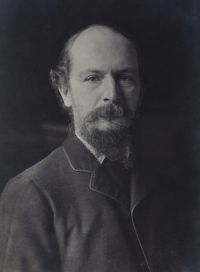 Algernon Charles Swinburne,
Tristram of Lyonesse and Other Poems
(1882)
“ Till birth and death be one in sight of life; Fate, heard and seen of no man's eyes or ears, To no man shown through light of smiles or tears, And moved of no man's prayer to fold its wings; Fate, that is night and light on worldly things; Fate, that is fire to burn and sea to drown, Strength to build up and thunder to cast down; Fate, shield and screen for each man's lifelong head, And sword at last or dart that strikes it dead; Fate, higher than heaven and deeper than the grave, That saves and spares not, spares and doth not save ”
Leigh Gordon Giltner, The Path of Dreams
“ Fate may make wreck of a future—how can she alter the past? I have tasted the sweets of life's chalice—why shrink from the lees at the last? How should I cavil at aught that shall come—I stand with your head on my breast— I have fought as I might—I have gained you, beloved ... to God's mercy the rest! Tho' the heavens darken above me and the sky be shrunk as a scroll, In the wreck and ruin of riven worlds, should I falter, O Soul of my soul? Tho' the demon Despair, where he vanquished lies, still utter his shibboleth— I fling my glove in the face of Fate and smile in the eyes of Death! ”
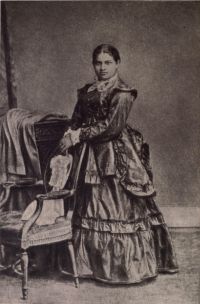 Toru Dutt,
Ancient Ballads and Legends of Hindustan
(1882)
“ If Fate so rules, that I should feel The miseries of a widow's life, Can man's device the doom repeal? Unequal seems to be a strife, Between Humanity and Fate; None have on earth what they desire; Death comes to all or soon or late ”
Baron Edward Bulwer Lytton Lytton, Eugene Aram — Complete
“ He could not but be sensible, too, that as he had proceeded on his high enterprise, his character had acquired a weight and a thoughtful seriousness, which was more fitted to the nature of that enterprise than akin to his earlier temper. This consciousness swelled his bosom with a profound and steady hope. When Fate selects her human agents, her dark and mysterious spirit is at work within them; she moulds their hearts, she exalts their energies, she shapes them to the part she has allotted them, and renders the mortal instrument worthy of the solemn end. ”
Ralph Waldo Emerson,
The Conduct of Life — Fate
(1860)
“ So soft and so stanch is the ring of Fate. Neither brandy, nor nectar, nor sulphuric ether, nor hell-fire, nor ichor, nor poetry, nor genius, can get rid of this limp band. For if we give it the high sense in which the poets use it, even thought itself is not above Fate: that too must act according to eternal laws, and all that is wilful and fantastic in it is in opposition to its fundamental essence. ”
 Joseph Conrad,
The Inheritors
(1920 (first published 1901))
“ It had been in her manner all along, she was like Fate; like the abominable Fate that desolates the whole length of our lives; that leaves of our hopes, of our plans, nothing but a hideous jumble of fragments like those of statues, smashed by hammers; the senseless, inscrutable, joyless Fate that we hate, and that debases us forever and ever. ”
 Jean Paul,
Titan: A Romance. v. 1 (of 2)
“ But, as they touched the first flowers of earth, and flung only rays of light, and cast no shadows, then the earnest Queen of gods and men, Fate, raised her eternal sceptre, and said: "The immortal becomes mortal upon the earth, and every spirit becomes a human being!" ”
Richard King, Over the Fireside with Silent Friends
“ It haunts you throughout your life. Like a flaming sign of interrogation it burns upon the Altar of Faith Unquestioning, before which, in your perplexity, Fate forces you—at least once in your life—to bow the head. ”
Sixty Folk-Tales from Exclusively Slavonic Sources
“ After supper they lay down to sleep. About midnight a terrible noise began, and out of the noise was heard a voice: ‘Fate! Fate! so many souls have been born to-day; assign them what you will.’ Then Fate arose, and opened the money-chest; but there were not ducats in it, but silver coins, with an occasional ducat. Fate began to scatter the coins behind him, saying: ‘As to me to-day, so to them for life.’ When, on the morrow, day dawned, that house was no more, but instead of it there stood a smaller one. ”
 Anatole France,
The Revolt of the Angels
“ Torn with dire wounds, scorched by flame and by ice, let us render thanks to Fate which has sedulously opened our eyes, and let us rejoice at our lot. It is through pain that, suffering a first experience of Nature, we have been roused to know her and to subdue her. When she obeys us we shall be as gods. ”
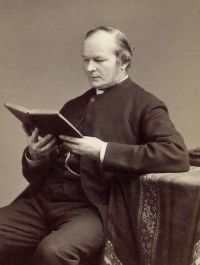 F. W. Farrar,
Darkness and Dawn; Or, Scenes in the Days of Nero…
“ He alluded with many tears to the brethren who had perished in the burning streets, or lay buried under the ruins of fallen houses, and he bade them not to sorrow as men without hope, since the dead who die in the Lord were blessed. How far more awful was the fate of those worshippers of false gods, who had lived in defiant wickedness, and who, instead of passing from life to life, had passed from death unto death, and a fiery looking for of judgment! ”
Ashley Horace Thorndike, Tragedy
“ In the medieval drama, death [Pg 132] had been a translation to final reward or punishment,—the portals of heaven and hell were open on the stage. In the Renaissance conception of tragedy death was the point and pith of tragic fact. Faith, forgiveness, reliance on Providence, assurance of immortality are rarely alluded to. Chance, mysterious fate, the emissaries of the devil, the powers of evil in the mind of man are the forces to which tragedy must attend; and they lead to a death terrible and pitiful, to be met bravely and defiantly, it may be, but not peacefully and hopefully. ”
The World's Great Sermons, Volume 03…
“ Celestial glory beamed around her; she dashed down the monumental marble of her foes, and they who hated her fled before her. She has celebrated the funeral of kings and kingdoms that plotted her destruction; and, with the inscriptions of their pride, has transmitted to posterity the record of their shame. How shall this phenomenon be explained? We are, at the present moment, witnesses of the fact; but who can unfold the mystery? This blest book, the book of truth and life, has made our wonder to cease. The Lord her God in the midst of her is mighty. ”
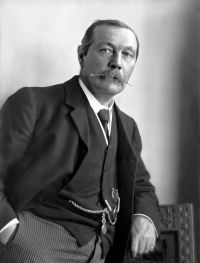 Arthur Conan Doyle,
The Man from Archangel, and Other Tales of Adventure
“ Many a drama which I have come across in my wandering life, some as strange and as striking as this one, has lacked the ultimate explanation which you demand. Fate is a grand weaver of tales; but she ends them, as a rule, in defiance of all artistic laws, and with an unbecoming want of regard for literary propriety. ”
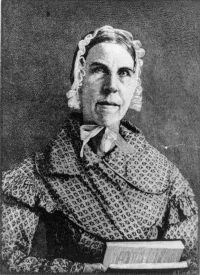 Sarah Moore Grimké,
An epistle to the clergy of the southern states
(1836)
“ At that awful day when the dead, small and great, stand before God, and the books are opened, and another, book is opened, which is the book of life, and the dead are judged out of those things which are written in the book according to their works—think you, my brethren, that the betrayer and the crucifiers of the Son of God will find their names inscribed in the book of life "because they fulfilled prophecy in killing the Prince of Peace? ”
 Gilbert Parker,
Embers, Volume 2
“ The hand that kills, Though you have wept to strike, and but have cried, "The mad Fate wills!" You could not, if you would, give what had been Peace, not distress; Some warping cords of destiny had held You in duress. Nay, not the Fates, look higher; is God blind? Doth He not well? Our eyes see but a little space behind, If it befell ”
 Thomas Aquinas,
Summa Theologiae — Question 116 - ON FATE…
“ Fate is worked out when Divine Providence is served by certain spirits; whether by the soul, or by all nature itself which obeys Him, whether by the heavenly movements of the stars, whether by the angelic power, or by the ingenuity of the demons, whether by some of these, or by all, the chain of fate is forged. ”
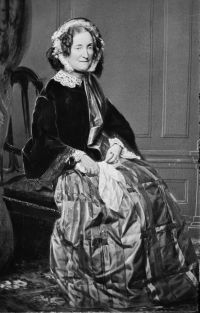 Lydia Sigourney,
Poems
(1834)
“ Beauty and innocence in Death's embrace, It seemed a mournful thing to waken them. Another prayer arose—and he, whose faith Had power o'er Nature's elements, to seal The dripping cloud, to wield the lightning's dart, And soon, from death escaping, was to soar On car of flame up to the throne of God, Long, long, with labouring breast, and lifted eyes, Solicited in anguish. On the dead Once more the prophet gazed. ”
Ralph Waldo Emerson,
The Conduct of Life — Fate
(1860)
“ Very odious, I confess, are the lessons of Fate. Who likes to have a dapper phrenologist pronouncing on his fortunes? Who likes to believe that he has hidden in his skull, spine, and pelvis, all the vices of a Saxon or Celtic race, which will be sure to pull him down, — with what grandeur of hope and resolve he is fired, — into a selfish, huckstering, servile, dodging animal? ”
 H. Rider Haggard,
Wisdom's Daughter: The Life and Love Story of She-Who-Must-be-Obeyed
“ Yet from my reckoning I left out the largest charge, that which Fate makes against those who play at dice with the Unknown. The gods may smile at courage and pass a venture by, but who can tell how blind Fate will avenge the forcing of his rule decreed and the rape of knowledge from his secret store? ”
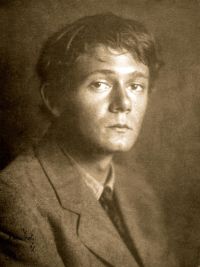 Clark Ashton Smith,
Retrospect and Forecast
(1912)
“ On Death, whose sateless mouth it fed in turn. Kingdoms abased, and Thrones that starward yearn, All are but ghouls that batten on the past. Monstrous and dread, must it forever abide This inescapable alternity? Must beauty blossom, rooted in decay, And night devour its flaming hues alway? Sickening, will Life not turn eventually, Or ravenous Death at last be satisfied? ”
 E. M. Forster,
The eternal moment and other stories
(1928)
“ We have sinned, we know it, and this place is death and Hell.""Death comes," the voice pealed, "and death is not a dream or a forgetting. Death is real. But I, too, am real, and whom I will I save. I see the scheme of things, and in it no place for me, the brain and the body against me. ”
Hanford Lennox Gordon, The Feast of the Virgins and Other Poems
“ And silent footsteps of the gladsome dawn. The morning breaks by sages long foretold; Truth comes to set upon the world her throne. Men lift their foreheads to the rising sun, And lo the reign of Reason is begun. Fantastic phantasms fly before the light— Pale, gibbering ghosts and ghouls and goblin fears: Man who hath walked in sleep—what thousands years? Groping among the shadows of the night, Moon-struck and in a weird somnambulism, Mumbling some cunning cant or catechism, Thrilled by the electric magic of the skies— Sun-touched by Truth—awakes and rubs his eyes. ”
 Alexander Maclaren,
Expositions of Holy Scripture: St…
“ The death of the mortal is the emancipation and the life of the immortal. Then, brethren, we may go with the words of my text, and look upon every green hillock below which any that are dear to us are lying, and say to ourselves, 'Not here—God be thanked, no—not here: living, and not dead; yonder, with the Master!' Oh, we think far too much of the grave, and far too little of the throne and the glory! We are far too much the creatures of sense ”
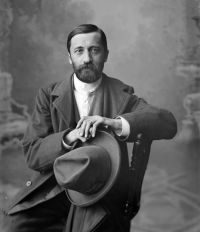 Dmitry Sergeyevich Merezhkovsky,
The Death of the Gods
“ Men say to the mountains, Fall on us and hide us from the throne of God and from the wrath of the Lamb, for the great day of His anger is come, and who can resist it?" 34 Over and over again came the prophecy: "Men shall seek death and shall not find it; they shall desire death and it shall flee from them." ”
Elwood Sylvester Berry, The Apocalypse of St. John (1921)
“ Those whose names are not written in the book of life are condemned, body and soul, to eternal torments which is the second death. Hence death and hell (the wicked) are cast into the pool of fire to be tormented for ever with the beast and his prophet. ”
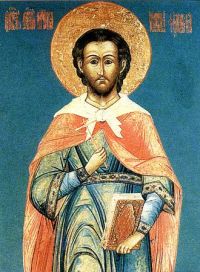 Justin Martyr,
Ante-Nicene Fathers Vol. I — The First Apology
(1885)
“ And that the Spirit of prophecy might signify to us that He who suffers these things has an ineffable origin, and rules His enemies, He spake thus: His generation who shall declare? Because His life is cut off from the earth: for their transgressions He comes to death. ”
Freiherr von Friedrich Hügel, The Mystical Element of Religion…
“ Thus Greek Fate is here retained, but it is transformed through being transplaced. For Fate has here ceased to be ultimate and above the very gods, the poor gods who were so predominantly the mere projections of man’s Individualism: Fate is here intermediate and a way to God—the great God, the source and ideal of all Personality. ”
 Charles Kingsley,
The Good News of God
“ Of one thing only they were certain, that death reigned, and that death had passed upon all men, and things, and even gods. Evil beasts, evil gods, evil passions, were gnawing at the root of all things. A time would come of nothing but rage and wickedness, fury and destruction; the gods would fight and be slain, and earth and heaven would be sent back again into shapeless ruin: and after that they knew no more, though they longed to know. ”
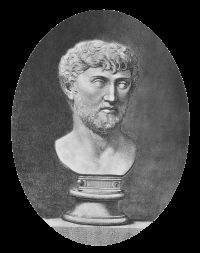 Titus Lucretius Carus,
Virgil & Lucretius
“ For the Damned, and Fiends to torment them, Dis,The Elysian fields for Saints in bliss.—But Spirits of the Dead, ere they can comeBefore their Judge to be assigned a homeAmong the Blest or Sinners, undergoTwo stages of probation; first, we know,For it to be on due inspection clearThey are qualified as Ghosts; and, next, whereTo prepare for trial.—From graves men riseShadows, bodiless, but as Death’s surpriseCaught them; and therefore shadows of the whole,Of Body with its accidents, and Soul.Such—Ghosts—they wake on Acheron’s dark shore:Such by grim Charon are they ferried o’er ”
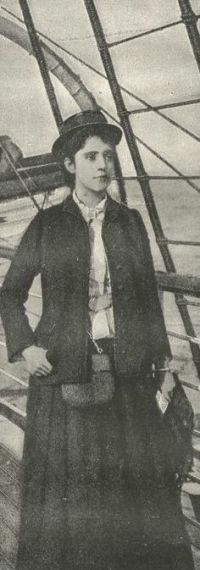 Elizabeth Bisland,
The Secret Life: Being the Book of a Heretic
“ Impossible as it was to deny the incontrovertible fact of death, it conceived, as an escape from the greatest of evils, the idea of the continuance of its identity either in an endless round of reincarnations, or as an impalpable essence triumphant in heaven or defeated in hell. The shadow of their own terror cast upon their imagination the figures of monstrous deities—thousand-armed, myriad-eyed, maleficent, and unakin to themselves. ”
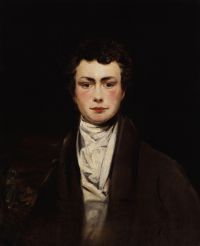 Thomas Moore,
The Epicurean: A Tale
“ I thought what myriads of the wise, the beautiful, and the brave, had sunk into dust since earth first beheld those wonders; and, in the sadness of my soul, I exclaimed,—“Must man alone, then, perish? must [pg 38] minds and hearts be annihilated, while pyramids endure? Death, Death, even on these everlasting tablets,—the only approach to immortality that kings themselves could purchase,—thou hast written our doom, saying, awfully and intelligibly, ‘There is, for man, no eternal mansion, but the tomb!’ ”My heart sunk at the thought ”
Edward Harrison Barker, Wanderings by Southern Waters, Eastern Aquitaine
“ Some like hell-hags, with wild hair flying, are rushing through the air; others, majestic, solitary, wrapped about with dark horror, are the trees of Fate; some have their arms raised in the frenzy of a torturing passion; others look like emblems of Care when hope and passion are alike dead: each touches the spring of a sombre thought or a fantastic fancy. ”
VirgilRalph Waldo EmersonCarveth ReadH. Rider HaggardElwood Sylvester BerryAlgernon Charles SwinburneLeigh Gordon GiltnerToru DuttEliza Buckminster LeePetronius ArbiterLetitia Elizabeth LandonJoseph ConradBaron Edward Bulwer Lytton LyttonEdward George Earle Lytton BulwerJean PaulF. W. FarrarAshley Horace ThorndikeAnatole FranceSarah Moore Grimké