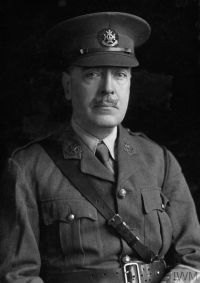
“ The whole of his life long, Boucher gave himself up with equal and passionate devotion to work and to pleasure—working at his easel often twelve hours of his day without losing, to the end when the brush fell from his dead fingers, his blitheness of heart or his generosity of act, and without weakening the pleasure-loving desires of his gadding spirit. ”
Boucher
Definition and stakes
The theme of “Boucher” has been addressed by authors such as Haldane MacFall, Edward Frederic Benson, Joseph A. Altsheler, Emma Orczy and Baroness Emmuska Orczy Orczy. It is often associated with terms like Beecher, Henry, Edward, ward and Jean.
Quotes about “Boucher”
“ The rosy carnivals and gay gallantries of his age gave way to the blood-stained romance and fierce tempest of the Revolution. The garrets of the old curiosity-shops received the discarded canvases of the master. His shepherds and shepherdesses were put to rout by the Romans of his pupil, citizen David. The old order was brought into contempt and overthrown. And with it, Boucher’s art, like much that was gracious and charming and good in the evil thing, went down also, and was overwhelmed for a while. ”
 Joseph A. Altsheler,
The Hunters of the Hills
Joseph A. Altsheler,
The Hunters of the Hills
“ Boucher, again as white as death, looked down hastily, and then uttered a fierce oath. The hunter laughed."It's true, Boucher," he said, "and everyone here knows it's true. Why speak of lies? I don't carry them in my stock, and I've proved that I don't need them. Come, you wish my death, attack again, but remember that I'm neither the untrained boy, Gaston Lafitte, nor Raoul de Bassempierre, wasted from illness."Boucher rushed at him, and Robert thought he could hear the angry breath whistling through his teeth. Then he grew cooler, steadied himself and pushed the offense. ”
 Emma Orczy,
The Scarlet Pimpernel — Chapter XVIII: The Mysterious Device
(1905)
Emma Orczy,
The Scarlet Pimpernel — Chapter XVIII: The Mysterious Device
(1905)
“ On the wall to the left of the desk, reaching almost from floor to ceiling, was a large full-length portrait of a woman, magnificently framed, exquisitely painted, and signed with the name of Boucher. It was Percy's mother.Marguerite knew very little about her, except that she had died abroad, ailing in body as well as in mind, which Percy was still a lad. She must have been a very beautiful woman once, when Boucher painted her, and as Marguerite looked at the portrait, she could not but be struck by the extraordinary resemblance which must have existed between mother and son. ”
Baroness Emmuska Orczy Orczy, The Scarlet Pimpernel
“ She felt cold and uncomfortable suddenly in this severe and dark room. There were no pictures on the wall, save the fine Boucher portrait, only a couple of maps, both of parts of France, one of the North coast and the other of the environs of Paris. What did Sir Percy want with those, she wondered. Her head began to ache, she turned away from this strange Blue Beard’s chamber, which she had entered, and which she did not understand. She did not wish Frank to find her here, and with a last look round, she once more turned to the door. ”
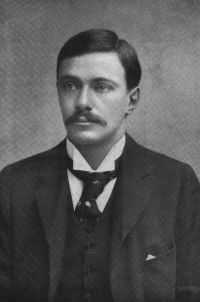 Edward Frederic Benson,
Queen Lucia
(1920)
Edward Frederic Benson,
Queen Lucia
(1920)
“ The two Miss Antrobuses frisked about the green, jumping over the stocks in their playful way, and running round the duck-pond in the sternal hope of attracting Colonel Boucher's attention to their pretty nimble movements. For many years past, they had tried to gain Georgie's serious attention, without any result, and lately they had turned to Colonel Boucher. There was Mrs Antrobus there, too, with her ham-like face and her ear-trumpet, and Mrs Weston was being pushed round and round the asphalt path below the elms in her bath-chair. ”
“ At thirty-five Boucher has arrived. He is in the vogue; in favour at Court—as well as in the [Pg 43] fashion. In his three years from taking his seat at the Academy to the opening of the first Salon he has created a new and original style—his cupid pieces, his pastorals, his Venus-pieces, his tapestry. Boucher’s kingdom lay in the realm of the decorative painter—and he has found it. Torn from the surroundings for which he designed them, as part and parcel of the general scheme, his pictures are as out of place as an Italian altarpiece in an English dining-room, yet they suffer less. ”
“ The boy Boucher, at sturdy twelve, would recall the death of the old king in his lonely last years, and the setting upon the ancient throne of France of the five-year-old child as Louis Quinze—a comely little fellow—with Orleans as Regent. Young François Boucher was to spend his youth and grow up to manhood in a France that lay under the regency of this dissolute, brilliant Orleans. ”
“ This Pastoral, known as “The Shepherd and Shepherdesses,” is another canvas painted at the height of Boucher’s career, in which dandified shepherds and shepherdesses seem to have stepped out of the Opera in order to play their light comedy of beribboned simple living in a pleasant landscape of France. It was of these pastorals a waggish critic complained that the shepherds and shepherdesses look as if they must soon be off to the Opera again. But what the carpers omitted was to praise the painting of the pleasant lands of France in which these dainty comedies were set. ”
Joseph A. Altsheler,
The Hunters of the Hills
“ De Courcelles opened a small door and they stepped out. Robert did not notice that Boucher instantly put down his cards and followed. Before them was a grassy lawn with borders of rose bushes, and beyond, the vast sweep of the hills, the river and the far shore showed dimly through the dusk. The air, moved by a light wind, was crisp, fresh and pure, and, as Robert breathed it deeply, he felt his head grow clear and cool. Several men were walking in the garden. One of them was Jumonville, and the others he did not know. ”
“ Poor unfortunate infants! for whom Philosophy could find no happier joy in life than [Pg 77] stripping hemp! Boucher was but an artist. He painted his generation as far as he could see it, and, with all his faults and weaknesses, he never debauched his art with foreign and alien things that had no part in the nation’s life; he painted fair France into his landscapes, not a make-believe land he did not know with preposterous Greek ruins ”
“ In an official document of the Director of Buildings to the king (or Minister of Fine Art, as we should say) , written in this year of 1745, Boucher being forty-two, is a “list of the best painters,” in which Boucher is singled out for distinction as “an historic painter, living in the Rue de Grenelle-Saint-Honoré, opposite the Rue des Deux-Ecus, pupil of Lemoyne, excelling also in landscape, grotesques, and ornaments in the manner of Watteau; and equally skilled in painting flowers, fruit, architecture, and subjects of gallantry and of fashion.” ”
“ The youth Boucher, with the quick and astounding gift, that he displayed all through his life, of rapidly making his own what he wanted to acquire, picked up from Lemoyne at once a French way of stating what he desired to state, in a large, broad manner, without having to go through the long years of drudgery to Italian models of style which was then the only schooling for an artist—was therefore enabled to free himself from the equally long years that it would have taken him to rid the Italian style from his artistry. ”
“ Edinburgh is fortunate in possessing this, one of the world-famous examples of Boucher’s exquisite portraiture. He painted with rare charm more than once this wonderful woman, “the king’s morsel,” Jeanne Poisson, Madame Lenormant d’Etioles, who became the notorious Marquise de Pompadour. He gives us perhaps too dainty a butterfly; for, of a truth, this woman’s prettiness masked an iron nerve, an unflinching courage, and a capacity and talents which must have reached to fame in any human being whose frame they illumined. ”
Edward Frederic Benson,
Queen Lucia
(1920)
“ Suddenly she turned to Colonel Boucher. "Oh, Colonel," she said. "What have I been saying? How dreadfully stupid of me not to remember that you were a bachelor too. But I wouldn't have you starve for anything. Have some more fish instantly to shew you forgive me. Georgie change the subject; you're always talking about yourself." Georgie turned with admirable docility to Mrs Weston. "It's too miserable for you," he said. "How will you get on without Elizabeth? How long has she been with you?" ”
Joseph A. Altsheler,
The Shadow of the North: A Story of Old New York and a Lost Campaign
“ Willet was the only white man who remained awake. He saw the great fire die, and the dawn come in its place. He felt then for the first time in all that long encounter the strangeness of his own position. The wilderness, savages and forest battle had become natural to him, and yet his life had once been far different. There was a taste of a distant past in that fierce duel at Quebec when he slew the bravo, Boucher, a deed for which he had never felt a moment's regret, and yet when he balanced the old times against the present, he could not say which had the advantage. ”
“ Boucher accounted his fortune made.The cheery youth went at his work with energy and enthusiasm, blithely setting his hand to anything that was wanted of him, bringing charm and invention to all he did—tailpieces, frontispieces, emblems, coats of arms, freemason’s certificates, first-communion cards, initial letters. He was soon set to work upon important designs for engravings. He searched [Pg 21] out the publishers of books, and let no chance escape of working for them. ”
“ In this year of 1744 Boucher created a new fashion at the annual Salon by sending studies and sketches instead of finished pictures; and it set a value upon such things not before realised by artists, for success was instant and loud.Towards the end of the next, Boucher’s forty-second year, the Swedish Ambassador, Count de Tessin, who was to take his leave of Paris, commissioned four pictures to represent the day of a woman of fashion, and to be entitled “Morning,” “Midday,” “Evening,” and “Night.” Boucher painted one of these for him, now known as the “Marchande de Modes.” ”
Edward Frederic Benson,
Queen Lucia
(1920)
“ It grew low and soft, it rang out again, it lingered and tarried, it quickened into the ultimate triumph. No singing could have been simpler, but that simplicity could only have sprung from the highest art. But now the art was wholly unconscious; it was part of the singer who but praised God as the thrushes do. She who had made gaiety last night, made worship this morning. As they sat down for the discourse, Colonel Boucher discreetly whispered to Georgie "By Jove." ”
Jennett Humphreys, Dictionary of National Biography… (1886)
“ BOUCHIER, BARTON (1794–1865) , religious writer, born in 1794, was a younger son of the vicar of Epsom, Surrey, the Rev. Jonathan Boucher [q. v.] Barton changed his name from Boucher to Bouchier after 1822. He was educated at Balliol College, Oxford. In 1816 he married Mary, daughter of the Rev. ”
Edward Frederic Benson,
Queen Lucia
(1920)
“ Let us talk about something else, though we won't go in quite yet, shall we?" She felt quite safe in her apparent reluctance to tell him; the Riseholme gluttony for news made it imperative for him to ask more. "Really, I must be very dull," he said. "I daresay an eye new to the place sees more. Who is it, Miss Bracely?" She laughed. "Ah, how bad a man is at observing a man!" she said. "Didn't you see Georgie at dinner? He hardly took his eyes off her." She had a great and glorious reward. Colonel Boucher's face grew absolutely blank in the moonlight with sheer astonishment. ”
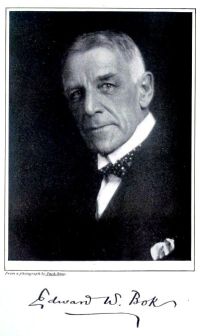 Edward W. Bok,
The Americanization of Edward Bok
(1921)
Edward W. Bok,
The Americanization of Edward Bok
(1921)
“ Mr. Beecher looked at Edward and sighed. “Hear about it,” he said.“I don’t think I understand you,” was the reply.“No, I don’t think you do,” he said. “I mean, you will some day hear about that suit. And I don’t know,” then he hesitated, “but—but you might as well get it straight. You say you were twelve then,” he mused. “What were you doing when you were twelve?”“Going to school,” was the reply.“Yes, of course,” said Mr. Beecher. “Well,” he continued, turning on his haunches so that his back rested against the box, “I am going to tell you the story of that suit, and then you’ll know it.” ”
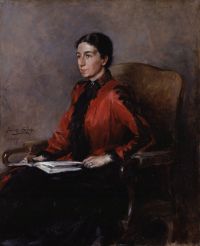 Mrs. Humphry Ward,
Fields of Victory
Mrs. Humphry Ward,
Fields of Victory
“ Pierre Bucher, a gentleman in whom Alsatian patriotism, both before the war and since the Armistice, has found one of its most effective and eloquent representatives. A man of a singularly winning and magnetic presence,—with dark, melancholy eyes, and the look of one in whom the flame of life has burnt in the past with a bitter intensity, fanned by winds of revolt and suffering. Before the war Dr. Bucher was a well-known and popular doctor in Strasbourg, recognised by Alsatian and German alike as a champion of the French spirit and French traditions in the lost provinces. ”
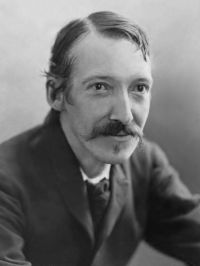 Robert Louis Stevenson,
Travels with a Donkey in the Cevennes
Robert Louis Stevenson,
Travels with a Donkey in the Cevennes
“ I drank a bowl of milk, and set off to explore the neighbourhood of Bouchet. It was perishing cold, a grey, windy, wintry morning; misty clouds flew fast and low; the wind piped over the naked platform; and the only speck of colour was away behind Mount Mézenc and the eastern hills, where the sky still wore the orange of the dawn.It was five in the morning, and four thousand feet above the sea; and I had to bury my hands in my pockets and trot. People were trooping out to the labours of the field by twos and threes, and all turned round to stare upon the stranger. ”
Edward W. Bok,
The Americanization of Edward Bok
(1921)
“ Up went the light, and the two beautiful girls of the box stood in their night-dresses.“Now, why did you run away?” asked Mr. Beecher.“Why, Mr. Beecher! How can you ask such a question?” pouted one of the girls, looking at her dress and then at Edward.“Exactly,” said Mr. Beecher. “Your modesty leads you to run away from this young man because he might possibly see you under a single light in dresses that cover your entire bodies, while that same modesty did not prevent you all this evening from sitting beside him, under a myriad of lights, in dresses that exposed nearly half of your bodies. ”
Ralph Stock, The Wet Blanket (1922)
“ IT is difficult to describe Bowker. Outwardly he was sufficiently unremarkable to cheat analysis. Small, quick, busy about being busy, you may find his prototype in any City office. But that is precisely where you would never find Bowker. It is the first peculiarity to be noted in the man that he shunned the environment to which he so obviously belonged. It was ever the "great outside" for him, the home of big men and big things, where, by the way, he looked uncommonly like a black-beetle strayed from its fastness in the light of day. ”
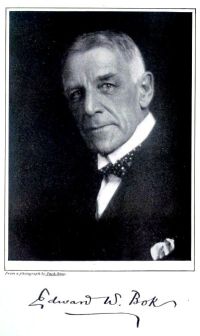 Edward William Bok,
A Dutch Boy Fifty Years After
Edward William Bok,
A Dutch Boy Fifty Years After
“ Edward Bok was in the formative period between boyhood and young manhood when impressions meant lessons, and associations meant ideals. Mr. Beecher never disappointed. The closer one got to him, the greater he became--in striking contrast to most public men, as Edward had already learned. Then, his interests and sympathies were enormously wide. He took in so much! One day Edward was walking past Fulton Market, in New York City, with Mr. Beecher. "Never skirt a market," the latter said; "always go through it. It's the next best thing, in the winter, to going South." ”
Edward W. Bok,
The Americanization of Edward Bok
(1921)
“ One evening the great preacher suddenly appeared at a friend’s house and, quietly entering the drawingroom without removing his overcoat, he walked up to his friend and said:“Rossiter, why don’t you bring back that Ruskin of mine that I lent you?”The man colored to the roots of his hair. “Why, Mr. Beecher,” he said, “I’ll go up-stairs and get it for you right away. I would not have kept it so long, only you told me I might.”At this Beecher burst into a fit of merry laughter. “Found! Found!” he shouted, as he took off his overcoat and threw himself into a chair. ”
“ Butch challenged mockingly. "Sure, you'll try 'n' keep yore standin', Kid—you ain't got a man that don't know you'd quit him cold in a pinch, and save yore own bacon! Go ahead an' look!""You bet I'll look!" Kid picked up the reins, ran his hand reassuringly along the shoulder of the brown horse, grasped the horn and gave the saddle a little shake, and began untying Butch's slicker from behind the cantle, his fingers probing into the folds. "How much was it, Bud?" ”
