
“ But the beer-men curtail my harangue, so I shake my departing fist at the cowering lion, and, leaving this British institution, proceed to investigate another British institution,—the undaunted English army, in its development in Fort Wellington. A wall shuts the world out from those sacred premises; a stile lets the world in,—over which stile we step and stand on the fort grounds. A party of soldiers are making good cheer in a corner of the pasture,—perhaps I ought to say parade-ground. As no sentinel accosts us, we hunt up one, and inquire if the fort is accessible. ”
British fort
Definition and stakes
The theme of “British fort” has been addressed by authors such as John Martin Hammond, Robert Orme, Francis Kingsley Ball, Benson John Lossing and Richard Cannon. It is often associated with terms like fortification, people, fortress, castle and French.
Quotes about “British fort”
Francis Kingsley Ball, Hero Stories from American History
“ Wayne's column scales the ramparts.The first man over shouts, "The fort's our own," and pulls down the British flag.The second main column follows."The fort's our own!" "The fort's our own!" echoes and reëchoes over the hills.The bayonet is now doing its grim work. The darkness is lighted only by the flashes from the guns of the redcoats. The bewildered British are driven at the point of the bayonet into the corners of the fort, and cry, "Mercy, mercy, dear Americans!" "Quarter! quarter!" "Don't kill us! we surrender!" ”
Days to Remember: The British Empire in the Great War
“ This was a small concrete fort situated among the ruins of a farm or in some piece of shell-torn woodland, often raised only a yard or two above the ground-level, and bristling with machine-guns. The low entrance was at the rear of the pill-box, which held from eight to forty men. Such forts were easy to make, for the wooden or steel framework could be brought up on any dark night and filled with concrete. They were placed with great skill, and in the barbed-wire defences alleys were left so that an unwary advance would be trapped and exposed to enfilading fire. ”
G. R. Gleig, The Campaigns of the British Army at Washington and New Orleans 1814-1815
“ Whilst the remainder of the army spent their time here, the 4th, 21st, and 44th, being landed above the fort, were busied in the siege. This small work stands, as I have stated, at the extremity of a promontory. Towards the sea its fortifications are respectable enough, but on the land side it is little better than a blockhouse. ”
Charles Henry Ashdown, British Castles
“ The wonderful trenches, too numerous to mention in detail, show a very high order of military skill in fortification, and this is the more remarkable when we discover that Neolithic man was probably answerable for their construction, although the fort has been subsequently occupied by men of the Bronze Age, and also by the Romans. ”
Robert Orme, A History of the Military Transactions of the British Nation in Indostan… (1861)
“ The fort was just strong enough to oblige an enemy to attack it with cannon: the bastions were small: the curtains were only three feet thick, and served as the outward wall of a range of chambers, which, with their terrasses, imitated ramparts, and were on all sides overlooked from without by buildings within 100 yards, and there was neither ditch, nor even a pallisade, to interrupt the approach to the very foot of the walls: perhaps the jealousy of the government would not suffer more ”
Charles Cabry Dix, The world's navies in the Boxer rebellion… (1905)
“ The South forts were occupied by the Russians and Germans, the North fort by the Japanese, and the North-west fort by the British and the twenty-five Italians who had fought in the line with our men on the day before.More gruesome work than the destruction of stores had first to be attended to. ”
 Isaac Weld,
Travels through the states of North America…
“ It is worthy of remark, that as military posts, all those lately established by the British are far superior, in point of situation, to those delivered up. The ground on which the new block house is building, on the British side of Niagara River, is nine feet higher than the top of the stone house in the American fort, and it commands every part of the fort. The chief strength of the old fort is on the land side; towards the water the works are very weak, and the whole might be battered down by a single twelve pounder judiciously planted on the British side of the river. ”
Edward J. Lowell, The Hessians and the other German auxiliaries of Great Britain in the revolutionary war (1884)
“ No disgrace can attach to the Americans in the fort, who made a creditable resistance against great odds. The blame lies with those generals who insisted on holding the fort after the abandonment of the island by the main army under Washington, and after the obstructions in the Hudson had been passed by the British ships. ”
Robert Orme, A History of the Military Transactions of the British Nation in Indostan… (1861)
“ This eastern part is the upper, and the only real fort; being inclosed and fortified with high stone walls and towers strongly built. The other inclosure, although called the lower fort, is only surrounded with a wall of loose stones, and was principally intended for the immediate refuge of the cattle and inhabitants on sudden alarm. The rock falls every where so steep, that the area of the fortified surface above is equal to half the base below. ”
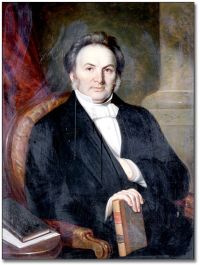 Egerton Ryerson,
The loyalists of America and their times
“ The American army of 4,000 men, being cooped up within the limits of the fort, depending for their supplies from the United States, and not daring to go out of their fortifications, could do little harm and be of little use to the American cause, the British commander did not think it advisable to incur the loss and risk of an assault upon the fort. ”
G. R. Gleig, The Campaigns of the British Army at Washington and New Orleans 1814-1815
“ As the left of the American army extended to a fort built upon the very brink of the river, it was clear that could the ships be brought to bear upon that point, and the fort be silenced by their fire, that flank of the position would be turned. This once effected, there would be no difficulty in pushing a column within their works; and as soldiers entrenched always place more reliance upon the strength of their entrenchments than upon their own personal exertions, the very sight of our people on a level with them would in all probability decide the contest. ”
Robert Orme, A History of the Military Transactions of the British Nation in Indostan… (1861)
“ The whole fort is surrounded by a dry ditch, of which the counterscarp is faced with stone; and on the other side is lined by the foot of the main wall of the curtain, without berm or faussebraye; excepting along that part of the rampart, which extends from the left of the great gateway in the middle of the eastern side to the bastion in the N.E. angle, and round it half-way along the northern wall; in which extent a slip of dry ground, 20 yards broad on the eastern side, and 40 on the northern, is left as a place of arms, and skirted with a parapet wall, with loop-holes for muskitry ”
Charles A. Goodrich, Great Events in the History of North and South America
“ Words are wanting to express the feelings of the Americans, in being thus compelled to surrender to an inferior force, without firing a gun, when they were firmly convinced that that force was in their power. The British took immediate possession of the fort, with all the public property it contained ”
 William Henry Giles Kingston,
Our Soldiers: Gallant Deeds of the British Army during Victoria's Reign
“ The enemy all through fought very well, and made every use of the cover afforded to their riflemen, who were excellent shots; and they built sangars on the rising ground above, commanding the fort, so that it was necessary for the besieged to build sheltering galleries to protect the men going from post to post. Hardly a night passed without an attack of some sort, and three times the enemy succeeded in setting the towers on fire, only to be extinguished with great difficulty by the use of earth and water. ”
G. R. Gleig, The Campaigns of the British Army at Washington and New Orleans 1814-1815
“ The ramparts being composed of sand, not more than three feet in thickness, are faced with plank barely cannon-proof; whilst a sand-hill rising within pistol-shot of the ditch, completely commands them. Within, again, the fort is as much wanting in accommodation as it is in strength. There are no bomb-proof barracks, nor any hole or arch under which men might find protection from shells; indeed, so deficient is it in common lodging-rooms, that a great part of the garrison slept in tents. ”
Robert Orme, A History of the Military Transactions of the British Nation in Indostan… (1861)
“ The Indian engineer, whoever he was, that erected the fort, seems to have exceeded the common reach of his countrymen in the knowledge of his art, not only by the choice of the spot, but also by proportioning the strength of the defences to the advantages and disadvantages of the situation: for the fortifications to the south are much the strongest, those opposite to the rice fields something weaker, and the part that is skirted by the lake is defended only by a slender wall ”
William Henry Giles Kingston,
Our Sailors: Gallant Deeds of the British Navy during Victoria's Reign
“ On the south side there is a series of strong forts and batteries for about a mile along the shore, mounting about 120 guns of various patterns, the greater part being quite modern. Some distance inland is another fort and the magazines. These forts, designed to protect the sea-front, are therefore very formidable, and well manned with competent gunners would constitute a real danger to any ships entering the river. ”
Charles Henry Ashdown, British Castles
“ The fort is advantageously situated upon the trading route between the inhabitants of the Great Forest of Anderida, covering the Weald of Sussex, and the maritime population of the southern littoral; and this fact appealed not only to Neolithic man but also the men of the Bronze and Iron Ages, who occupied it in succession. It is a camp of the plateau type with an inner vallum rising nearly 50 feet above the fosse and 20 above the inner area. General Pitt Rivers estimated that 5000 men would be required to man the ramparts effectually. ”
Robert Orme, A History of the Military Transactions of the British Nation in Indostan… (1861)
“ This place, now a fort, was originally nothing more than a pagoda and choultry, situated at the top of a rock about 30 feet high. The rock was afterwards inclosed by a square stone wall, carried up as high as the top of the rock itself, and built thick enough to afford a rampart about five feet in breadth, besides a slender parapet, which has loop-holes to fire through: on the western side is a gateway, of which the top communicates with the rampart on either hand: the enemy's garrison consisted chiefly of Sepoys. A watercourse served instead of a trench to shelter the English troops ”
Robert Orme, A History of the Military Transactions of the British Nation in Indostan… (1861)
“ Much depending on the safe arrival of the convoy, captain Clive, reserving only 30 Europeans and 50 Sepoys for the guard of the fort, sent all the rest to strengthen the detachment which escorted it. On this the enemy changed their design, and returned hastily to the city in expectation that an assault made on the fort during the absence of so great a part of the garrison, would encourage the inhabitants to rise; and in this confidence, their whole force, horse and foot, advanced as soon as it was dark, and surrounded the fort. ”
W. H. Maxwell, The Victories of Wellington and the British Armies
“ The French, aware of the value of this important264 passage, adopted every means within their power to protect it from being surprised, or assaulted with success. Both banks of the river were jealously fortified—the left of the Tagus being protected by a tête-du-pont178 regularly intrenched and flanked, and commanded by Fort Napoleon—a strong redoubt placed on the high ground above the bridge. The fort was secured by an interior intrenchment, with a loopholed tower in the centre armed with nine pieces of cannon, and a garrison of four hundred men. ”
Robert Orme, A History of the Military Transactions of the British Nation in Indostan… (1861)
“ From this rugged ground up to the fort the plain was occupied by rice fields. The English army coasting the mountain until opposite to the fort, and then making a conversion of their lines to the right, would immediately be formed in the strongest of situations; their right protected by the fire of the fort; their left by the impassable ground under the mountain, and with the certainty of throwing any number of troops, without opposition, into the fort; who, sallying with the garrison to the other side, might easily drive the enemy from their batteries in the pettah ”
G. R. Gleig, The Campaigns of the British Army at Washington and New Orleans 1814-1815
“ At all events, as the column was to advance under cover of night, it might easily push forward and crown the hill above the enemy, before any effectual opposition could be offered; by which means they would be enclosed between two fires, and lose the advantage which their present elevated situation bestowed. All, however, depended upon the ability of the fleet to lend their assistance; for without silencing the fort, this flank could scarcely be assailed with any chance of success, and, therefore, the whole plan of operations must be changed. ”
Robert Orme, A History of the Military Transactions of the British Nation in Indostan… (1861)
“ A ditch and palisade should have been carried on, if time admitted no more, at least in the weakest parts, round the fort, especially along the warehouses to the south. Shells should have been thrown wherever the enemy assembled or took post, and resolute sallies should have been made in the night into their open quarters, which in such a multitude must have been many. ”
Robert Orme, A History of the Military Transactions of the British Nation in Indostan… (1861)
“ It has many wells of good water, which is not to be found in all parts of the coast so near the sea. The fort was of stone, square, of moderate extent, with four round towers at the angles, a parapeted faussebray, and a wet ditch, but without a glacis. A pettah extends along the strand to the north, and fronts within 250 yards of the fort. An eight-inch howitz bombarded; and a ricochet battery of two guns, to enfilade the north front from the west, was begun in the night, and finished before morning; during which, a serjeant of pioneers and a Sepoy were killed. ”
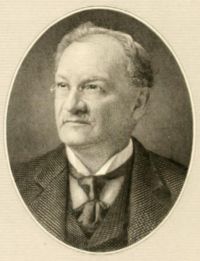 Joel Cook,
America, Volume 4 (of 6)
“ There thus was built the great English fortress of Crown Point, covering the highest parts of the peninsular promontory southwestward from the old French fort. The limestone 298 rocks were cut into deeply, and ramparts raised twenty-five feet thick and high, the citadel being a half-mile around. The ruins of these heavy walls, the ditches, spacious parade and demolished barracks, give an idea of the costly but obsolete military construction of that time. ”
Various, Graham's Magazine, Vol. XXXV, No…
“ Whole towns, cities indeed, are spread out upon the inclined surfaces, that only a few years back were deemed unfit for cultivation, and consequently unworthy of consideration, while at the entrance to each port and harbor is seen some old fort, which, fifty years ago, would, in the midst of profound peace, bristle with the glittering bayonet of men-at-arms; and each morning and evening pour out the formal thunder that bespeaks the character of the fortress and the rank of its commander. ”
John Martin Hammond, Quaint and Historic Forts of North America
“ The post was transferred to the United States in 1796, with the other frontier posts which Great Britain had held. From then until the outbreak of the War of 1812 it was allowed to fall into decay, and at the beginning of that conflict was but partially armed and quite unable to withstand an enemy. The English, hearing of its condition, and hearing, moreover, of the presence in the fort of large quantities of stores of all kinds, sent a fleet with 3000 men against the place. ”
Richard Cannon, Historical Record of the Second…
“ The fortress was already surrounded by walls upwards of a mile and a quarter in extent, but the English began constructing, at immense cost both of money and labour, a series of external fortifications. It was also determined to form a secure harbour by building a pier, or mole, several hundred yards in length. A spirit of enterprise, which has since become so conspicuous in British subjects, was, at this early period, strongly evinced in these improvements, carried on amidst barbarian tribes on the unpromising shores of Africa. ”
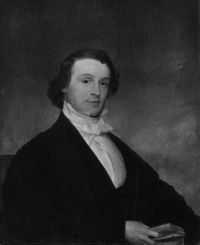 George E. Ellis,
The Red Man and the White Man in North America
(1882)
“ These forts were defended and protected as well as circumstances would permit. They would have been but as houses of cards in the warfare of civilized men; but they were of service against the simple tactics of the savage. A blockhouse of solid timber, with rude barracks, a magazine, a well, the whole surrounded by a high stockade with loopholes, — such was the wilderness fort. They were designed to admit of communication with each other, and so with the centres of civilization, whence from time to time supplies and reinforcements for their garrisons might be brought to them. ”
Sir Arthur G. Doughty, The Acadian Exiles : a Chronicle of the Land of Evangeline
“ It was agreed that the garrison should march out with the honours of war and be transported to France in English ships, and that the inhabitants within three miles of the fort should 'remain upon their estates, with their corn, cattle, and furniture, during two years, in case they are not desirous to go before, they taking the oath of allegiance and fidelity to Her Sacred Majesty of Great Britain.' Then to the roll of the drum, and with all the honours of war, the French troops marched out and the New Englanders marched in. ”
Related terms
Authors who wrote about “British fort”
John Martin HammondRobert OrmeFrancis Kingsley Ball Benson John LossingRichard Cannon
 Mercy Otis WarrenJames WolfeCharles Cabry DixJames OtisEdward Parrott
 Francis ParkmanFanny Emily PennyVariousCharles A. GoodrichW. H. MaxwellEgerton RyersonSir Arthur G. Doughty
 William Francis Patrick NapierEdward J. LowellIsaac Weld
Benson John LossingRichard CannonMercy Otis WarrenJames WolfeCharles Cabry DixJames OtisEdward ParrottFrancis ParkmanFanny Emily PennyVariousCharles A. GoodrichW. H. MaxwellEgerton RyersonSir Arthur G. DoughtyWilliam Francis Patrick NapierEdward J. LowellIsaac Weld