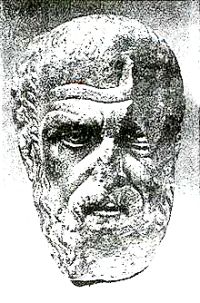
Callisthenes

Definition and stakes

Elizabeth Hazelton Haight,  Essays on the Greek Romances

“ Callisthenes does not reappear until in the end of Book VIII Sostratus tells the story of his reform. [160] On the voyage Callisthenes found himself madly in love with Calligone, revealed to her that he was no pirate but a wealthy Byzantine noble, offered her honorable marriage and a large dowry, and promised to respect her chastity as long as she desired. At Byzantium, love transformed him so that he appeared courteous, virtuous, self-controlled. He showed great respect for his elders. ”
Source: Gutenberg

Elizabeth Hazelton Haight,  Essays on the Greek Romances

“ Leucippe, disguised as a slave, begs Melitte as a woman to pity a woman and to pity one once free, now through Fortune’s will a slave. [174]
Tatius has presented also in Callisthenes a picture of a noble young hero who was converted from the wildness of youth to self-control, respect, patriotism and service by chivalrous love. [175] And this portrait of Callisthenes becomes an embodiment of an ideal latent in the philosophical discussions of love which flavor the romance. “Love,” says Clitophon, “inspired by beauty enters the heart through the eyes.”
”
Source: Gutenberg

Portrait of Plutarch Plutarch,  Parallel Lives (c. 100 AD)

“ But yet afterwards, in a letter to Antipater, he accuses Callisthenes. "The young men," he says, "were stoned to death by the Macedonians, but for the sophist," (meaning Callisthenes,) "I will take care to punish him with them too who sent him to me, and who harbor those in their cities who conspire against my life," an unequivocal declaration against Aristotle, in whose house Callisthenes, for his relationship's sake, being his niece Hero's son, had been educated. His death is variously related. Some say he was hanged by Alexander's orders ”
Source: Gutenberg

Get perspective with Kwize: daily news enlightened by great literature