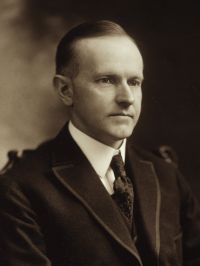
Calvin Coolidge, the 30th president of the United States (1923–1929), was a Republican lawyer and politician known for his fiscal conservatism, quiet nature, and "hands-off" approach to governance, earning him the nickname "Silent Cal." A product of Massachusetts politics, he gained prominence through decisive actions, such as quelling the Boston police strike of 1919, and later served as vice president under Warren G. Harding before assuming the presidency following Harding’s death. Coolidge’s tenure coincided with the economic prosperity of the Roaring Twenties, characterized by policies that favored business and minimal federal interference.
Authors such as Frank W. Buxton emphasized his distinctive combination of personal qualities and political skill, while Grace Arlington Owen contrasted his reserved nature with the lively personality of his wife. Coolidge himself expressed his belief in democracy as a "building up" of human rights and the government’s responsibility to safeguard the vulnerable. His legacy remains a subject of debate, praised by supporters of limited government yet criticized for policies that may have contributed to the Great Depression, reflecting ongoing discussions about his influence on American political and economic thought.