“ On particularly clear days, Cape Prince of Wales on the American side of Behring Strait can be seen from East Cape in Siberia. This day was clear, and, as Johnny climbed, he saw more and more of the peak as it lay across the Strait, above the white ice floes. ”
Cape Prince of Wales
Definition and stakes
The theme of “Cape Prince of Wales” has been addressed by authors such as Allan Neal, W. Watkin Davies, Roger Livingston Scaife, R. Rice Davies and George McCall Theal. It is often associated with terms like bay, hope, good, island and Massachusetts.
Quotes about “Cape Prince of Wales”
 Henry Wood Elliott,
Our Arctic province
(1906)
Henry Wood Elliott,
Our Arctic province
(1906)
“ With Cape York just astern, you pass under the lee of those sheer and lofty walls of that shoulder to our continent, Cape Prince of Wales. Its bold front stands in full but silent recognition of an Asiatic coast westward, just thirty-six miles away, over the shallow flood of Bering Straits. What changes in a great northland and seas would have been wrought had a tithe of such volcanic energy which raised up the Aleutian archipelago been only exerted here in throwing a basaltic dike across from continent to continent! ”
Walter Noble Burns, A Year with a Whaler
“ The straits are thirty-six miles wide, with East Cape, a rounded, dome-shaped mass of black basalt, on the Asiatic side and on the American side Cape Prince of Wales, a headland of sharper outline, but neither so lofty nor so sheer. ”
Agnes C. Laut, Vikings of the Pacific
“ In 1779 Clerke made one more attempt to pass through the northern ice-fields from Pacific to Atlantic; but he accomplished nothing but to go over the ground explored the year before under Cook. On the 5th of July at ten P.M. in the lingering sunlight of northern latitudes, just as the boats were halfway through the Straits of Bering, the fog lifted, and for the first time in history—as far as known—the westernmost part of America, Cape Prince of Wales, and the {209} eastern-most part of Asia, East Cape, were simultaneously seen by white men. ”
 Matthew Flinders,
A Voyage to Terra Australis
(1814)
Matthew Flinders,
A Voyage to Terra Australis
(1814)
“ On passing the north end of the western isle at seven o'clock, I took altitudes for the time keeper, and from thence deduced the longitude of Mount Adolphus to be 142° 40′ east; we then hauled up for Cape York, with soundings between 14 and 10 fathoms, leaving on the starbord hand a rock which lies S. 78 W. five miles from the north end of the western isle. At half past eight, two rocks close to the northern extremity of the Cape were distant four or five miles, the Prince of Wales's Islands were coming in sight, and the following, bearings were taken. ”
 Jules Verne,
The Voyages and Adventures of Captain Hatteras
Jules Verne,
The Voyages and Adventures of Captain Hatteras
“ The 30th they passed Cape Walker at the northeast extremity of Prince of Wales Land; this is the farthest point seen by Kennedy and Bellot, May 3d, 1852, after an expedition across North Somerset. In 1851, Captain Ommaney of the Austin expedition had been fortunate enough to get fresh supplies there for his detachment.This cape, which is very lofty, is remarkable for its reddish-brown color; in clear weather one can see as far as the entrance of Wellington Channel. ”
Frederick Young, A Winter Tour in South Africa
“ Personal influence goes for more than all the defined policies of successive administrations, or excellent theories of Government. A Prince is of more weight than the best of official Governors, and it is not likely that in medieval ages, or even at later periods, such an appanage of the Crown, as we desire South Africa to become, would be unvisited by either the Sovereign, or someone of the Sovereign's family. The visit of their Royal Highnesses Prince Albert Victor, and Prince George of Wales was limited to a brief sojourn at Cape Town, and did not extend to the Colony in general. ”
Frederick Arthur Ambrose Talbot, Lightships and Lighthouses
“ Green Cape Lighthouse. 2. The sentinel of Sugar Loaf Point, or Seal Rocks. 3. “Bungaree Norah” station, one of the loneliest on the coast.The most southerly light upon the New South Wales coastline is that at Green Cape, a few miles north of Cape Howe. As at the other stations, three keepers are maintained, being accommodated, with their families, in roomy cottages; while a small patch of land is turned to agricultural advantage, cows, horses, etc., being maintained by the men. The most easterly light on the Australian continent is at Cape Byron. ”
David Collins, An Account of the English Colony in New South Wales…
“ Residence at the Cape would be highly agreeable, were it not for the south-east wind. This during the summer season blows with such violence, and drives every where such clouds of sand before it, that the inhabitants at certain times dare not stir out of their houses. ”
Sir Clements R. Markham, The lands of silence (1921)
“ The great ice current, flowing down the east coast of Greenland and diverted by the Gulf Stream, sweeps round Cape Farewell and is closely packed along this shore until late in the season. Almost the whole coast, with numerous islands and entrances to the deep fjords, may be taken in at a glance from Cape Farewell, or at least from Cape Christian to Cape Desolation. It comprises the whole of the ancient colony of the East Bygd. Great precipices face the sea, with black mountains, 3000 to 4000 ft. high, rising above them. ”
R. Rice Davies, The Cambrian Sketch-Book: Tales…
“ It was at Cefn-y-Bedd, which is now a respectable farm homestead, where no monument of any kind marks the spot, that the mortal remains of Llewelyn ap Gruffydd, the last reigning sovereign of Wales, were interred. If no Parian marble marks the ground beneath whose sacred sod lies the dust of the dear departed, his name still survives, his virtues still live, his memory is still fondly cherished by hundreds and thousands of his descendants; and though nearly six centuries have come and gone since the fall of our great captain, prince, and patriot, he still speaks to the people and the nation. ”
Various, The Mirror of Literature, Amusement…
“ In geographical position it has an incalculable advantage over New South Wales. In the first place, it is not only much more conveniently situated than that colony, but is much nearer to, and has much more easy means of communication with, every part of the civilized world, the east coast of America perhaps excepted. The passages to it from England, and from the Cape of Good Hope, are shortened by nearly a month, and the return voyages still more. ”
 Seba Smith,
Powhatan; A Metrical Romance, in Seven Cantos
Seba Smith,
Powhatan; A Metrical Romance, in Seven Cantos
“ The cape at the south is Cape Henry, in honor of our most noble prince. The land white hilly sands, like unto the Downes, and all along the shores great plentie of pines and firres.“The north cape is called Cape Charles, in honor of the worthy Duke of Yorke; the isles before it, Smith’s Isles, by the name of the discoverer. Within is a country that may have the prerogative over the most pleasant places knowne, for large and pleasant navigable rivers; heaven and earth never agreed better to frame a place for man’s habitation. ”
 Morley Roberts,
A Tramp's Notebook
Morley Roberts,
A Tramp's Notebook
“ I came at last to the little wind-swept divide between Table Mountain and the Lion's Head. Here Capetown was lost to me, and I stood among sandy wastes where thin pines and whin-like bushes grow. And further still was the cold grey sea with the waves breaking on a rocky point and a little island all awash with white water.Though beyond this divide the air was cold as death, the slopes of Table Mountain sweeping to the sea were full of colour; deep, strong, stern colour. When the sun shines and full summer rules upon the Cape Peninsula the place must be glorious. ”
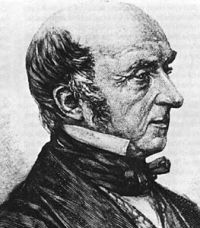 Philip Parker King,
Narrative of a Survey of the Intertropical and Western Coasts of Australia…
Philip Parker King,
Narrative of a Survey of the Intertropical and Western Coasts of Australia…
“ At daylight on the 7th the cutter was about eight miles East by South from Point Slade, with a projecting bluff cape in sight, which proved to be Captain Cook's Cape Hilsborough. The country in the vicinity and particularly to the southward of the Cape is rocky and mountainous; but the lower grounds are verdant and well clothed with timber; and, judging from the numerous fires along the coast, it must be very populous; the islands near it are rocky and very barren, but many of them being wooded with pine-tree have a picturesque appearance. ”
Various, The Atlantic Monthly, Volume 14…
“ The sea is not gaining on the Cape everywhere: for one man told me of a vessel wrecked long ago on the north of Provincetown whose "bones" (this was his word) are still visible many rods within the present line of the beach, half buried in sand. Perchance they lie along-side the timbers of a whale. The general statement of the inhabitants is, that the Cape is wasting on both sides, but extending itself on particular points on the south and west, as at Chatham and Monomoy Beaches, and at Billingsgate, Long, and Race Points. ”
David Collins, An Account of the English Colony in New South Wales…
“ On the 1st of September the Britannia sailed for the Cape of Good Hope, on a second voyage of speculation for some of the civil and military officers of the settlement. In her went, with dispatches, Mr. David Wake Bell, and Mr. Richard Kent (gentlemen who arrived here in the Boddingtons and Sugar Cane transports, charged with the superintendance and medical care of the convicts from Ireland) . The Speedy also sailed on her fishing voyage, the master intending not to consume any longer time in an unsuccessful trial of this coast. ”
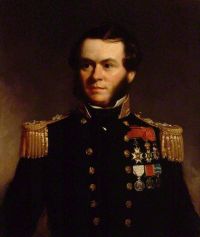 Sherard Osborn,
Stray Leaves from an Arctic Journal
Sherard Osborn,
Stray Leaves from an Arctic Journal
“ To the west, the land of Cornwallis Island stretched up Wellington Channel for many miles, and Cape Hotham locked with Griffith's Island. In the south-west a dark mass of land showed Cape Walker, and from Cape Bunny, the southern shore of Barrow's Strait spread itself until terminated in the steep wall-like cliffs of Cape Clarence and Leopold Island. ”
King of Great Britain Edward VII, Speeches and Addresses of H. R. H. the Prince of Wales…
“ In 1886 there were 13 time-immemorial lodges, and 375 warranted lodges, divided into 44 Provincial Grand Lodges, including those in New Zealand, South Africa, Australia, India, and other parts of the globe. The consent of the Prince of Wales to be Grand Mark Master was proof of his zealous personal efforts to unite the Colonies and Dependencies of the empire with the mother country. The Prince, in his reply, said that—He thanked the Past Grand Master most heartily and sincerely for the address he had just delivered. ”
King of Great Britain Edward VII, Speeches and Addresses of H. R. H. the Prince of Wales…
“ On the 11th of August, 1872, the Prince of Wales went from Osborne in the Royal yacht Victoria and Albert, to inaugurate the completed Breakwater and Harbour of Refuge at Portland, and to pay a visit to Weymouth, the favourite resort of the Prince's great-grandfather, George III. A magnificent fleet of ironclads, headed by the Minotaur, bearing the flag of Admiral Hornby, and many other vessels, were in attendance for the ceremony, of which fifteen were first-rate ironclad ships of war. ”
Louis Legrand Noble, After Icebergs with a Painter
“ Our calls are cut short for the want of wind, and we lie becalmed on the low, broad swells, majestically rolling in upon the Cape, only a mile to the south-west. Captain Knight is evidently unquiet at this proximity. A powerful current is setting rapidly in, carrying us over depths too great for our cables, up to the very cliffs. If the adventurous mariner, who first sighted this bold and forward headland, was bent upon christening it by an apostolic name, why did he not call it Cape St. Peter? All in all, it is certainly the finest coast scenery I have ever seen ”
George Bass, An Account of the English Colony in New South Wales…
“ Nothing, therefore, was left to their choice, but to allow that they might transport themselves over, either upon logs of wood, or by swimming across: and, as the most probable reward of such an exertion would be the capture of birds, whilst breeding, or the seizure of their eggs, the utility of spreading fires in facilitating such operations is obvious. The south cape may be easily distinguished from any other projection in its vicinity. ”
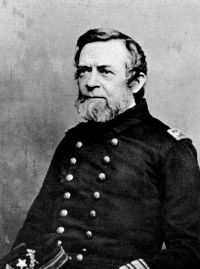 Andrew H. Foote,
Africa and the American Flag
(1854)
Andrew H. Foote,
Africa and the American Flag
(1854)
“ As has ever been done by all wise people on that coast, a fort was expeditiously erected, overlooking in a peremptory way the native villages and the anchorage; since it is not, for a time at least, safe to trust in such affairs to the conscience of the natives.Cape Palmas is well suited for such an establishment; the climate is as good as any in tropical Africa. The Cape itself is a small elevation or insulated hill, sloping down towards the continent, into the general expanse of wooded plain or forest ”
Viscount James Bryce Bryce, Impressions of South Africa
“ The heaths and other flowers and shrubs that grow profusely over the wide top, which is not flat, as he who looks at it from the sea fancies, but cut up by glens, with here and there lake reservoirs in the hollows, are very lovely, and give a novel and peculiar charm to this ascent. [42] Nor is the excursion to Cape Point, the real Cape of Storms of Bartholomew Diaz, and the Cape of Good Hope of Vasco da Gama, less beautiful. An hour in the railway brings one to Simon's Bay, the station of the British naval squadron, a small but fairly well sheltered inlet under high hills. ”
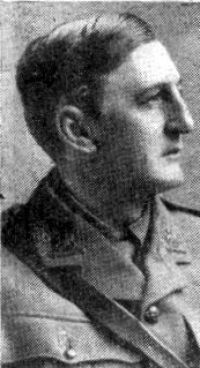 A. E. W. Mason,
The Summons — XVII: On a Cape of Spain
(1920)
A. E. W. Mason,
The Summons — XVII: On a Cape of Spain
(1920)
“ The great cape thrusts its knees far out into the Mediterranean, and close down by the sea on the very point a lighthouse stands out from the green mass like a white pencil. South-westwards the land runs sharply back in heights of tangled undergrowths and trees, overhangs a wide bay and drops at the end of the bay to the mouth of a spacious, empty harbour. Eastwards the cape slopes inland at a gentler angle with an undercliff, a narrow plateau, and behind the plateau mountain walls. ”
Harry James Smith, Cape Breton Tales
“ Back from the other shore of the harbor, jutting out for some miles into Chedabucto Bay, lies the Cape. You get a view of it if you climb to the crest of the hill—a broad reach of barrens, fretted all day by the sea. Out there it is what the Acadians call a bad country. About the sluice-like coves that have been eaten into its rocky shore are scrambling groups of fishermen's houses ”
King of Great Britain Edward VII, Speeches and Addresses of H. R. H. the Prince of Wales…
“ The interest taken by my lamented father in the religious welfare of this institution, evinced by his laying the foundation stone of the Seamen's Church adjoining, will not, I trust, be less in his son, who is well aware of the sentiments of loyalty and devotion to the Throne which distinguish the mercantile navy of Great Britain." ROYAL DRAMATIC COLLEGE. June 5th, 1865.How much the Prince of Wales has, from early life, favoured dramatic art, and encouraged its professors, is universally known. ”
Richard Cannon, History of the Cape Mounted Riflemen
“ Admiral Rio d’Infanté landed there in 1498, and fixing upon the mouth of a river for the site of a settlement, recommended his countrymen to establish a colony there; his advice was, however, not followed, and other Portuguese navigators failed in some [5] slight attempts which they made to colonize this interesting part of Africa.The Cape forms one of the great landmarks of the globe, separating the Atlantic from the Indian Ocean, and dividing the voyage to Hindoostan into two nearly equal portions ”
David Collins, An account of the English colony in New South Wales (1804)
“ The land behind them was the abode of a civilized people; that before them was the residence of savages: when, if ever, they might again enjoy the commerce of the world, was very uncertain. The refreshments and pleasures of which they had so liberally partaken at the Cape, were to be exchanged for coarse fare and hard labour at New South Wales. ”
Henry Curties, A forgotten Prince of Wales (1912)
“ On the 15th, in the afternoon, their Royal Highnesses the Prince and Princess of Wales, with the Princes William and Henry and Princess Augusta, arrived in the harbour in the Commissioner’s yacht. Before they went on shore they did Sir Edward Hawke the honour of a visit on board the “Monarch” man-of-war; from thence they went on shore to the Commissioner’s house, where they lodged that night.Next morning his Royal Highness surveyed the [Pg 352] dock and yard, then went on board the guard-ships, which were all made clear to receive him ”
 R. M. Ballantyne,
Six Months at the Cape
R. M. Ballantyne,
Six Months at the Cape
“ These Kafir chiefs were afterwards feasted and fêted by the governor and gentry of Capetown, but I have my doubts whether they will ever forget or forgive the treatment received on that occasion in Algoa Bay.To correct the false is more difficult than to imbibe the true. Did you ever think of that before? All my life have I been under the false impression that the Cape of Good Hope was the most southerly point of Africa. It is nothing of the sort. Cape Agulhas, not far distant, is the real extremity of South Africa. ”
Related terms
Authors who wrote about “Cape Prince of Wales”
Allan NealW. Watkin DaviesRoger Livingston ScaifeR. Rice Davies George McCall ThealHarry James SmithFrank R. Cana, Walcot Gibson and Alfred P. HillierFrances Lester WarnerW. Hastings MacaulayKing of Great Britain Edward VIIVariousMatthew FlindersJames CookR. M. BallantyneRobert KerrPhilip Parker KingHenry Curties
 Charles Sturt
 William BlighDavid Collins
George McCall ThealHarry James SmithFrank R. Cana, Walcot Gibson and Alfred P. HillierFrances Lester WarnerW. Hastings MacaulayKing of Great Britain Edward VIIVariousMatthew FlindersJames CookR. M. BallantyneRobert KerrPhilip Parker KingHenry CurtiesCharles SturtWilliam BlighDavid Collins