Central America and South America

Definition and stakes

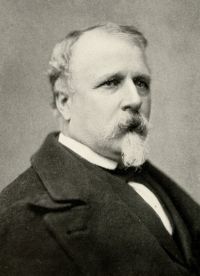
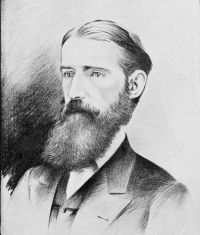
Gardiner G. Hubbard South America

The Latin race conquered Central America and South America, a perfect Eden of natural loveliness, one hundred years prior to the settlement of the Anglo-Saxon; yet to-day they constitute but a thin layer over a scarcely populated country. Their leaders were men of unbounded ambition, rapacious, of great endurance, but cruel and unscrupulous. They sought adventure, expecting it would bring them gold and silver. For that end they plundered, despoiled and enslaved the Indians.
Source: Gutenberg

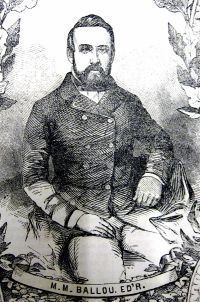
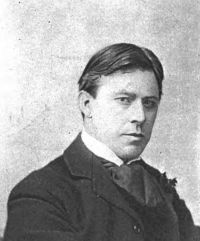
Portrait of Murat Halstead Murat Halstead The Story of the Philippines

All of South America save Brazil and the two Guineas, all Central America, Mexico, the entire territory west of the Mississippi, now embraced by the United States, beautiful Cuba, from whose eastern province of Santiago Ponce de Leon across the lucent waves of the tropical sea coveted the ambrosial forests and fertile meadows of Porto Rico, whence he was to sail to the floral empire of Florida. But this was not all of Spain's magnificent domain. Far across the waters of the South Pacific was the now famous cluster of islands bearing the name of the Spanish king.
Source: Gutenberg

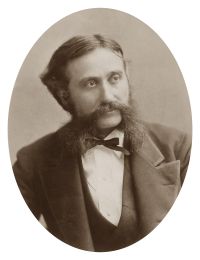
Viscount James Bryce Bryce South America: Observations and Impressions

Considered as a field for emigration, South America may be divided into three sections. There are, first, the tropical and forest-covered regions of Colombia, Venezuela, Guiana, and eastern Brazil; secondly, the temperate and grassy or wooded regions of Argentina, Uruguay, and southern Brazil outside the tropics; and lastly, the great central plain of the Amazon and its tributaries which the Brazilians call the Selvas (woods) . I exclude altogether the mountainous parts of Ecuador, Peru, and Bolivia, because they are already as well inhabited as they deserve to be.
Source: Gutenberg

Get perspective with Kwize: daily news enlightened by great literature