Eurasia

Definition and stakes

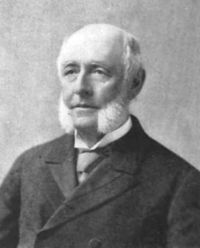
Portrait of Madison Grant Madison Grant,  The Conquest of a Continent; or…

“ Eurasia, where it is probable that mankind originated, was the greatest land mass on the globe in Tertiary times. Modern Europe and North Africa formed relatively small peninsulas in the extreme west of this Tertiary land mass. It is probably from Eurasia that man spread out to the uttermost parts of the habitable globe, carrying with him his language and such cultural features as had developed at the time of each successive migration. No race or language or cultural invention seems to have entered Eurasia [Pg 19] from adjoining land areas. ”
Source: Gutenberg

Portrait of Cecil Torr Cecil Torr,  Small Talk at Wreyland. Third Series

“ In another one, a geography of England and Wales, the first chapter starts with this—“Our country really forms a part of the Continent of Eurasia, though not now joined to it. Eurasia is the name given to the Continents of Europe and Asia. Eurasia is only separated from the Continent of Africa by a canal.” Well, at the geological period when our country was joined to the Continent, Africa also was joined to it near Gibraltar and near Sicily: so, if our country really forms a part of the Continent, Africa must really form a part of it as well. ”
Source: Gutenberg

The Circle of Knowledge: A Classified…

“ THE CONTINENT OF EUROPE From its political and historical importance Europe has always been regarded as one of the great divisions of the earth’s surface though it is not a separate and independent mass. It is, rather, a great peninsula of what is sometimes called Eurasia—i.e. the continent of Europe and Asia combined—that extends westward its many arms between the Arctic Ocean on the north, the Atlantic on the west, and the Mediterranean Sea on the south. ”
Source: Gutenberg

Get perspective with Kwize: daily news enlightened by great literature