Charles Keene

Definition and stakes

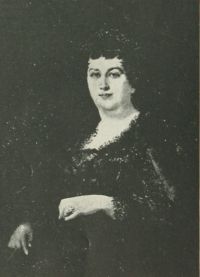
Portrait of Alice Meynell Alice Meynell,  The Rhythm of Life, and Other Essays

“ Where Keene achieved fun was in the figures of his schoolboys. The hint of tenderness which in really fine work could never be absent from a man’s thought of a child or from his touch of one, however frolic or rowdy the subject in hand, is absolutely lacking in Keene’s designs; nevertheless, we acknowledge that here is humour. It is also in some of his clerical figures when they are not caricatures, and certainly in ‘Robert,’ the City waiter of Punch. But so irresistible is the derision of the woman that all Charles Keene’s persistent sense of vulgarity is intent centrally upon her. ”
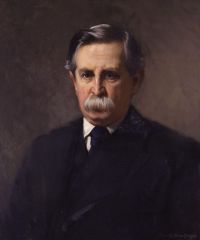
Source: Gutenberg

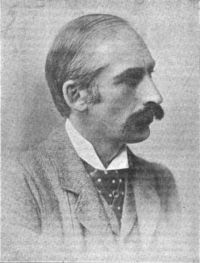
Portrait of Henry Austin Dobson Henry Austin Dobson,  Dictionary of National Biography… (1892)

“ His father, Samuel Browne Keene of Furnival's Inn and Ipswich, was a solicitor, and died in 1838; his mother was Mary Sparrow, the daughter of John Sparrow of the Old, or Ancient, House, Ipswich, which stands in the Butter Market, and had been occupied by the Sparrow family for more than three centuries. Charles Keene was educated at the grammar school in Foundation Street, Ipswich. When he quitted it, at sixteen years of age, he came to London to enter his father's office. The law was found to be uncongenial by one whose taste for drawing was already manifest ”
Source: Wikisource

Charles Keene dead (1891)

“ Mr Keene was of so retiring a disposition that, as far as he could prevent it, no drawing of his were ever sold or exhibited in public. He was essentially the artist of the middle and lower classes, and drew with unerring and not unkindly appreciation the well-to-do city man, and the gay young clerk, the medical student, the old lady of the omnibus, the railway porter, the cabdriver., 'Arry and 'Arriet, and the street ragamuffin. ”
Source: Wikisource

Get perspective with Kwize: daily news enlightened by great literature