
“ The blue guns and riflemen moved to another position and continued, at short intervals, to fire on the pioneers. It was Sunday the twenty-ninth; fearfully hot by the McGehee house, and on Turkey Hill, and in the dense midsummer woods, and in the mosquito-breeding bogs and swamps through which meandered the Chickahominy. The river spread out as many arms as Briareus; short, stubby creeks, slow waters prone to overflow and creep, between high knotted roots of live-oak and cypress, into thickets of bog myrtle. The soil hereabouts was black and wet, further back light and sandy. ”
Chickahominy River
Definition and stakes
The Chickahominy River, an 87-mile waterway in eastern Virginia, has influenced both history and ecology. Named after the indigenous Chickahominy tribe, it served as a crucial yet dangerous obstacle during the Civil War, dividing Union forces in 1862 and shaping the Peninsula Campaign. Today, it functions as a recreational center and essential water source.
Authors like Mary Johnston described its swamps as "black and wet" battlegrounds, while C. H. Forbes-Lindsay narrated Captain John Smith’s hazardous journey to its headwaters. Robert Sparks Walker outlined its geographical importance, connecting it to larger watersheds. These diverse viewpoints highlight the river’s lasting role as both a natural barrier and a vital resource, linking eras from colonial encounters to contemporary hydrology.
Quotes about “Chickahominy River”
C. H. Forbes-Lindsay, Captain John Smith
“ Still stepping backward and dragging his captive with him he presently walks into a deep morass and reaches the end of his journey in more than one sense, for it is in this swamp that the Chickahominy rises and he has fulfilled his undertaking to find the head of the river. It was at once clear to the dauntless explorer that he must [209] yield, and that quickly, for he and his Indian were fast sinking in the icy ooze of the bog. He threw his pistols away in token of surrender and his savage adversaries rushed up and extricated him from his perilous situation. ”
Robert Sparks Walker, The Chickamauga Dam and its environs (1949)
“ Dragging Canoe was the leader of the militant minded Indians there.In 1770 there passed down the Tennessee River at the site of the Chickamauga Dam a Scotch trader by the name of John McDonald. With him was a half-breed Cherokee by the name of William Shorey. They turned their boats which held their possessions up the South Chickamauga Creek and paddled and poled for about seven miles upstream, halting at the crossing of the Great War Path where the Lee Highway now crosses the Chickamauga Creek. ”
Related terms
Authors who wrote about “Chickahominy River”
Intercolonial RailwayZebulon Montgomery PikeWilliam Lewis Herndon, Lieutenant…Albert S. Gatschet Lardner GibbonLe Page du Pratz
 Hermann Hesse
 Henry Rowe SchoolcraftRobert Sparks Walker
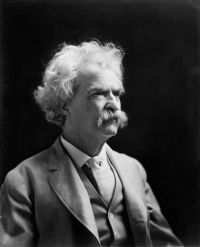 Mark Twain
 Anton Chekhov
 Charles Lanman
 John Wesley PowellJohn FranklinA. M. Chisholm
 John Muir
 Jerome K. JeromeVariousWilliam H. C. Folsom
 Rabindranath Tagore
Lardner GibbonLe Page du PratzHermann HesseHenry Rowe SchoolcraftRobert Sparks WalkerMark TwainAnton ChekhovCharles LanmanJohn Wesley PowellJohn FranklinA. M. ChisholmJohn MuirJerome K. JeromeVariousWilliam H. C. FolsomRabindranath Tagore