Christian commonwealth

Definition and stakes

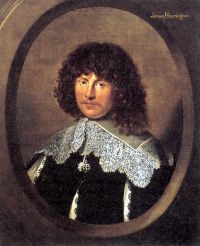
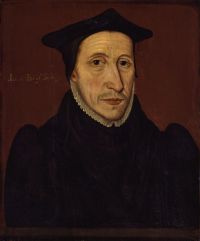
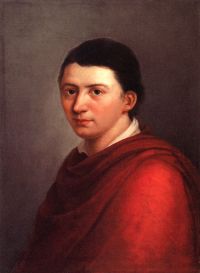
Portrait of Thomas Hobbes Thomas Hobbes,  Leviathan — The third Part, Of A Christian Common-wealth (1651)

“ Christian kings may err in deducing a consequence, but who shall judge? Shall a private man judge, when the question is of his own obedience? Or shall any man judge but he that is appointed thereto by the Church, that is, by the civil sovereign that representeth it? Or if the Pope or an Apostle judge, may he not err in deducing of a consequence? Did not one of the two, St. Peter or St. Paul, err in a superstructure, when St. Paul withstood St. Peter to his face? There can therefore be no contradiction between the laws of God and the laws of a Christian Commonwealth. ”
Source: Wikisource

Portrait of Thomas Hobbes Thomas Hobbes,  The English Works of Thomas Hobbes of Malmesbury… (1839)

“ And hence he concludeth, that every Christian commonwealth is a church endowed with all spiritual authority. And yet more fully: The church if it be one person, is the same thing with the commonwealth of Christians; called a commonwealth, because it consisteth of men united in one person their sovereign; and a church, because it consisteth in Christian men united in one Christian sovereign. Upon which account there was no Christian church in these parts of the world, for some hundreds of years after Christ, because there was no Christian sovereign. ”
Source: Gutenberg

The Unity of Western Civilization

“ The conflict between the two societies—Church and State—was one which could hardly arise in the Middle Ages, because there was only a single society, an undivided Christian commonwealth, which was at one and the same time both Church and State. Because there was only one society, baptism counted as admission both to churchmanship and to citizenship, which were one thing, and one only, in the Christian commonwealth ”
Source: Gutenberg

Get perspective with Kwize: daily news enlightened by great literature