Christopher Hatton

Definition and stakes

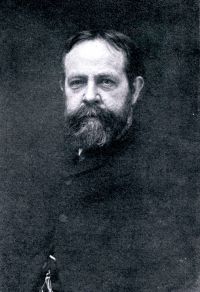
James McMullen Rigg,  Dictionary of National Biography… (1891)

“ He died unmarried, and left no will. His estates he had settled by deed in tail male first on his nephew, Sir William Newport, and then on his cousin, Sir Christopher Hatton. Sir William Newport, who assumed the name of Hatton, succeeded to the estates, but died without male issue on 12 March 1596–7. Sir William's successor, Sir Christopher Hatton, was father of Christopher, baron Hatton of Kirby [q. v.]
Hatton wrote the fourth act of the tragedy of ‘Tancred and Gismund,’ performed before the queen at the Inner Temple in 1568 (Warton, Hist. of Poetry, iii. 305) .
”
Source: Wikisource

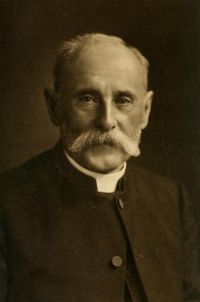
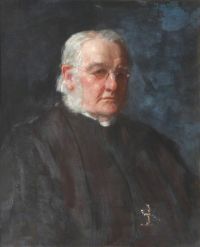
Portrait of William Dunn Macray William Dunn Macray,  Annals of the Bodleian Library…

“ In the Register of Benefactions, on a page faintly headed in pencil with this date, is entered a gift from Christopher, Lord Hatton, 'Homiliarum Saxonicarum 4 volumina antiqua.' The donor was consequently the second baron, and first viscount, Hatton, who succeeded his father Christopher (a firm royalist, and close friend of Clarendon, as well as antiquarian, and friend of Dodsworth) in 1670, and died in 1706. ”
Source: Gutenberg

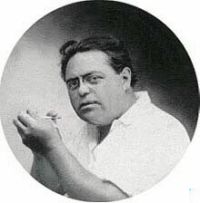
Portrait of Joseph Hatton Joseph Hatton,  The Tallants of Barton, vol. 2… (1867)

“ Had that property in Yorkshire, those splendid farms on the wolds, reverted to the only son of Christopher Tallant? How much had the old man left?
It occurred to him that his father might have changed his will, indeed he had every reason to believe that such had been his intention. But he would not let this more than probable contingency have a settled place in his thoughts
”
Source: Gutenberg

Get perspective with Kwize: daily news enlightened by great literature