Connecticut River Valley

Definition and stakes

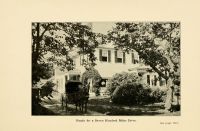
Portrait of Frances S. Howe Frances S. Howe,  14000 miles, a carriage and two women (1906)

“ Then we have a day’s drive, perhaps, of unsurpassed beauty, which no wire fence can enclose, as along the Connecticut River valley on the Vermont side with an unbroken view of New Hampshire hills, Moosilauke in full view, and the tip of Lafayette in the distance, the silvery, leisurely Connecticut dividing the two states and the green and yellow fields in the foreground completing the picture. No State Reservation or Park System can compete with it. ”
Source: Gutenberg

1911 Encyclopædia Britannica, Volume 6… (1911)

“ In Massachusetts and Connecticut the river flows through a basin of weaker Triassic shales and sandstones, and the valley consequently broadens out, making the finest agricultural region of large extent in New England. Near Holyoke and at other points rugged hills of harder trap rock rise so high above the valley lowland that they are locally called mountains. From their crests there are beautiful views of the fertile Connecticut valley lowland and of the more distant enclosing hills of crystalline rocks. ”
Source: Wikisource

A Book of the United States

“ The Valley of the Connecticut is one of the most celebrated valleys of the United States for its fertility and beauty. It is a large tract of land extending from Long Island sound to Hereford Mountains in Canada, five miles beyond the forty-fifth degree of latitude. In the largest sense, it is from five to forty-five miles in width, and its surface is composed of a succession of hills, valleys and plains. The interval lands begin about twelve or fourteen miles from the mouth of the river. These are formed by a long and continued alluvion. ”
Source: Gutenberg

Get perspective with Kwize: daily news enlightened by great literature