Conrad III of Germany

Definition and stakes

1911 Encyclopædia Britannica, Volume 6… (1911)

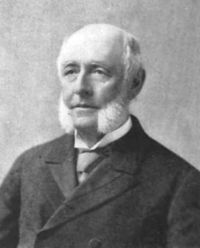
The solitary success amid the general disorder in the Empire was the expedition undertaken in 1142 by Conrad into Bohemia, where he restored his brother-in-law Ladislaus to this throne. An attempt, however, to perform the same service for another brother-in-law, also called Ladislaus, who had been driven from his Polish dukedom, ended in failure. Meanwhile Germany was ravaged and devastated by civil war, which Conrad was unable to repress. Disorder was rampant in Saxony, Bavaria and Burgundy; and in 1146 war broke out between the Bavarians and the Hungarians.
Source: Wikisource

Portrait of Joseph Conrad Joseph Conrad Notes on Life & Letters (1921)

The disappearance of the Russian phantom has given a foreboding of unwonted freedom to the Welt-politik. According to the national tendency this assumption of Imperial impulses would run into the grotesque were it not for the spikes of the pickelhaubes peeping out grimly from behind. Germany’s attitude proves that no peace for the earth can be found in the expansion of material interests which she seems to have adopted exclusively as her only aim, ideal, and watchword.
Source: Gutenberg

1911 Encyclopædia Britannica, Volume 6… (1911)

He rendered valuable assistance to the German king Otto, afterwards the emperor Otto the Great, and in 944 was made duke of Lorraine. In 947 he married Otto’s daughter Liutgarde (d. 953) , and afterwards took a prominent part in the struggle between Louis IV., king of France, and Hugh the Great, duke of Paris. He accompanied his father-in-law to Italy in 951, and when Otto returned to Germany in 952, Conrad remained behind as his representative, and signed a treaty with Berengar II., king of Italy, which brought about an estrangement between the German king and himself.
Source: Wikisource

Get perspective with Kwize: daily news enlightened by great literature