
“ Whatever his real sentiments might be, Conrade took especial care that his countenance should express nothing but satisfaction with what he heard, and smiled or applauded as zealously, to all appearance, as the Archduke himself at the solemn folly of the SPRUCH-SPRECHER and the gibbering wit of the fool. ”
Conrade
Definition and stakes
The theme of “Conrade” has been addressed by authors such as Walter Scott and David Hume. It is often associated with terms like Conrad, Joseph, emperor, Germany and holy.
Quotes about “Conrade”
 David Hume,
The History of England in Three Volumes…
David Hume,
The History of England in Three Volumes…
“ The inhabitants of Tyre, who were governed by that nobleman, had put to death some of this dangerous people: the prince demanded satisfaction; for as he piqued himself on never beginning any offence, [**] he had his regular and established formalities in requiring atonement: Conrade treated his messengers with disdain: the prince issued the fatal orders: two of his subjects, who had insinuated themselves in disguise among Conrade’s guards, openly, in the streets of Sidon, wounded him mortally ”
The Palace of Pleasure, Volume 3
“ As Conrade spake these woords, and wyth great grauity, and constancy pronouncing sundry tokens of sorrow, the Conestable of Naples, wroth beyond measure for these vnpleasant newes, and full of griefe and choller against the trayterous Lieutenaunt, swore in the hearing of them all, that he would neuer rest one good sleepe vntill that quarell were auenged, and had quited the outrage done to the Lord Conrade, and the wrong which he felt in him for the imprisonment of the Duke of Camerino. ”
The Palace of Pleasure, Volume 3
“ And feare not to receiue anye euill of them, nor yet to feele anoyaunce, for wee wyll take vppon vs by honest meanes to craue pardon for thy fault how haynous so euer it be. But if thou continue thine 385 offence, be sure that the Lord Conrade shall be aduertised, and with all our power we shall succour him by force, to let thee feele the Nature of Treason, and what reward is incydent to the practizers of the same. ”
 Ernst Theodor Amadeus Hoffmann,
Hoffmann's Strange Stories
(1855)
Ernst Theodor Amadeus Hoffmann,
Hoffmann's Strange Stories
(1855)
“ Conrad, instead of being touched by this cordiality, threw on his master a proud and disdainful glance, and said—"It was not you that I sought here, and you can believe that I should have no need of permission to seat myself near you, if I wished to do so. I have to-day vanquished all those who tried to wrestle with me, and I wished to supplicate your beautiful young daughter to grant me, as the price of my victories, the perfumed bouquet which reposes on her bosom." ”

“ As we have already seen, Conrad is of the firm and resolute conviction that life is too strong, too clever and too remorseless for the sons of men.It is as though, from some high window, looking down, he were able to watch some shore, from whose security men were for ever launching little cockle-shell boats upon a limitless and angry sea. He observes them, as they advance with confidence, with determination, each with his own sure [Pg 98] ambition of nailing victory to his mast; he alone can see that the horizon is limitless ”
Ernst Theodor Amadeus Hoffmann,
Hoffmann's Strange Stories
(1855)
“ Reinhold related a thousand remembrances of brilliant Italy; but Frederick, buried up in himself, kept his eyes fastened on those of Rosa. Now here is Conrad, who approaches them slowly, like a man who has a project, but hesitates about putting it into execution. "Well, Conrad, come here," cried out master Martin to him, as soon, as he saw him. "You have had fine and joyful success in ail the physical games, and I sincerely congratulate you. I like to see my journeymen distinguish themselves in any thing. Come, then, and place yourself there, quite near us." ”
F. Marion Crawford, Via Crucis: A Romance of the Second Crusade
“ Men were roused, and the times were ripe, but not until the Abbot of Clairvaux had given Europe the final impulse could the armies of the King and of the Queen, and of Conrad, who was never to be crowned Emperor in Rome, begin the march of desperate toil and weariness that lay between their homes and their death. From Vezelay the master preacher and inspirer of mankind went straight to Conrad's court, doing the will of others in faith and without misgiving of conscience, to the greater glory of God, yet haunted in sleep and waking by the dim ghosts of ruin and defeat. ”
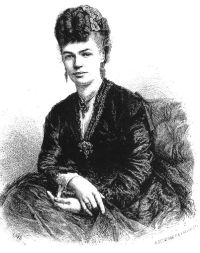 Wilhelmine von Hillern,
The Hour Will Come: A Tale of an Alpine Cloister…
Wilhelmine von Hillern,
The Hour Will Come: A Tale of an Alpine Cloister…
“ The child grew up in bliss--as if in Paradise. Loved by all, affectionately taught by all, he developed rapidly in body and mind. One above all others bore him in his heart and cared for him with his hands--to one above all others he clung with increasing devotion; this was Conrad of Ramüss, his uncle. However deep the child might be in some new game, however close the circle of monks around him, when he heard Conrad's voice he flung everything aside, got up on his tottering little feet, and trotted jubilant to meet him. ”
 E. T. A. Hoffmann,
The Serapion Brethren, Vol. I
E. T. A. Hoffmann,
The Serapion Brethren, Vol. I
“ In the little time that he has been here, you see he has got so far that even Master Martin himself has to obey him, when he roars at him with that thundering voice of his. But then, at the same time, Conrad is so good-humoured, and so thoroughly straight-forward and honourable, that one can't be vexed with him. In fact I must say that, in spite of his wildness, I like him better than Reinhold, almost; for though he does often speak roughly, yet one always understands what he is saying. I would wager he has once been a soldier, however he may pretend to disguise himself now. ”
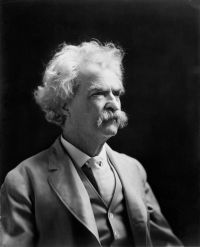 Mark Twain,
Sketches New and Old, Part 4
Mark Twain,
Sketches New and Old, Part 4
“ All men published the praises of the young Conrad's government and extolled the wisdom of his judgments, the mercifulness of his sentences, and the modesty with which he bore himself in his great office. The old Duke soon gave everything into his hands, and sat apart and listened with proud satisfaction while his heir delivered the decrees of the crown from the seat of the premier. It seemed plain that one so loved and praised and honored of all men as Conrad was, could not be otherwise than happy. ”
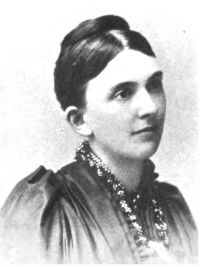 Blanche Mary Channing,
Zodiac Stories
(1899)
Blanche Mary Channing,
Zodiac Stories
(1899)
“ Dolf blushed and looked down. "Never mind," said Conrad, his cheeks as red as the others'. "He is right. I do not shoot well, and he does. Courage, Dolf! Here is another arrow." "I must go now," said the cowherd's son. "My father will scold me. Good day, sirs!" He made a gesture of respect, and turned to go. "Come again to-morrow!" called Conrad. "Yes," said Father Johann. "It will be an excellent thing for Lord Conrad," said Father Johann to the Duchess that evening. "I know the child's parents. They are decent, honest folk, and the boy is like them. It is written in his face." ”
Samuel Langhorne Clemens, Sketches by Mark Twain (1879)
“ A solemn hush fell upon the great court—a silence so profound that men could hear their own hearts beat. Then the princess slowly turned, with eyes gleaming with hate, and pointing her finger straight at Conrad said— "Thou art the man!" An appalling conviction of his helpless, hopeless peril struck a chill to Conrad's heart like the chill of death itself. What power on earth could save him? To disprove the charge he must reveal that he was a woman, and for an uncrowned woman to sit in the ducal chair was death! ”
 Marjorie Bowen,
The Viper of Milan — 31. The Pride of the d'Estes
(1906)
Marjorie Bowen,
The Viper of Milan — 31. The Pride of the d'Estes
(1906)
“ Conrad nodded."For better men—i' faith, I've tried all I know—no man is asked to break his head against a brick wall for nothing—not while the sun shines, and there is such a place as his own land to see again!""You used not to hold such language, Conrad," said Vincenzo, with some reproach."I have tried everything," cried Conrad, gayly. "I tried to rescue the Lady Valentine, I tried to kill Visconti, I tried to make him kill me—I have failed. My Lady Valentine is married, and is set out for France." ”
Wilhelm Raabe, The Imperial Crown
“ From the time of Conrad Hainzen onwards, who was called Conrad the Leper and then Conrad the Great, no more imposing family has arisen in Nuremberg and on the strong tree with a hundred branches no fairer blossom than Mechthild Grossin whose father on Banner Mountain was my father's neighbour. For me it is a miracle, even if it is not one, that today, withered and grey, I can overlook the window of the fair maid's summer garden, while she departed this life many years ago as she left her room in all her youthful beauty. ”
Robert Lynd, Old and New Masters
“ Conrad is more than most. He has a lure like some lost shore in the tropics. He compels to adventure. There is no other living writer who is sensitive in anything like the same degree to the sheer mysteriousness of the earth. Every man who breathes, every woman who crosses the street, every wind that blows, every ship that sails, every tide that fills, every wave that breaks, is for him alive with mystery as a lantern is alive with light—a little light in an immense darkness. ”
Friedrich Spielhagen, The German Pioneers: A Tale of the Mohawk
“ Not the neighbors, who would hardly forgive him for preferring a stranger to their daughters. Not Aunt Ursul, who, though her honest and righteous disposition strove against it, yet would rather see Conrad in his place. And Conrad himself--his only, his beloved brother--yes, that was the deepest grief; that was the drop bitter as gall, poured into the sweet draught of love, and which he must always taste. It ought not to be so. If this should not be so what purpose, what meaning had the rest? Why care for a future that could no more bring him true joy? ”
Thomas Carlyle, History of Friedrich II of Prussia…
“ Conrad, suddenly once more all flame, whirls round; storms the ramparts, slays what he meets, plunders Fritzlar with a will, and leaves it blazing in a general fire, which had broken out in the business. Here is a pair of coils for Conrad; the like of which can issue only in Papal ban or worse. Conrad is grim and obstinate under these aspects; but secretly feels himself very wicked; knows not well what will come of it. Sauntering one day in his outer courts, he notices a certain female beggar; necessitous female of loose life, who tremulously solicits charity of him. ”
Friedrich Spielhagen, The German Pioneers: A Tale of the Mohawk
“ The minister began anew: "Your precious blood--I say, Conrad, precious, as all human blood is precious, but doubly precious in the hour of danger, thrice precious when it flows in the veins of a man to whom the God of all has given the power to be the protection and defense of those nearest to him. Moreover, Conrad, to whom much is given, of him shall much be required. The rest of us are only like soldiers in rank and file, and we need not be ashamed of it. ”
“ Such passages of descriptive prose may be found again and again in the earlier novels and tales of Conrad, in Almayer’s Folly, Tales of Unrest, The Nigger of the Narcissus, Typhoon, Youth, Heart of Darkness, Lord Jim,—prose piled high with sonorous and slow-moving adjectives, three adjectives to a noun, prose that sounds hike an Eastern invocation to a deity in whom, nevertheless, the suppliant does not believe. At its worst, the strain that its sonority places upon movements and objects of no importance is disastrous. ”
Mark Twain,
Sketches New and Old, Part 4
“ Six days after the occurrences related in the above chapter, the brilliant capital of the Duchy of Brandenburgh was resplendent with military pageantry, and noisy with the rejoicings of loyal multitudes; for Conrad, the young heir to the crown, was come. The old Duke's, heart was full of happiness, for Conrad's handsome person and graceful bearing had won his love at once. The great halls of tie palace were thronged with nobles, who welcomed Conrad bravely; and so bright and happy did all things seem, that he felt his fears and sorrows passing away and giving place to a comforting contentment. ”
Wilhelmine von Hillern,
The Hour Will Come: A Tale of an Alpine Cloister…
“ There is Conrad, surnamed Stiero or the bull, to distinguish him from Conrad the Abbot and Conrad of Ramüss; a man worthy of his surname,--a bull with a thick neck, and a broad, angular forehead moulded much as the heathen figured that Jupiter Ammon whom the Church overthrew after such a severe and bloody struggle. He is a man of no subtlety, but a strong bulwark of the faith and of the convent. So long as Conrad the Bull is there, no enemy will venture near, for his fist and his wrathful temper are everywhere known and none would brave them without good cause. ”
 Eugène Sue,
The Iron Trevet; or, Jocelyn the Champion…
Eugène Sue,
The Iron Trevet; or, Jocelyn the Champion…
“ Therefore, Conrad, to-morrow I shall take the oath at the altar to finish my days in a monastery, if you are killed in battle, or if you fail in the promises that I have demanded of you!'""By the saints! That girl is gone daft on her Englishmen in chains. There are only blows to be fetched in war, and your betrothed runs the chances of seeing you return without an eye, a leg or an arm ... if you do return.... The devil take her whims!""I am bound to yield to Gloriande's wishes. There is no more stubborn head than hers. Besides, she loves me as I do her. ”
Ernst Theodor Amadeus Hoffmann,
Hoffmann's Strange Stories
(1855)
“ Conrad gallantly approached towards the cooper's daughter, and said to her with exquisite grace:—"Permit, my beautiful young lady, Conrad to partake of your felicity to-day; deign to tell him that you forget his former outbursts, and that you pardon him as your father has done." And as Rosa stood disconcerted, and master Martin and the guests were looking on in astonishment, the elder Mr. Spangenberg spoke to end this embarrasment. "You think that you are dreaming!" said he. ”
 John Cowper Powys,
Suspended Judgments: Essays on Books and Sensations
John Cowper Powys,
Suspended Judgments: Essays on Books and Sensations
“ Conrad may follow his tropical rivers into the dim dark heart of his Malay jungles, but he never forgets to carry with him his sensitiveness, his metaphysical subtlety, his delicate and elaborate art.What gives one such extraordinary pleasure in his books is the fact that while he is writing of frontier-explorers and backwoods-peddlers, of ivory-traffickers and marooned seafarers, he never forgets that he is a philosopher and a psychologist. ”
John Cowper Powys,
Suspended Judgments: Essays on Books and Sensations
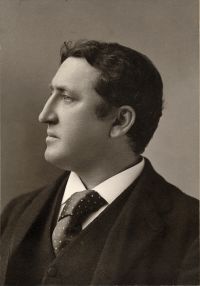
“ But what renders the work of Conrad so extraordinarily rich in human value is not only that he can remain a philosopher in the deserted outposts of South-Pacific Islands, but that he can remain a tender and mellow lover of the innumerable little things, little stray memories and associations, which bind every wanderer from Europe, however far he may voyage, to the familiar places he has left behind in the land of his birth. ”
 James Huneker,
Ivory, Apes and Peacocks
James Huneker,
Ivory, Apes and Peacocks
“ Sailing a ship is no sinecure, and for Conrad a ship is something with human attributes. Like a woman, it must be lived with to be understood, and it has its ways and whims and has to be petted or humoured, as in The Brute—that monstrous personification of the treacherous sea's victim. Like all true artists, Conrad never preaches. His moral is in suffusion, and who runs may read. We recognise his emotional calibre, which is of a dramatic intensity, though never over-emphasising the morbid. Of his intellectual grasp there is no question. He possesses pathos, passion, sincerity, and humour. ”
“ Nevertheless, in spite of its eager incoherence, at the same time both breathless, and, by the virtue of its author’s style, solemn, we do obtain, in addition to our glimpses of Poland and the sea, one or two revelations of Conrad himself. Our revelations come to us partly through our impression of his own zest for life, a zest always ironical, often sceptical, but always eager and driven by a throbbing impulse of vitality. ”
E. T. A. Hoffmann,
Weird Tales, Vol. 2 (of 2)
“ They all threw themselves upon Conrad, who was frantic, flourishing his bloody adze in the air, and shouting and screaming in a terrible voice, "Let him go to hell! To hell with him!" Hurling them all off with the strength of a giant, he was preparing to deal a second blow at his poor master, who was gasping for breath and groaning on the floor,--a blow that would have completely done for him--when Rose, pale as a corpse with fright, appeared in the shop-door. As soon as Conrad observed her he stood as if turned to a pillar of stone, the adze suspended in the air. ”
“ He admires that courage, the simplicity of that faith, but his irony springs from his knowledge of the inevitable end. There are, we may thankfully maintain, other possible views of life, and it is, surely, Conrad’s harshest limitation that he should never be free from this certain obsession of the vanity of human struggle. So bound is he by this that he is driven to choose characters who will prove his faith. We can remember many fine and courageous characters of his creation, we can remember no single one who is not foredoomed to defeat. ”
