Constitution of the United States

Definition and stakes

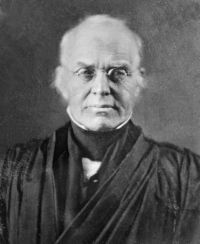
Portrait of Joseph Story Joseph Story Commentaries on the Constitution of the United States (1833)

The general reasoning, by which the maxim is supported, independently of the just weight of the authority in its support, seems entirely satisfactory. What is of far more value than any mere reasoning, experience has demonstrated it to be founded in a just view of the nature of government, and the safety and liberty of the people. And it is no small commendation of the constitution of the United States, that instead of adopting anew theory, it has placed this practical truth, as the basis of its organization. It has placed the legislative, executive, and judicial powers in different hands.
Source: Wikisource

Portrait of Joseph Story Joseph Story Commentaries on the Constitution of the United States (1833)

The obligation, which the constitution imposes upon the judiciary department, to support the constitution of the United States, would be nugatory, if it were dependent upon either of the other branches of the government, or in any manner subject to their control, since such control might operate to the destruction, instead of the support, of the constitution.
Source: Wikisource

Portrait of Joseph Story Joseph Story Commentaries on the Constitution of the United States (1833)

There are now twenty-four states in the Union, and each has, in its sovereign capacity, a right to decide for itself in the last resort, what is the true construction of the constitution; what are its powers; and what are the obligations founded on it. We may, then, have, in the free exercise of that right, twenty-four honest, but different expositions of every power in that constitution, and of every obligation involved in it. What one state may deny, another may assert; what one may assert at one time, it may deny at another time.
Source: Wikisource

Get perspective with Kwize: daily news enlightened by great literature