“ Aurelia, a captive of the Conquerors, remained at Cumae, and still was living there, though no longer under restraint. Because of its strength, this ancient city became the retreat of many ladies who fled from Rome before the hardships and perils of the siege; from them the proud and unhappy woman, ever held apart, yet she refused to quit the town when she would have been permitted to do so. From his terrace above the Surrentine shore, Maximus gazed across the broad gulf to the hills that concealed Cumae, yearning for the last of his children. ”
Cumae
Definition and stakes
Cumae, an ancient Greek city in Campania, Italy, plays a crucial role in Mediterranean history, connecting myth with archaeology. Virgil and Livy highlight its strategic importance, while Thomas Ashby’s comprehensive accounts describe its ruins and historical strata.
Jesse Benedict Carter associates Cumae with Rome’s religious beginnings through Apollo’s influence, and Samuel Birch observes its position as Magna Graecia’s earliest colony. From literary portrayals of its remains to archaeological findings, Cumae stands as a meeting point of cultural and historical synthesis, its heritage maintained in both written records and physical artifacts.
Quotes about “Cumae”
Herbert M. Vaughan, The Naples Riviera
“ The founding of Rome is enveloped in impenetrable clouds of legend; the building of Cumae is a fact:—here then we obtain a key to Italian history. Rome, whose origin is lost in mists of obscurity, is a flourishing modern capital; Cumae is but a shapeless mass of crumbling ruins, overgrown with ivy and cytizus, and inhabited by lizards and [pg 318] serpents. ”
Hugh Macmillan,
Roman Mosaics; Or, Studies in Rome and Its Neighbourhood
“ Nature has taken back the ruins of Cumæ so completely to her own bosom, that it is difficult to believe that on this desolate spot once stood one of the most powerful cities of antiquity, which colonised a large part of Southern Italy. A sad, lonely, fateful place it is, haunted for ever by the gods of old, the dreams of men. A silence, almost painful in its intensity, broods over its deserted fields; hardly a living thing disturbs the solitude; and the traces of man's occupancy are few and faint. The air seems heavy with the breath of the malaria ”
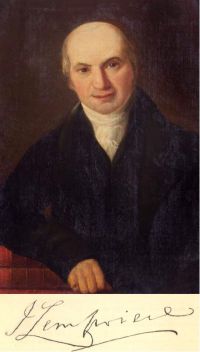
John Lemprière,
A classical dictionary
(1904)
“ Cuma and Cumæ, a town of Æolia, in Asia Minor. The inhabitants have been accused of stupidity for not laying a tax upon all the goods which entered their harbour during 300 years. They were called Cumani. Strabo, bk. 13.—Paterculus, bk. 1, ch. 4.――A city of Campania, near Puteoli, founded by a colony from Chalcis and Cumæ, of Æolia, before the Trojan war. The inhabitants were called Cumæi and Cumani. There was one of the Sibyls that fixed her residence in a cave in the neighbourhood, and was called the Cumæan Sibyl. See: Sibyllæ.—Ovid, Metamorphoses, bk. ”
Thomas Ashby, 1911 Encyclopædia Britannica (1911)
“ PUTEOLI (mod. Pozzuoli, q.v.) , an ancient town of Campania, Italy, on the northern shore of the Bay of Puteoli, a portion of the Bay of Naples, from which it is 6 m. W. The statement made by Stephanus of Byzantium and Jerome, that the city was founded under the name of Dicaearchia by a colony of Samians about 520 B.C., is probably correct, for, though in the territory of Cumae, it does not appear to have been occupied previous to 520, Misenum having been the original port of Cumae. On the other hand, Cumae probably extended her supremacy over it not long after. ”
Jesse Benedict Carter,
The Religion of Numa
“ This was not the first association that Rome had had with Cumae, for in all probability the worship of Apollo had spread from there into Rome toward the close of the kingdom. Apollo and the books were connected at Cumae, for it was Apollo who inspired the Sibyl, and the oracles were his commands, but it is almost certain that Apollo came to Rome in advance of the oracles. ”
Robert Seymour Conway and Thomas Ashby, 1911 Encyclopædia Britannica (1911)
“ The Grotto della Pace leads to the shores of Avernus. On the E. side of Cumae are considerable remains of the Roman period, among them those of the temple of Demeter, as restored by the family of the Lucceii. The cemeteries of Cumae extended on all sides of the ancient city, except towards the sea, but the most important lay on the north, between this temple and the Lago di Licola. Excavations during the 19th century in Greek, Samnite and Roman graves have produced many important objects, now in the various museums of Europe, but especially at Naples. ”
F. W. Farrar,
Darkness and Dawn; Or, Scenes in the Days of Nero…
“ He suborned one of the household to give false witness against him, permitted him no defence, and threw most of his slaves into chains. Petronius had left home for Campania to pay his respects to Nero. At Cumæ he was ordered to stop, and, not choosing to await the tedious delays of hope and fear, he set the example of a death as satirical as any which history records. There was nothing tragic in it, nothing remotely serious. He treated death as a jest no less contemptible than life, and died with complete coolness, effeminately brave, and sincerely frivolous. ”
Livy, From the Founding of the City… (1905)
“ He went to the Baths of Cumae, but became gradually worse and died at Cumae. The body was brought to Rome and received a magnificent funeral. He had also been a pontiff. Orders were given to the consul Q. Petilius to hold an election - as soon as he obtained favourable omens from the sacrifices - to provide him with a colleague and also to proclaim the Latin Festival. He fixed the election for the 3rd and the Latin Festival for the 11th of August.Whilst men's minds were thus filled with religious fears, fresh portents were announced. At Tusculum a burning brand was seen in the sky ”
Hugh Macmillan,
Roman Mosaics; Or, Studies in Rome and Its Neighbourhood
“ And I do not envy the man who is not deeply moved at the thought of the simple, old-world piety that placed a holy presence in this solitary spot, and of the tender awe with which the mysterious divinity of Cumæ was worshipped by generations of like passions and sorrows with ourselves—whose very graves under the shadow of this romantic hill had vanished long ages before our history had begun.Every schoolboy is familiar with the picturesque Roman legend of the Sibyl. It is variously told in connection with the elder and the later Tarquin, the two Etruscan kings of Rome ”
Ovid,
The Metamorphoses of Ovid, Books VIII-XV
“ Ver. 151. Some authors place the Phlegræan plains near Cumæ, in Italy, and say that in a spot near there, much impregnated with sulphur, Jupiter, aided by Hercules and the other Deities, conquered the Giants with his lightnings. Others say that their locality was in that part of Macedonia which was afterwards called Pallene; others again, in Thessaly, or Thrace. ”
Samuel Birch, History of Ancient Pottery: Greek…
“ Beginning with Campania, we take first the famous colony of Cumae, the most ancient in Magna Graecia, which was founded by the Chalcidians of Kyme in Aeolis at an unknown date, but not later than the eighth century. ”
Robert Seymour Conway and Thomas Ashby, 1911 Encyclopædia Britannica (1911)
“ In the Gothic wars the acropolis of Cumae was, except Naples, the only fortified town in Campania, and it retained its military importance until it was destroyed by the Neapolitans in 1205, since, which time it has been deserted. ”
Robert Seymour Conway and Thomas Ashby, 1911 Encyclopædia Britannica (1911)
“ These were unable to repel a renewed Etruscan attack without the help of Hiero of Syracuse, who in the battle of Cumae of 474 B.C. drove the Etruscan fleet from the sea, and broke their power in Campania. The Samnites finally destroyed the Etruscan supremacy by the capture of Capua in the latter half of the 5th century (see Capua; Campania) , and the Greeks of Cumae were overwhelmed by the same invasion, either in 420 B.C. (Livy iv. 44) or in 421 (Diodor. Sic. xii. 76) , if his statement is drawn from Greek sources, 428 if it is to be dated by the Roman consuls to whose year he ascribes it. ”
Theodor Mommsen,
The History of Rome, Book I
“ Had their dealings with the originally Ionian cities, such as Cumae (26) and the Phocaean settlements, been even merely on a similar scale with those which they had with the Sicilian Dorians, Ionic forms would at least have made their appearance along with the others; although certainly Dorism early penetrated even into these Ionic colonies themselves, and their dialect varied greatly. ”
W. Warde Fowler, The Religious Experience of the Roman People
“ Dim as is all early Roman history, the one clear fact of the sixth century is, as we have seen, the rapid advance of the Etruscans, their occupation of Rome, Praeneste, and other Latin cities, and their conquest of Campania, which is now ascribed to that same age.541 Legend told in later days how the last Etruscan king had taken refuge at Cumae after his expulsion from Rome, and it is just possible that it may here be founding upon some dim recollection of a fact. ”
Virgil,
Eclogues and Georgics
(1910)
“ Muses of Sicily, sing we a somewhat ampler strain: not all men's delight is in coppices and lowly tamarisks: if we sing of the woods, let them be woods worthy of a Consul. Now is come the last age of the Cumaean prophecy: the great cycle of periods is born anew. ”
Various, Encyclopaedia Britannica, 11th Edition…
“ From Capua itself a road ran north to Vicus Dianae, Caiatia and Telesia, while to the south the so-called Via Campana (there is up ancient warrant for the name) led to Puteoli, with a branch to Cumae, Baiae and Misenum; there was also connexion between Cumae, Puteoli and Neapolis (see below) , and another road to Atella and Neapolis. Neapolis could also be reached by a branch from the Via Popillia at Suessula, which passed through Acerrae. ”
Procopius, History of the Wars — Book V: The Gothic War…
“ But while Vittigis was carrying on these negotiations, Belisarius was preparing to go to Rome. He accordingly selected three hundred men from the infantry forces with Herodian as their leader, and assigned them the duty of guarding Naples. And he also sent to Cumae as large a garrison as he thought would be sufficient to guard the fortress there. For there was no stronghold in Campania except those at Cumae and at Naples. It is in this city of Cumae that the inhabitants point out the cave of the Sibyl, where they say her oracular shrine was ”
Virgil,
The Æneid of Virgil, Translated into English Verse
“ CIII. The temple of Venus on Mount Eryx was very celebrated in antiquity. Venus is called 'Idalian' from Idalium in Cyprus.CXII. All the names that occur in this stanza are those of sea-gods or sea-nymphs.CXVIII. The Roman poets placed the Sirens on some rocks in the southern part of the bay of Naples.NOTES TO BOOK SIXI. Cumae was the most ancient Greek colony in Campania. The tradition was that it had been founded by immigrants from Cyme and Aeolis and from Chaleis in Euboea. Hence its name, and the epithet Virgil applies to it. ”
John Colin Dunlop, History of Roman Literature from its Earliest Period to the Augustan Age…
“ Previous, however, to entering on this topic, our philosophers pass over from the Cuman villa of Catulus to that of Hortensius, at Bauli, one of the many magnificent seats belonging to that orator, and situated a little above the luxurious Baiæ, in the direction towards Cumæ, on an inlet of the Bay of Naples. Here they had resolved to remain till a favourable breeze should spring up, which might carry Lucullus to his Neapolitan, and Cicero to his Pompeian villa. ”
Livy, The History of Rome, Books 27 to 36
“ The consul were detained by religious affairs; for receiving intelligence of several prodigies, they could not easily obtain a favourable appearance from the victims. It was reported from Campania, that two temples, those of Fortune and Mars, and several sepulchres, had been struck by lightning. From Cumae, so does superstition connect the deities with the most trifling circumstances, that mice had gnawed some gold in the temple of Jupiter. That an immense swarm of bees had settled in the forum at Casinum. That at Ostia a wall and gate had been struck by lightning. ”
Robert H. Hobart Cust, The Pavement Masters of Siena…
“ DEMITTITVR ALTO 39 (Now has come the last period of Cumaean song, A great order of the ages is born afresh. The Virgin now returns; the kingdoms of Saturn return. Now a new progeny is sent down from lofty Heaven.) Her label bears the words “Sibilla Cumana meminit Virgilius. Eclog. IV.”This figure is the work of Giovanni di Maestro Stefano di Giovanni and his scholars, and was executed by him in 1482.45 He received for it the sum of 697 lire, 9 soldi and 2 c. ”
Theodor Mommsen,
The History of Rome, Book I
“ Thus the language and writing of Latium indicate that the direction of Latin commerce was exclusively towards the Cumaeans and Siceliots. Every other trace which has survived from so remote an age leads to the same conclusion: such as, the coin of Posidonia found in Latium; the purchase of grain, when a failure of the harvest occurred in Rome, from the Volscians, Cumaeans, and Siceliots (and, as was natural, from the Etruscans as well) ; above all, the relations subsisting between the Latin and Sicilian monetary systems. ”
W. Y. Sellar, The Roman Poets of the Augustan Age…
“ Alba Longa, as the chief city of the old Latin confederacy, must have been an object of greater interest to the Cumaeans than Tibur or Tusculum, and if we could be sure of the existence of the belief in the Trojan settlement in Latium before the destruction of Alba, we might infer with probability the great antiquity of the legend which ascribed the foundation of that town to the son of Aeneas. This belief might easily have passed to Rome; and Cephalon may have received it, in a somewhat distorted form, from native sources. ”
John Evelyn,
The Diary of John Evelyn (Volume 1 of 2…
“ It is reported Nero had once resolved to cut a channel for two great galleys that should have extended to Ostia, 150 miles distant. The people now call it Licola.From hence, we ascended to that most ancient city of Italy, the renowned Cuma, built by the Grecians. It stands on a very eminent promontory, but is now a heap of ruins. A little below, stands the Arco Felice, heretofore part of Apollo's Temple, with the foundations of divers goodly buildings; among whose heaps are frequently found statues and other antiquities, by such as [Pg 158] dig for them. ”
Franz Cumont,
The Oriental Religions in Roman Paganism
“ The Oriental religions that successively gained popularity exercised a decisive influence on the transformation of Latin paganism. Asia Minor was the first to have its gods accepted by Italy. Since the end of the Punic wars the black stone symbolizing the Great Mother of Pessinus had been established on the Palatine, but only since the reign of Claudius could the Phrygian cult freely develop in all its splendor and excesses. It introduced a sensual, highly-colored and fanatical worship into the grave and somber religion of the Romans. ”
Jacob Bryant, A New System; or, an Analysis of Antient Mythology…
“ Such we find to have been in Aquitania at the foot of this mountain, which were called Thermæ Onesæ; and are mentioned by Strabo, as [611] Θερμα καλλιστα ποτιμωτατου ὑδατος. What in one part of the world was termed Cumana, was in another rendered Comana. There was a grand city of this name in Cappadocia, where stood one of the noblest Puratheia in Asia. The Deity worshipped was represented as a feminine, and styled Anait, and Anaïs; which latter is the same as Hanes. She was well known also in Persis, Mesopotamia, and at Egbatana in Media. Both An-ait, and An-ais, signifies a fountain of fire. ”
Franz Cumont,
The Oriental Religions in Roman Paganism
“ As we see, the researches into the doctrines or practices common to Christianity and the Oriental mysteries lead almost always beyond the limits of the Roman empire into the Hellenistic Orient. The religious conceptions which imposed themselves on Latin Europe under the Cæsars [8] were developed there, and it is there we must look for the key to enigmas still unsolved. It is true that at present nothing is more obscure than the history of the religions that arose in Asia when Greek culture came in contact with barbarian theology. ”
Franz Cumont,
The Oriental Religions in Roman Paganism
“ The works of that erudite and religious writer influenced the development of the entire Roman theology more than anything else.Under the empire, while the Semitic Baals and Mithra were triumphing, astrology manifested its power everywhere. During that period everybody bowed to it. The Cæsars became its fervent devotees, frequently at the expense of the ancient cults. Tiberius neglected the gods because he believed only in fatalism, [6] and Otho, blindly confiding in the Oriental seer, marched against Vitellius in spite of the baneful presages that affrighted his official clergy. ”
Franz Cumont,
The Oriental Religions in Roman Paganism
“ Step by step they advanced, always reaching higher social classes and appealing to popular conscience rather than to the zeal of functionaries.As a matter of fact all these religions, except that of Mithra, seem at first sight to be far less austere than the Roman creed. We shall have occasion to note that they contained coarse and immodest fables and atrocious or vile rites. The Egyptian gods were expelled from Rome by Augustus and Tiberius on the charge of being immoral, but they were called immoral principally because they opposed a certain conception of the social order. ”