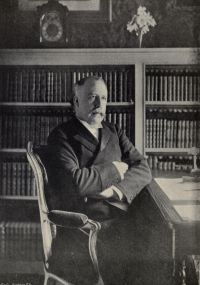
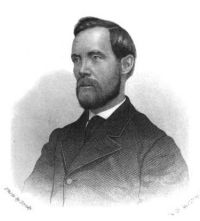
Earl Salisbury

Definition and stakes

Charles Lethbridge Kingsford,  1911 Encyclopædia Britannica, Volume 24… (1911)

“ Three days later whilst surveying the city from a window in Tourelles he was wounded by a cannon-shot, and died on the 3rd of November 1428. Salisbury was the most skilful soldier on the English side after the death of Henry V. Though employed on diplomatic missions both by Henry V. and Bedford, he took no part in politics save for a momentary support of Humphrey, duke of Gloucester, during his visit to England in 1427–1428. He was a patron of John Lydgate, who presented to him his book The Pilgrim (now Harley MS. 4826, with a miniature of Salisbury, engraved in Strutt’s Regal Antiquities) . ”
Source: Wikisource

William Hunt,  Dictionary of National Biography… (1893)

“ Salisbury was a wise and valiant man, not, indeed, to be ranked with patriotic statesmen, such as William the earl-marshal and Hubert de Burgh, but far superior to most of the nobles of his day, and sincerely attached to the interests of the royal house from which he came, faithful as long as it was possible to his brother John, and a good servant to his young nephew Henry. ”
Source: Wikisource

Richard Brooke,  Visits to Fields of Battle, in England…

“ Richard Neville Earl of Salisbury was the son of Ralph Neville, first Earl of Westmoreland (by Joan, his second wife, daughter of John of Gaunt Duke of Lancaster, and widow of Sir Robert Ferrers of Oversley) , and was created Earl of Salisbury after the death of Thomas de Montacute Earl of Salisbury, his wife’s father, in the fifteenth year of King Henry VI., and made Lord Chancellor in the 32nd year of his reign. ”
Source: Gutenberg

Get perspective with Kwize: daily news enlightened by great literature