William Cecil

Definition and stakes

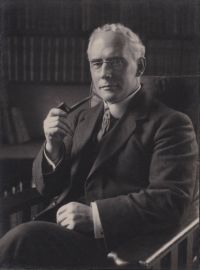
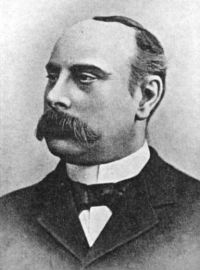
Portrait of Martin A. S. Hume Martin A. S. Hume,  The Great Lord Burghley: A study in Elizabethan statecraft

“ This throughout his life was the function of William Cecil. His gifts were not of the highest, for he was not a constructive statesman or a pioneer of great causes. He often stood by and saw injustice done by extreme men on one or the other side rather than lose his influence by appearing to favour the opposite extreme; and, as we have seen in his own words, he was quite ready to carry out as a minister a policy of which as a Councillor he had expressed his disapproval. ”
Source: Gutenberg

Oswald Barron,  1911 Encyclopædia Britannica (1911)

“ By the first marriage David Cecil left at his death in 1536 a son and heir, Richard Cecil, who enjoyed a place at court as yeoman of the king’s wardrobe under Henry VIII. and Edward VI. A gentleman of the privy chamber and sometime sheriff of Rutland, Richard Cecil had his share at the distribution of abbey lands, St Michael’s priory in Stamford being among the grants made to him. William Cecil, only son of Richard, was born, by his own account, in 1520, at Bourne in Lincolnshire. ”
Source: Wikisource

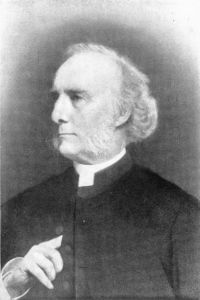
Portrait of Augustus Jessopp Augustus Jessopp,  Dictionary of National Biography… (1887)

“ CECIL, ROBERT Earl of Salisbury (1563?–1612) , statesman, was son of William Cecil, lord Burghley [q. v.] , by Mildred, daughter of Sir Anthony Cooke. The place of his birth has never been fixed with certainty. He declared that he was born in Westminster; the exact year, too, has been the subject of much doubt. When Thomas Cecil, his elder brother, was in France in January 1563, it was deemed advisable that he should return sooner than had been intended, because his father's ‘younger son’ had recently died. ”
Source: Wikisource

Get perspective with Kwize: daily news enlightened by great literature