Earl of Moray

Definition and stakes

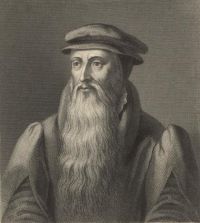
Portrait of John Knox John Knox The History of the Reformation of Religion in Scotland

The Earl of Moray sent word of the marvellous victory to the Queen, and humbly prayed her to show obedience to God and publicly to convene with them, to give thanks to God for His notable deliverance. She gloomed at the messenger and at the request, and scarcely would give a good word or blithe countenance to any that she knew to be earnest favourers of the Earl Moray, whose prosperity was, and yet is, to her boldened heart, a very venom against him for his godliness and upright plainness. For many days she bare no better countenance
Source: Gutenberg

Portrait of Leslie Stephen Leslie Stephen Dictionary of National Biography… (1894)

Moray was present at the futile parliament convened at Dairsie in April 1335 by the steward of Scotland and the returned Earl of Moray, the regents. In the subsequent surrender to Edward, and in the making of the treaty of Perth (18 Aug. 1335) , Moray had no part, but chose to go into hiding with the Earl of March and William Douglas of Liddesdale. When the Earl of Athole laid siege to the castle of Kildrummie, in which Moray's wife and children had been placed, the three fugitives came from their fastnesses, and marched against Kildrummie with eleven hundred men.
Source: Wikisource

1911 Encyclopædia Britannica (1911)

MURRAY (or Moray) , EARLS OF. The earldom of Moray was one of the seven original earldoms of Scotland, its lands corresponding roughly to the modern counties of Inverness and Ross. Little is known of the earls until about 1314, when Sir Thomas Randolph, a nephew of King Robert Bruce, was created earl of Moray (q.v.) , and the Randolphs held the earldom until 1346, when the childless John Randolph, 3rd earl of this line and a soldier of repute, was killed at the battle of Neville’s Cross.
Source: Wikisource

Get perspective with Kwize: daily news enlightened by great literature