“ One was Cardinal-Bishop of Winchester, another was Duke of Exeter, and a third was Earl of Somerset. Two of the sons of the Earl became Dukes of Somerset; the younger fell at St. Albans, (p. 007) the earliest victim of the Wars of the Roses, which proved so fatal to his House; and the male line of the Beauforts failed in the third generation. The sole heir to their claims was the daughter of the first Duke of Somerset, Margaret, now widow of Edmund Tudor; for, after a year of wedded life, Edmund had died in November, 1456. Two months later his widow gave birth to a boy, the future Henry VII. ”
Earl of Somerset
Definition and stakes
The Earl of Somerset, a noble title associated with prominent historical and political figures, appears in literary and historical works as a symbol of power and rivalry. Scholars such as A.F. Pollard emphasize its significance during the Wars of the Roses, while Mary Louisa Boyle points out its bestowal on Carr during a period of royal favor.
Richard Watson Dixon highlights its involvement in struggles for regency under Edward VI. These differing portrayals underscore the title’s importance in shaping medieval and early modern English dynastic disputes, illustrating both ambition and fragility. The Earl of Somerset therefore emerges as a persistent figure in accounts of authority and inheritance.
Quotes about “Earl of Somerset”
Great Men and Famous Women. Vol…
“ The Duke of York at first made no claim to the throne, demanding only that he should have his place in the councils of the king, and even when swords were drawn the Yorkists swore their allegiance to the king, Henry VI., while fighting against his advisers. Of these favorites of the king, the chief was the Earl of Somerset, whom many suspected of a design to establish himself as the successor to the throne. ”
Mary Louisa Boyle, Biographical catalogue of the portraits at Longleat in the county of Wilts…
“ The King, who was not likely to be deterred by any sense of rectitude from the weak pleasure he found in complying with any demand that Rochester might make, not only connived at the passing of the divorce, but created Carr Earl of Somerset, as he was not considered of sufficiently high rank to marry one who had been a Countess. ”
 Richard Watson Dixon,
Dictionary of National Biography…
(1888)
Richard Watson Dixon,
Dictionary of National Biography…
(1888)
“ On 18 July 1546 he was sent ambassador to Paris. In 1547 he was left by Henry VIII one of the executors of his will, as a sort of joint regent with fifteen others, but he seems to have acquiesced in the designs of Somerset, the uncle of the young King Edward VI, who turned the joint regency into his own sole protectorate. In the same year (18 Feb. 1546–7) he was created Earl of Warwick and high chamberlain of England. There was some talk of his choosing the title of Earl of Coventry. On 4 Feb. he resigned his office of great admiral to Somerset's brother, Thomas, Lord Seymour of Sudeley. ”
Various, Chambers's Edinburgh Journal, No…
“ Carr, afterwards made Earl of Somerset, was a raw Scotch youth, without education or training, when he was first brought under the notice of the king by chancing to have his leg broken in the royal presence in an attempt to mount a fiery horse. When once taken into favour, the king did not care whom he offended, or what injustice he did, to enrich the fortunate youth. ”
The Paston Letters, A.D. 1422-1509…
“ The Duke of York was present, with ten bishops and twenty temporal peers, among whom were the Protector’s friend, the Earl of Salisbury, Lord Chancellor, the Earl of Worcester, Treasurer of England, and the king’s half-brother, the Earl of Pembroke. His accuser, the Duke of Norfolk, was absent, probably not without a reason. In presence of the assembled lords, Somerset then declared that he had been imprisoned without a cause and confined in the Tower of London one whole year and more than ten weeks over, and had only been liberated on bail on the 7th of February. ”
1911 Encyclopædia Britannica (1911)
“ The title of Earl St Maur adopted by the 12th duke in 1863 is said to have been the original form of the family name of which Seymour was a later corruption, and since the last-mentioned date it has been assumed as the family surname of the dukes of Somerset. ”
Mrs. A. T. Thomson, The life and times of George Villiers…
“ It seemed therefore very improbable that Villiers should ever hope to rival one who was so rooted in the King’s regard as the Earl of Somerset, but events which no human foresight could have anticipated worked for him in the dark secrecy of a woman’s guilty career. ”
1911 Encyclopædia Britannica (1911)
“ He supported the earl of Northampton and the Spanish party in opposition to the old tried advisers of the king, such as Lord-Chancellor Ellesmere, who were endeavouring to maintain the union with the Protestants abroad, and who now in 1614 pushed forward another candidate for the king’s favour. Somerset, whose head was turned by the sudden rise to power and influence, became jealous and peevish, and feeling his position insecure, obtained in 1615 from the king a full pardon, to which, however, the chancellor refused to put the Great Seal. ”
 Leslie Stephen,
Dictionary of National Biography…
(1897)
Leslie Stephen,
Dictionary of National Biography…
(1897)
“ His father's attainder for felony, December 1551, did not affect his dignities or estates, and on his execution on 21 Jan. 1551–2 the Earl of Hertford became de jure Duke of Somerset. Being a minor, he could not take his seat in the House of Lords, and in the following April his father's enemies in wanton malice procured an act of parliament (5 Edward VI) ‘for the limitation of the late Duke of Somerset's lands,’ wherein a clause was introduced declaring forfeit all the lands, estates, dignities, and titles of the late duke and his heirs by his second wife (Cobbett, State Trials, i. 526–7) . ”
Anonymous, Cassell's History of England, Vol…
“ He sent messenger after messenger to Somerset in prison, the Attorney-General Bacon being the principal, James Hay, afterwards Earl of Carlisle, another, with whom was employed Somerset's late private secretary. They did all in their power to induce Somerset to accept the king's terms, but he remained obstinate, replying, when offered life and fortune, "Of [456] what use is life when honour is gone?" He demanded earnestly to be permitted to see the king himself, declaring that in half an hour's interview he could place all in so clear a light as should perfectly satisfy his majesty. ”
 John Cassell,
Cassell's Illustrated History of England
(1865)
John Cassell,
Cassell's Illustrated History of England
(1865)
“ Somerset had sworn never to act without the assent of the majority of the council, but he had little thought indeed of abiding by that oath. He could rely on Craumer's support in his attempts at supreme authority, as the primate calculated, through his means, to carry out the most extensive innovations in religion; but there was one man whom he well knew would oppose his aspiring proceedings—Wriothesley, the new Earl of Southampton. ”
Ida A. Taylor, Lady Jane Grey and Her Times
“ Wriothesley, now Earl of Southampton, remained the solitary genuine adherent of the old faith belonging to the Council. His lack of caution in putting the great seal into commission without the authority of his colleagues afforded them an excuse for ousting him from his post of Chancellor; he was compelled to resign his office, and received orders to confine himself to his house, whilst Hertford, become Duke of Somerset, took advantage of his absence to obtain letters patent by which he became virtually omnipotent in the State. ”
Leslie Stephen,
Dictionary of National Biography…
(1898)
“ SOMERSET, EDWARD, fourth Earl of Worcester (1553–1628) , born in 1553, was the only son of William Somerset, third earl of Worcester [q. v.] , by his wife Christian, daughter of Edward, first baron North [q. v.] In his youth he was considered ‘the best horseman and tilter of his time,’ and, in spite of his Roman catholicism, he became a favourite with Queen Elizabeth, who said that he ‘reconciled what she believed impossible, a stiff papist to a good subject’ (Lloyd, State Worthies, 1670, p. 582) . ”
Various, Bentley's Miscellany, Volume II
“ Butterfly Bishop, see Fictions of the Middle Ages. C. Calonne, M. 473. Cannon Family, account of the, 150; particulars of their Journey to Boulogne, 454. Capital Punishments in London eighty years ago, (Earl Ferrers,) 595. Carr, Robert, Viscount Rochester and Earl of Somerset, his influence with King James I. 322; created Earl of Somerset, 323; his conduct to Sir Thomas Overbury, 324; his marriage with Lady Essex, 326; his trial for the murder of Sir Thomas Overbury, 332. Castle by the Sea, lines on the, 623. ”
Leslie Stephen,
Dictionary of National Biography…
(1898)
“ In April 1550 he was sent as a hostage to France, in company with the Earl of Hertford and other noblemen's sons, and about the same time a project was formed for marrying him to Margaret, daughter of the Duke of Somerset. According to his own statement, he was employed by Somerset to induce Edward VI to marry the duke's third daughter (Jane) , to keep a watch on the young king's words and deeds, and to report any secret conferences he might have with his councillors. ”
Leslie Stephen,
Dictionary of National Biography…
(1898)
“ SOMERSET, CHARLES, Earl of Worcester (1460?–1526) , born about 1460, was an illegitimate son of Henry Beaufort, third duke of Somerset. In his childhood he was doubtless an exile in Flanders, for he was knighted by the Archduke Philip, then himself a child, before the battle of Bosworth. ”
1911 Encyclopædia Britannica (1911)
“ As the latter died unmarried, his sister Elizabeth brought to her husband, Thomas Bruce, 2nd earl of Ailesbury, the great estates of Tottenham Park and Savernake Forest in Wiltshire; while the Somerset title devolved on John Seymour (c. 1628–1675) , the 2nd duke’s fifth and youngest son. At the death of the latter without issue in April 1675 the marquessate of Hertford became extinct, and his cousin Francis Seymour (1658–1678) became 5th duke of Somerset. ”
 Leopold von Ranke,
A history of England principally in the seventeenth century…
Leopold von Ranke,
A history of England principally in the seventeenth century…
“ When the enemies' fortune stood highest, he was heard to say with great tranquillity, 'they can do no more than God will allow.' [280] By the side of this pilot of the state, Robert Dudley, who was promoted to be Earl of Leicester, drew all eyes on himself as the leading man at court. Burleigh was looked on as Somerset's creation, Dudley was the youngest son of the Earl of Northumberland: for it was of advantage to Elizabeth, especially at first, to unite around her important representatives of the two parties which had composed her brother's government. ”
Gordon Goodwin, Dictionary of National Biography… (1889)
“ On the accession of Edward VI, in 1547, Arundel was retained in the post of lord chamberlain and chosen to act as high constable at the coronation. He had also been named, in the will of Henry VIII, as a member of the council of twelve, intended to assist the executors in cases of difficulty; but his influence was destroyed when Somerset became protector. Somerset soon disgusted the other members of the cabinet, and Arundel was among the first to urge his dismissal in favour of the Earl of Warwick. ”
Various, Notes and Queries, Vol. IV, Number 100…
“ John Beaufort Duke of Somerset, and his wife, in Wimborne Minster, Dorset, Knight of the Garter, created Duke of Somerset and Earl of Kendal, and at the same time made Lieutenant and Captain-General of Aquitaine, France and Normandy. ”
Leslie Stephen,
Dictionary of National Biography…
(1898)
“ Parl. v. 206) . He seems to have resigned this unprofitable post to Edmund Beaufort, second duke of Somerset [q. v.] , in 1451. In February 1455 he helped to bail out Somerset, and to arbitrate between him and Richard, duke of York (Fœdera, xi. 361–2) . He had shown his dislike of York's ambition a year before by consenting to act as lord steward at the Earl of Devonshire's trial (Rot. Parl. v. 249) . He it was, too, who had presented the infant prince Edward to the mad king without succeeding in making him understand that a son and heir had been born to him (Paston Letters, i. 263) . ”
Mary Louisa Boyle, Biographical catalogue of the portraits at Weston…
“ Lord Russell’s choice was free no more, and the sequel proved the selection had been for his own happiness, and that of the whole family. The King interested himself in the cause of the young lovers, and sent the Duke of Lennox to mediate with Lord Bedford in the matter. Lord Somerset, with all his crimes on his head, had proved himself the most tender and devoted of fathers, giving his child an excellent and strictly virtuous education, and he made every sacrifice in his power to give her a good dowry, seeing that her poverty was an additional obstacle to the marriage in Lord Bedford’s eyes ”
Mary Louisa Boyle, Biographical catalogue of the portraits at Weston…
“ The young King, who loved him dearly, had little power to befriend his uncle, whose estates were forfeited, and he was treated with insult and contumely. The Earl of Warwick was bent on his destruction. Arraigned of high treason at Westminster Hall, he demanded a trial of his peers, was acquitted of the principal charge, but found guilty of felony, and after several months’ imprisonment, in spite of every attempt on King Edward’s part, Edward Seymour, Duke of Somerset, was condemned to die on the scaffold. ”
Leopold von Ranke,
A history of England principally in the seventeenth century…
“ The victory gained by him, with the active sympathy of the nobility, which was defending its own interests, was a defeat for Somerset. Even those who did not believe that he had any personal share in the movement, nevertheless reproached him with having allowed conditions to be prescribed to himself and his government by the people; the common man would be King. Financial difficulties arising from an alteration in the coinage, and ill success in the war against France, contributed to give his opponents the ascendancy in the Privy Council. ”
 Charlotte M. Yonge,
Young Folks' History of England
Charlotte M. Yonge,
Young Folks' History of England
“ However, there was another great nobleman, the Duke of Northumberland, who wanted to be as powerful as the Duke of Somerset. He was the son of Dudley, the wicked judge under Henry VII., who had made himself so rich, and he managed to take advantage of the people being discontented with Somerset to get the king into his own hands, accuse Somerset of treason, send him to the Tower, and cut off his head. ”
Various, Chambers's Journal of Popular Literature…
“ In Edward VI.’s reign, however, a more ruthless and sweeping hand came to deal with it. The proud and ambitious Seymour, Duke of Somerset, at that time Lord Protector, had no kindly feeling for such places; and the church and all the rest of the priory, with the exception of the gate, were blown up with gunpowder. The large blocks of stone were used to build Somerset’s palace in the Strand in 1549. ”
Ida A. Taylor, Lady Jane Grey and Her Times
“ God save the King!’ The good Duke all the while stayed, and, with his cap in his hand, waited for the people to come together.”124Whatever had been Sir Anthony’s errand, it had not been one of mercy; and when the excitement following upon the panic was calmed the doomed man and the crowd were alike aware that the people had been misled by hope, and that no pardon had been brought. It is at such a moment that a man’s mettle is shown. With admirable dignity Somerset bore the blow. ”
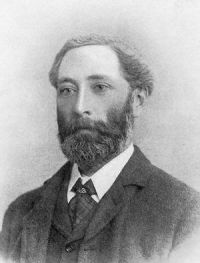 W. W. Rouse Ball,
Cambridge Papers
W. W. Rouse Ball,
Cambridge Papers
“ Delighting in danger, which even when in supreme command he deliberately sought, brave to a fault, an excellent cavalry leader, rich and lavishly generous, he was the idol of the public, and witnesses to his popularity remain in the numerous public-houses scattered far and wide over England which bear his name and arms. Somerset was of a very different type, being a stupid man whose power was chiefly derived from his enormous landed possessions. ”
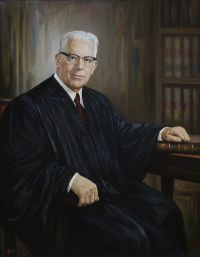 Earl Warren,
Maryland Committee for Fair Representation v…
Earl Warren,
Maryland Committee for Fair Representation v…
“ Counties with only 35.6% of the State's total population elect a majority of the members of the House under the 1962 legislation. A maximum population-variance ratio of almost 6-to-1 still exists between the most populous and least populous House districts. A delegate from Somerset County represents an average of 6,541 persons, whereas a delegate from Baltimore County represents an average of 37,879. Under both the previous and present apportionment provisions, members of both the Senate and the House of Delegates in Maryland are all elected to serve four-year terms. ”
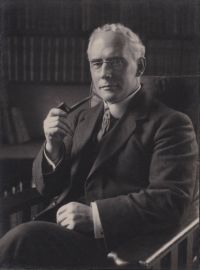 Albert Frederick Pollard,
Dictionary of National Biography
(1901)
Albert Frederick Pollard,
Dictionary of National Biography
(1901)
“ In 1457 Queen Margaret of Anjou suggested a marriage between Somerset and his cousin Joan, sister of James II of Scotland, but the proposal came to nothing. On 14 Oct. of that year Somerset was made lieutenant of the Isle of Wight and warden of Carisbrooke Castle. Early in 1458 he took part in the council at London which again endeavoured to effect a political reconciliation, and it was agreed that Richard, duke of York, should pay the widowed Duchess of Somerset and her children an annual pension of five thousand marks as compensation for the death of the second duke. ”
Ida A. Taylor, Lady Jane Grey and Her Times
“ Some portion of his wealth was restored to him, and he was at length readmitted to the Council and to a limited share in the government. To sanguine eyes all seemed to have been placed on a satisfactory footing; but jealousy, distrust, and hatred take much killing. The position of the man who was the King’s nearest of kin amongst his nobles, and had lately been all-powerful in the State, was a difficult one. Warwick was rising, and meant to rise; Somerset was not content to remain fallen and discredited. ”
