Earth's poles

Definition and stakes

George S. Chappell,  My Northern Exposure: The Kawa at the Pole (1922)

“ For hundreds of years men have struggled amid snow and ice to reach one or the other of the earth's poles. Why? What has attracted them? What has been the lure which has led them from warm firesides and comfortable radiators to suffer the rigors of a most annoying climate?
We search in vain among the writings of modern polar explorers for a satisfactory answer to this question.
In earlier days we find credible reasons for this fanatical zeal, reasons which were material and commercial. In the dark ages we know that hardy Norsemen sought an Ultima Thule beyond the Arctic Circle.
”

Source: Gutenberg

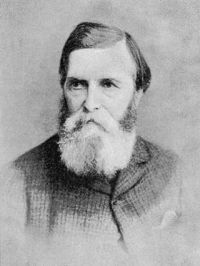
Portrait of Sir John William Dawson Sir John William Dawson,  Some Salient Points in the Science of the Earth

“ Independently of astronomical objections, there is good geological evidence that the poles of the earth must have been nearly in their present places from the dawn of life until now. From the Laurentian upward, those organic limestones which mark the areas where warm and shallow equatorial water was spreading over submerged continents, are so disposed as to prove the permanence of the poles. ”
Source: Gutenberg

James De Mille,  A Strange Manuscript Found in a Copper Cylinder

“ Do not imagine that the surface of the earth is different at the poles from what it is anywhere else. If we get to the South Pole we shall see there what we have always seen—the open view of land or water, and the boundary of the horizon. As for this current, it seems to me like the Gulf Stream, and it evidently does an important work in the movement of the ocean waters. It pours on through vast fields of ice on its way to other oceans, where it will probably become united with new currents. Theories about openings at the poles, or whirlpools, must be given up. ”
Source: Gutenberg

Get perspective with Kwize: daily news enlightened by great literature