“ A strange house for an architect to inhabit! George, however, had never liked it. Before his marriage he had discovered a magnificent house in Fitzroy Square, a domestic masterpiece of the Adams period, exquisitely designed without and within, huge rooms and many rooms, lovely ceilings, a forged-iron stair-rail out of Paradise; a house appreciably nearer to the centre than the one in Elm Park Road, and with a lower rental. George would have taken the house, had not Lois pointed out to him its fatal disadvantage, which had escaped him, namely, that people simply did not live in Fitzroy Square. ”
Fitzroy Square
Definition and stakes
Quotes about “Fitzroy Square”
Charles Dickens,
Nicholas Nickleby
(1839)
“ And let not those whose eyes have been accustomed to the aristocratic gravity of Grosvenor Square and Hanover Square, the dowager barrenness and frigidity of Fitzroy Square, or the gravel walks and garden seats of the Squares of Russell and Euston, suppose that the affections of Tim Linkinwater, or the inferior lovers of this particular locality, had been awakened and kept alive by any refreshing associations with leaves however dingy, or grass, however bare and thin. The City square has no inclosure, save the lamp-post in the middle, and no grass but the weeds which spring up round its base. ”
Percy Fitzgerald, Picturesque London
“ Portland Place and its stately mansions, with their broad surfaces of brick, have a certain dignity; but the houses have been sadly disfigured by additions. The pleasing old-fashioned-looking Fitzroy Square seems like a bit of Bath. The brothers are said to have been the first, in London at least, who attacked the difficult problem of imparting to a number of detached mansions the air of being portions of one whole, which in architecture is a deception most intolerable and not to be endured. ”
Edward FitzGerald, Letters of Edward FitzGerald, in Two Volumes…
“ But for the present here I am, at 19 Charlotte Street, Fitzroy Square, come up to have a fresh squabble with Lawyers, and to see to an old College friend who is gone mad, and threatens to drive his wife mad too, I think. Here are troubles, if you p. 272like: I mean, these poor people’s. Well, I have not had much time except to post about in Omnibi between Lincoln’s Inn and Bayswater: but I have seen Alfred once; Carlyle once; Thackeray twice; and Spedding many times. ”
Percy Fitzgerald, Picturesque London
“ Some of the most forlorn and dismal places are those curious squares found in the long roads that lead out of London. There is one such near the Old Kent Road, built in a pretentious style and now utterly gone to seed and decay. All the doorways, of a curious pattern, are the same, so are all the windows. No one walks there, no custom appears to visit it. It seems one mass of abandonment and we hurry away depressed. Soho Square is really quaint and interesting: it is in a sound and flourishing condition ”
F. Scott Fitzgerald,
The Beautiful and Damned
(1922)
“ The Reproachless Apartment Fifth and Sixth Avenues, it seemed to Anthony, were the uprights of a gigantic ladder stretching from Washington Square to Central Park. Coming up-town on top of a bus toward Fifty-second Street invariably gave him the sensation of hoisting himself hand by hand on a series of treacherous rungs, and when the bus jolted to a stop at his own rung he found something akin to relief as he descended the reckless metal steps to the sidewalk. ”
Percy Fitzgerald, Picturesque London
“ Passing out of Victoria Street, where there is much crush and noise at “The Stores,” and down a small alley, we come to a little gem of its kind, as it will seem to the true artist, a small charity school, standing in its walled inclosure. It is of Queen Anne date and pattern, and is no more than a simple square little hall. But how quaint and varied is it! how admirably are its surfaces broken! while every side offers a different pattern. The honest brick is of a fine plum colour; the wall is daintily divided by pilasters ”
F. Scott Fitzgerald,
The Beautiful and Damned
(1922)
“ Passed a bewildered old lady borne along like a basket of eggs between two men who exclaimed to her of the wonders of Times Square—explained them so quickly that the old lady, trying to be impartially interested, waved her head here and there like a piece of wind-worried old orange-peel. Anthony heard a snatch of their conversation:"There's the Astor, mama!""Look! See the chariot race sign——""There's where we were to-day. No, there!""Good gracious! ...""You should worry and grow thin like a dime." ”
Percy Fitzgerald, Picturesque London
“ Indeed, this little quarter could scarcely be matched as a characteristic specimen of a certain phase of London life in the City, where the herd of workers cluster together thickly and economize every inch of space. At front, sides, and rear of the old fane, old and new wooden and brick houses are heaped together in disorder, according as the convenience of the site offered favourable opportunity. Close by is a little flagged square with a dozen alleys starting from it, with two or three old mansions of last century. ”
Percy Fitzgerald, Picturesque London
“ In this worthy mansion one has the interest that one takes in all connected with Johnson.Not far away is another antique square, very old-fashioned, and with good houses, Red Lion Square. The inclosures of both these places have more the air of “grounds” than of the prim and trim modern square. There is a certain wildness, and the grass grows carelessly. But it is now completely invaded by business, and every house is subdivided into offices. Curious little foot-alleys lead into it from various quarters. ”
Percy Fitzgerald, Picturesque London
“ OLD SQUARES. THE old, smaller squares in London are very interesting from their tranquil, retired air and antique pattern, and venerable trees. None is more characteristic than Queen Square in Bloomsbury, with its pleasant Queen Anne and Georgian houses running round. Most of these inclosures were laid out originally after the Dutch manner, which is still apparent. It must be a curious solitary sensation to live in one of these retreats, and they are affected by students and literary men. ”
Samuel Hopkins Adams,
From a Bench in Our Square
“ Let me confess at once that we are a bit supercilious in our attitude toward the sister Square far to our West, across the Alps of Broadway. Our Square was an established center of the social respectabilities when the foot of Fifth Avenue was still frequented by the occasional cow whose wanderings are responsible for the street-plan of Greenwich Village. Our Square remains true to the ancient and simple traditions, whereas Washington Square has grown long hair, smeared its fingers with paint and its lips with free verse, and gone into debt for its inconsiderable laundry bills. ”
With the World's Great Travellers…
“ All the streets run at right angles to one another, so that a short cut, the joy of the accomplished Londoner, is impossible. It is a chess-board on which the bishop’s move is unknown. Nothing diagonal can be done. The city is ruled like the page of a ledger, from top to bottom with streets, from side to side with avenues. It is all divided into squares. When you are first told this, a vision arises of the possibility of cutting across these squares from corner to corner. Not a bit of it: a square at Philadelphia means a solid block of houses, not an open space enclosed by buildings. ”
Hugh Walpole,
The Golden Scarecrow — Henry Fitzgeorge Strether
(1915)
“ There can be nothing in the world more charming than the way the Square receives its friends. Let it number amongst its guests a Duchess, that is no reason why it should scorn "Colonel Harry" or "Mouldy Jim," the singer of hymns. Scorn, indeed, cannot be found within its grey walls, soft grey, soft green, soft white and blue—in these colours is the Square's body clothed, no anger in its mild eyes, nor contempt anywhere at its heart.The Square is proud, and is proud with reason, of its garden. It is not a large garden as London gardens go. It has in its centre a fountain. ”
Percy Fitzgerald, Picturesque London
“ His statue is to be seen in Islington; and in all the annals of English pluck and perseverance there is nothing better or more encouraging than the indomitable pluck of this intrepid water purveyor—himself “a company.” The board room of the building is a fine, picturesque apartment in a good old style; its ceiling, a good piece of florid decoration, laid out in carpet pattern, or like a flowerbed, with rich stucco borders—a circle within a square, and a border round that again. Panelling runs all round, and there is an elaborately-wrought mantel, with carvings and other decorations. ”
Anna Alice Chapin,
Greenwich Village
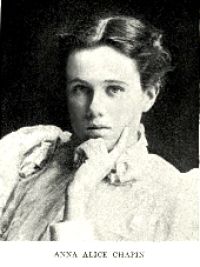
“ There is scarcely a plot of ground below Fourteenth Street without its story and its associations, its motley company of memories and spectres both good and bad, its imperishably adventurous savour of the past, imprisoned in the dry prose of registries and records. Let us just take a glance, a bird's-eye view as it were, of that region which we now know as Washington Square, as it was when the city of New York bought it for a Potter's Field. ”
Percy Fitzgerald, Picturesque London
“ In Soho, once a fashionable quarter, in Gerrard Street and in Dean Street, there are some fine examples. There are some hundreds, in short, to be discovered in London; and they are well worth searching for.At No. 8, Grosvenor Square, will be noted some airy and elegant treatment of old-fashioned iron railings, and which have been but little restored. It is not, moreover, limited to the doorway, but extends along the area. There are many doorways in London where a bit of “flourish” connects the brick wall next the door with the iron railing of the area with not unpleasing effect. ”
F. Scott Fitzgerald,
The Beautiful and Damned — Book Three…
(1922)
“ She had been pleased for a part of the day--the early afternoon--in walking along that Broadway of Harlem, One Hundred and Twenty-fifth Street, with her nostrils alert to many odors, and her mind excited by the extraordinary beauty of some Italian children. It affected her curiously--as Fifth Avenue had affected her once, in the days when, with the placid confidence of beauty, she had known that it was all hers, every shop and all it held, every adult toy glittering in a window, all hers for the asking. ”
Alfred Rimmer, Ancient Streets and Homesteads of England
“ Now a broad red wall is one of the most dreary objects of modern civilisation, and, indeed, the side of a square, broken only by rectangular windows, as exhibited in London squares, has doubtless had a depressing and injurious effect on the duration of human life. Russell Square and Bedford Square are familiar instances of this; and how unfavourably they contrast with old Lincoln’s Inn buildings, in the same city, the engraving will show, yet the same architecture that prevails in Lincoln’s Inn would abundantly serve all the purposes of a London square of modern times. ”
Percy Fitzgerald, Picturesque London
“ Nowhere is the current of life and traffic so congested as on Ludgate Hill: the stream surges up and down the hill, yet here we come upon such an oasis. Turning out of Paternoster Row, and passing near its aorta, as we might almost style Stationers’ Hall Court, we stand before a red arch and gateway, quite modern, but not out of keeping. This is the entrance to Amen Court, happily named, a little sequestered square, where the canons of St. Paul’s live when they are “in residence.” Nothing more lazy, dreamy, or retired can be imagined. ”
Arthur Bartlett Maurice,
Fifth Avenue
“ It was their type of house that was accepted for the neighbourhood as the first streets began to open to the right and left of Fifth Avenue. That northern stretch of the Square, first invaded in fiction by Henry James, has ever been a favourite background of the story-spinners, who never tire of contrasting its tone of well-bred aristocracy with the squalor, half-Bohemian and half-proletarian, that faces it from across the Park. In fiction one does not necessarily have to be of an old New York family in order to inhabit one of those north-side dwellings. ”
Percy Fitzgerald, Picturesque London
“ These places seem to belong to a mode of society now antiquated or gone by, or to the manners and customs such as are described in “Pickwick” and “Nickleby.” It must be pleasant for the stranger to look across at the old, quaint lantern of the Charterhouse and hear the recurring chimes. Unhappily, the old square, which is so suitable an introduction, has been already nibbled at by the builders and “jobbers.” ”
Percy Fitzgerald, Picturesque London
“ To hear its chimes, not at midnight, but on some December evening, when the steeple is projected on a cold blue background, while you can see the shadows of the ringers in the bell-tower, offers a picturesque effect. The bells fling out their janglings more wildly than any peal in London: they are nearer the ground, and the hurly-burly is melodious enough. Those tones the Doctor often heard in Gough Square and Bolt Court, and within he had his favourite seat, to this day reverently marked by a plate and inscription. ”
William Le Queux,
Behind the Throne
“ Mrs Charles Fitzroy, a pretty and rather extravagant woman, still on the right side of forty, moved in a very good set, and entertained a good deal at her house in Brook Street. Her husband was a magnate in the city, and the fact that Morgan-Mason was her brother gave her the entrée to houses which would have otherwise been closed to her. Fitzroy, a rather short, grey-bearded man with a florid countenance, had risen from a clerk’s stool to be what he was, and differed in little particular from thousands of well-off city men who live in the West End and enter the anteroom of society. ”
Percy Fitzgerald, Picturesque London
“ To its labours we are indebted for Trafalgar Square and the improvements in the Strand, Cockspur Street, the Haymarket, the old Opera House, and those between Oxford Street and Holborn, which are really very good, and the architecture, although not altogether faultless, is nevertheless, taken as a whole, very effective ”
Samuel Hopkins Adams,
Our Square and the People in It
“ WALLED in by slums stands Our Square, a valiant green space, far on the flank of the Great City. Ours is an inglorious little world Sociologists have-not yet remarked and classified us. The Washington Square romancers who bold sentimental revel at the foot of Fifth Avenue reck nothing of their sister park, many blocks to the east. But we are patient of our obscurity. Close-knit, keeping our own counsel, jealous of our own concerns, and not without our own pride of place, we live our quiet lives, a community sufficient unto itself. ”
F. Scott Fitzgerald,
The Beautiful and Damned
(1922)
“ All the newest and most beautiful designs in automobiles were out on Fifth Avenue, and ahead of them the Plaza loomed up rather unusually white and attractive. The supple, indolent Gloria walked a short shadow's length ahead of him, pouring out lazy casual comments that floated a moment on the dazzling air before they reached his ear. "Oh!" she cried, "I want to go south to Hot Springs! I want to get out in the air and just roll around on the new grass and forget there's ever been any winter." ”
Joel Cook,
America, Volume 1 (of 6)
“ Upon the south side of Chestnut Street, occupying the block between Fifth and Sixth Streets, is Independence Square, an open space of about four acres, tastefully laid out in flowers and lawns, with spacious and well-shaded walks. Upon the northern side of the square, and fronting Chestnut Street, is the most hallowed building of American patriotic memories, Independence Hall, a modest brick structure, yet the most interesting object Philadelphia contains. ”
Percy Fitzgerald, Picturesque London
“ Not far away, just out of Soho Square, is to be seen another grimed and neglected-looking edifice, a stretch of gloomy brickwork, with rows of windows, having the general air of a disused Assembly room. This, curious to say, was actually its original function. For, over a hundred and twenty years ago, it was the well-known “Mrs. Cornelys’,” where her masquerades and ridottos, the most brilliant in London, were held. Mrs. Cornelys, after being patronized by all “the nobility and gentry,” came at last to “selling asses’ milk” in the suburbs, and died in a wretched way. ”