Fourth Amendment to the United States Constitution

Definition and stakes

by the United States Court of Appeals for the District of Columbia Circuit United States v. Kember (648 F.2d 1354…

The effect of the Fourth Amendment is to put the courts of the United States and Federal officials, in the exercise of their power and authority, under limitations and restraints as to the exercise of such power and authority, and to forever secure the people, their persons, houses, papers and effects against all unreasonable searches and seizures under the guise of law.
Source: Wikisource

The Constitution of the United States of America…

However, the Supreme Court declined to sustain Congress when, under the guise of enforcing the Fourteenth Amendment by appropriate legislation, it enacted a statute which was not limited to take effect only in case a State should abridge the privileges of United States citizens, but applied no matter how well the State might have performed its duty, and would subject to punishment private individuals who conspired to deprive anyone of the equal protection of the laws.
Source: Gutenberg

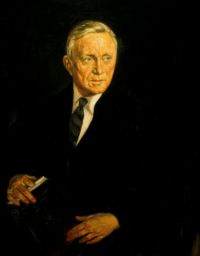
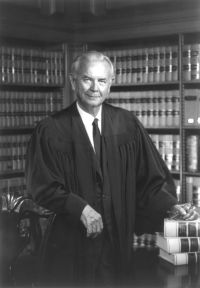
Portrait of Hugo Black Hugo Black Wolf v. Colorado — Concurrence

It is not amiss to repeat my belief that the Fourteenth Amendment was intended to make the Fourth Amendment in its entirety applicable to the states. The Fourth Amendment was designed to protect people against unrestrained searches and seizures by sheriffs, policemen and other law enforcement officers. Such protection is an essential in a free society. And I am unable to agree that the protection of people from over-Zealous or ruthless state officers is any less essential in a country of 'ordered liberty' than is the protection of people from over-zealous or ruthless federal officers.
Source: Wikisource

Get perspective with Kwize: daily news enlightened by great literature