George Wither

Definition and stakes

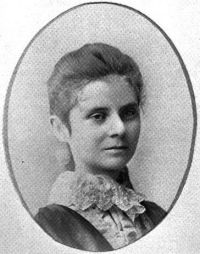
Portrait of Elia Wilkinson Peattie Elia Wilkinson Peattie,  Poems You Ought to Know

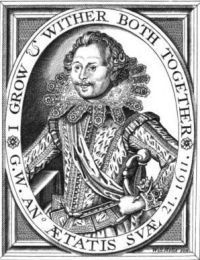
“ George Wither was born at Brentworth, 1588. He went to Magdalene College, Oxford. He led a troop of Royalist horse against the Covenanters, but three years later he became a Puritan and held command in Cromwell’s army. He was imprisoned during the Restoration for a time. He died in 1667. Wither wrote, besides his poems, a volume of church hymns, several satires, and a translation of the Psalms.
Shall I, wasting in despair,
Die because a woman’s fair?
”
Source: Gutenberg

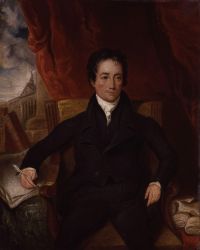
Portrait of Leslie Stephen Leslie Stephen,  Dictionary of National Biography… (1900)

“ Quarles thinks of his audience when he lectures; Wither soliloquises in company with a full heart.’ In an essay on ‘The Poetical Works of George Wither’ (published in Lamb's ‘Works’ in 1818) he expressed unbounded faith in his poetic greatness. It is now universally recognised that Wither was a poet of exquisite grace, although only for a short season in his long career. Had his last work been his ‘Faire Virtue,’ he would have figured in literary history in the single capacity of a fascinating lyric poet. ”
Source: Wikisource

Portrait of Leslie Stephen Leslie Stephen,  Dictionary of National Biography… (1900)

“ To every song is added a new and easie Tune, and a short Prologue also’ (London, printed by T. S. 1621, 8vo; dedicated to the archbishop of Canterbury, Abbot) .
Wither's reputation was now assured. Secular and religious critics were equally enthusiastic in his praises, and in 1620 his popularity was paid a very equivocal compliment. A collection of his compositions was surreptitiously issued under the title: ‘The Workes of Master George Wither, of Lincolns-Inne, Gentleman, Containing Satyrs, Epigrammes, Eclogues, Sonnets and Poems.
”
Source: Wikisource

Get perspective with Kwize: daily news enlightened by great literature