“ The cautious dullness of a Gopher Prairie appeared in boarding-houses where ladylike bureau-clerks gossiped to polite young army officers about the movies; a thousand Sam Clarks and a few Widow Bogarts were to be identified in the Sunday motor procession, in theater parties, and at the dinners of State Societies, to which the emigres from Texas or Michigan surged that they might confirm themselves in the faith that their several Gopher Prairies were notoriously “a whole lot peppier and chummier than this stuck-up East.” ”
Gopher Prairie
Definition and stakes
Gopher Prairie, a fictional town in Minnesota featured in Sinclair Lewis’s Main Street, embodies the archetype of the small American town, merging everyday routine with a unique social cadence. Lewis portrays it as a microcosm of provincial life, where tradition and modernity collide through the daily activities of its residents, from bridge-whist games to the contrast between rural simplicity and urban ambitions.
While other writers, such as Gertrude E. Benham and Stephen David Durrant, have also mentioned Gopher Prairie, Lewis’s vivid portrayals—emphasizing its “cautious dullness” and the contradiction of its “refinement and culture”—solidify its status as a symbol of the small town’s lasting, yet often controversial, role in American identity.
Quotes about “Gopher Prairie”
Sinclair Lewis, Main Street — Chapter XIII (1920)
“ Anyway, Gopher Prairie isn't particularly bad. It's like all villages in all countries. Most places that have lost the smell of earth but not yet acquired the smell of patchouli--or of factory-smoke--are just as suspicious and righteous. I wonder if the small town isn't, with some lovely exceptions, a social appendix? Some day these dull market-towns may be as obsolete as monasteries. ”
Sinclair Lewis, Main Street — Chapter XXI (1920)
“ She was born in a hill-smothered Wisconsin village where her father was a prosy minister; she labored through a sanctimonious college; she taught for two years in an iron-range town of blurry-faced Tatars and Montenegrins, and wastes of ore, and when she came to Gopher Prairie, its trees and the shining spaciousness of the wheat prairie made her certain that she was in paradise. ”
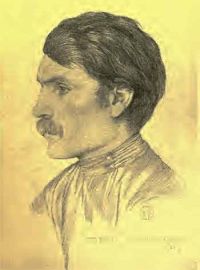
Stephen Graham,
Tramping With a Poet in the Rockies
(1922)
“ It names the town Gopher Prairie—because the Middle West is prairie land and the gopher-rats or marmots live there in myriads in their little burrows. The novelist seems to suggest that the people themselves are a species of gopher, a little people, limited of view, good-natured, of the earth earthy, but always bobbing-up. ”
Sinclair Lewis, Main Street (1920)
“ The automobile and bridge-whist had not only made more evident the social divisions in Gopher Prairie but they had also enfeebled the love of activity. It was so rich-looking to sit and drive—and so easy. Skiing and sliding were "stupid" and "old-fashioned." In fact, the village longed for the elegance of city recreations almost as much as the cities longed for village sports; and Gopher Prairie took as much pride in neglecting coasting as St. Paul—or New York—in going coasting. Carol did inspire a successful skating-party in mid-November. ”
Sinclair Lewis, Main Street — Chapter X (1920)
“ At first I didn't hardly know if you were going to like Gopher Prairie. Isn't it dandy that you've settled down to being homey with us! Maybe we aren't as highbrow as the Cities, but we do have the daisiest times and--oh, we go swimming in summer, and dances and--oh, lots of good times. If folks will just take us as we are, I think we're a pretty good bunch! ”
Sinclair Lewis, Main Street — Chapter XXXV (1920)
“ I'm not only insisting that Gopher Prairie is going to be Minnesota's pride, the brightest ray in the glory of the North Star State, but also and furthermore that it is right now, and still more shall be, as good a place to live in, and love in, and bring up the Little Ones in, and it's got as much refinement and culture, as any burg on the whole bloomin' expanse of God's Green Footstool, and that goes, get me, that goes! ”
Sinclair Lewis, Free Air — CHAPTER 4: A ROOM WITHOUT (1919)
“ GOPHER PRAIRIE has all of five thousand people. Its commercial club asserts that it has at least a thousand more population and an infinitely better band than the ridiculously envious neighboring town of Joralemon. But there were few signs that a suite had been engaged for the Boltwoods, or that Prince Collars and Cuffs had on his royal tour of America spent much time in Gopher Prairie. Claire reached it somewhat before seven. ”
Sinclair Lewis, Main Street (1920)
“ Come to Gopher Prairie. Show us. Make the town—well—make it artistic. It's mighty pretty, but I'll admit we aren't any too darn artistic. Probably the lumber-yard isn't as scrumptious as all these Greek temples. But go to it! Make us change!" "I would like to. Some day!" "Now! You'd love Gopher Prairie. We've been doing a lot with lawns and gardening the past few years, and it's so homey—the big trees and⸻ And the best people on earth. And keen. I bet Luke Dawson⸻" Carol but half listened to the names. She could not fancy their ever becoming important to her. ”
“ I've learned that Gopher Prairie isn't just an eruption on the prairie, as I thought first, but as large as New York. In New York I wouldn't know more than forty or fifty people, and I know that many here. ”
Sinclair Lewis, Main Street — Chapter XVIII (1920)
“ "I wonder if you can understand the 'fun' of making a beautiful thing, the pride and satisfaction of it, and the holiness!"The company glanced doubtfully at one another. In Gopher Prairie it is not good form to be holy except at a church, between ten-thirty and twelve on Sunday. ”
Sinclair Lewis, Main Street (1920)
“ The railroad was more than a means of transportation to Gopher Prairie. It was a new god; a monster of steel limbs, oak ribs, flesh of gravel, and a stupendous hunger for freight; a deity created by man that he might keep himself respectful to Property, as elsewhere he had elevated and served as tribal gods the mines, cotton-mills, motor-factories, colleges, army. ”
Robert J. C. Stead,
Dennison Grant: A Novel of To-day
“ He was looking for no temporary location, but for a spot where he might drive his claim-stakes deep. That prairie, which stretched under the hot sunshine unbroken to the rim of heaven; that brown grass glowing with an almost phosphorescent light as it curled close to the mother sod;—a careless match, a cigar stub, a bit of gun-wadding, and in an afternoon a million acres of pasture land would carry not enough foliage to feed a gopher. ”
Sinclair Lewis, Main Street — Chapter XII (1920)
“ She read in the records of the Minnesota Territorial Pioneers that only sixty years ago, not so far back as the birth of her own father, four cabins had composed Gopher Prairie. The log stockade which Mrs. Champ Perry was to find when she trekked in was built afterward by the soldiers as a defense against the Sioux. The four cabins were inhabited by Maine Yankees who had come up the Mississippi to St. Paul and driven north over virgin prairie into virgin woods. They ground their own corn; the men-folks shot ducks and pigeons and prairie chickens ”
Sinclair Lewis, Main Street (1920)
“ The poorer houses of Gopher Prairie, where the services of Miles Bjornstam were a luxury—which included the shanty of Miles Bjornstam—were banked to the lower windows with earth and manure. Along the railroad the sections of snow fence, which had been stacked all summer in romantic wooden tents occupied by roving small boys, were set up to prevent drifts from covering the track. ”
Meredith Nicholson,
The man in the street: Papers on American topics
(1921)
“ A lady with whom I frequently exchange opinions on the trolley-cars of my town took me to task recently for commending Mr. Sinclair Lewis’s Main Street as an achievement worthy of all respect. “I know a score of Indiana towns and they are not like Gopher Prairie,” she declared indignantly. “No,” I conceded, “they are not; but the Indiana towns you have in mind are older than Gopher Prairie; many of them have celebrated their centennial; they were founded by well-seasoned pioneers of the old American stocks ”
Popular Science Monthly (1875)
“ The habitat of the prairie gopher appears to extend from the Red River of the North to the Rocky Mountains, and from latitude 38° to 55°. So numerous are they in Dakota and Montana that, according to Dr. Coues, should certain portions of these Territories ever be settled, the little gophers will contend with the husbandman for the land more persistently and successfully than the Indians can hope to. ”
Popular Science Monthly (1875)
“ The Prairie Gopher.—Among the burrowing species belonging to the squirrel family, the prairie gopher (Spermophilus Richardsoni) holds prominent rank. Though one of the most abundant animals in our country, infesting hundreds of thousands of square miles of territory, almost to the exclusion of other mammalian forms, the prairie gopher has but lately received the honor of an adequate description. This service has been rendered by Dr. Elliott Coues in the pages of the American Naturalist. ”
Frances Hatton Eva Hasell, Across the Prairie in a Motor Caravan
“ There were prairie chickens of a greyish brown, wild duck and large snipe, and a sort of water-hen.The jack-rabbit was a very ubiquitous person, always jumping across the trail. He is really a hare, greyish-brown in summer and white in winter. Another local inhabitant who made his presence felt was the gopher, which looks like a cross between a squirrel and a weasel. They make their holes in the wheel-ruts of the trails, as we found by bumping violently over their excavations. ”
Carl Sandburg,
Rootabaga Pigeons
(1923)
“ So again the gophers, the black and brown striped ground squirrels, sit with their backs straight up, sitting on their soft paddy tails, sitting in the spring song murmur of the south wind, saying, "This is the prairie and the prairie belongs to us." Far away to-day where the sky drops down and the sunsets open doors for the nights to come through—where the running winds meet, change faces and come back—there the gophers are playing the-green-grass-grew-all-around, playing cross tag, skip tag, hop tag, billy-be-tag, billy-be-it. ”
Benjamin F. Gue,
History of Iowa From the Earliest Times to the Beginning of the Twentieth Century
(1903)
“ They drag leaves and any manageable plants into their burrows, and much of the material so much taken into the ground decays and enriches the ground to a depth of several inches. The pocket gopher has done much to furnish a surface area of loose, mellow, easily cultivated and highly productive soil. ”
Winifred Hawkridge Dixon, Westward hoboes (1921)
“ Houston the old lady’s skirts hummed in the breeze. We unwillingly put hundreds of gophers to death. The roads here were honeycombed with their nests, and as we bore down on them they poked their silly heads up to be sacrificed or ran under our wheels by the gross. We learned to dread them, for each gopher-hole meant a sharp little jolt to the car, by which more than one spring-leaf was snapped. ”
Stephen David Durrant, The Pocket Gophers (Genus Thomomys…
“ When trapping, it is possible to predict what species will be taken by the types of burrows and soil. Gophers of the bottae group have their burrows in the areas of the deepest soil and heaviest vegetation, whereas the areas of shallow, rocky soil covered with sparse vegetation are the habitat of talpoides. Above 6,000 feet the only gopher encountered is talpoides. Along Settlement Creek on the west side of the Oquirrh Mountains, which is the type locality of oquirrhensis, bottae and talpoides have essentially [Pg 13] the same vertical distribution as in Rose Canyon. ”
Walter Woelber Dalquest, Mammals of Washington, Volume 2
“ Following the retreat of the ice, the gophers in the Mount Rainier area spread westward on the outwash of the Nisqually and perhaps other glaciers to the Vashon Outwash about southern Puget Sound and thence to the Olympic Mountains. In the southern Cascades, gophers spread westward on glacial terraces of the Columbia River to the vicinity of Vancouver, Clark County. The establishment and growth of the forests split up the original populations, and continued spread of forest has exterminated many units. ”
Ridgwell Cullum,
The Watchers of the Plains: A Tale of the Western Prairies
“ One may be miles and miles away from human habitation and yet there is an exhilaration in the very sunlight, in the long nodding grass, in the dusty eddies of the breeze which is never actually still on the plains. It is the suggestion of freedom in a great boundless space. It grips the heart, and one thanks God for life. This effect is not only with the prairie novice. It lasts for all time with those who once sniff the scent of its delicious breath.Dakota and the more southern Nebraska are not the finest examples of the American plains, but they will do. ”
Walter Woelber Dalquest, Mammals of Washington, Volume 2
“ In uncultivated land the gopher is a distinct asset unless the land is near enough to cultivated land to serve as a reservoir of pests. In the mountains and on the desert the gopher cultivates and keeps the soil soft and stimulates the growth of water-retaining vegetation, thus preventing rapid run-off and erosion and keeping the flow of springs and streams constant. Boulders, logs, and other obstructions are undermined and, as a result of gopher activity, in time sink under the surface of the ground. ”
Josiah Gregg, Gregg's Commerce of the Prairies…
“ It will now readily be inferred that the Great Prairies from Red River to the western sources of the Missouri, are, as has before been intimated, chiefly uninhabitable—not so much for want of wood (though the plains are altogether naked) , as of soil and of water; for though some of the plains appear of sufficiently fertile soil, they are mostly of a sterile character, and all too dry to be cultivated. {192} These great steppes seem only fitted for the haunts of the mustang, the buffalo, the antelope, and their migratory lord, the prairie Indian. ”
“ Narrow as the field is, however, it offers a somewhat unusual diversity of scene; for that most charming of health resorts known in these pages as Springtown, is the chance centre of many varying interests. In its immediate vicinity exists the life of the prairie ranch on the one hand and that of the mining-camp on the other; while dominating all as it were—town, prairie, and mountain fastness—rises the great Peak which has now for so many years been the goal of pilgrimage to men and women from the Eastern States in pursuit of health, of fortune, or of the free, open-air life of the prairie. ”
Rollin H. Baker, Geographic Variation in the Pocket Gopher…
“ Desert mountains with their thin rocky soils, elevated passes, perpendicular rocky cliffs, and stands of oaks and conifers at higher elevations present impassable barriers for pocket gophers of this species. The Río Grande, bordering Coahuila to the north, in many places flowing [594] through steep-walled cañons, also seems to be a barrier that this fossorial rodent does not cross; distinct subspecies occur on the two sides of the river directly opposite each other (also see Nelson and Goldman, op. cit.: 143) . ”
Sir William Francis Butler,
The Wild North Land
“ We may well ask the question where can they come from? for in truth the vast expanse of the great prairie seems too small to save them from their relentless foes.The creek of the Eagle Hills winds through the prairie in long, lazy bends. The beaver has made his home under its banks; and in some of the serpentine bends the bastard maple lifts its gnarled trunk, and the willow copses grow thickly. It is a favourite ground for the hunter in summer; but now, in mid-November, no sign of man was visible, and we had the little thicket oasis all to ourselves. ”
Margaret Hill McCarter, The Price of the Prairie: A Story of Kansas
“ What followed makes one of the sacred memories a man does not often put into print.We wanted to be alone, so we left the noisy hotel and strolled out toward the higher level beyond the town. There was only brown prairie then stretching to the westward and dipping down with curve and ravine to the Kaw River on the one side and the crooked little Shunganunga Creek on the other. Away in the southwest the graceful curve of Burnett's Mound, a low height like a tiny mountain-peak, stood out purple and hazy in the October sunlight. ”
Frank H. Spearman,
The Mountain Divide
“ The next morning Bucks installed himself at Goose Creek.Goose Creek was a mere operating point and besides the rough wooden station, with an attic sleeping-room for the operator, boasted only a house for the section crew––six men taken care of by a China boy cook. East of the station stood an old road ranch belonging to Leon Sublette. For this, freight was at times unloaded and an Indian trail to the south led through the sand-hills as far as the Arickaree country. North of the river greater sand-hills stretched as far as the eye could reach. ”
Charles Mair,
Through the Mackenzie Basin
“ The only people who, through their employments, knew the interior well were the Indians and half-breed hunters. It was the statements of these, therefore, and of the few prosperous farmers and stockmen scattered here and there, which afforded us our only reliable knowledge.The most extensive prairies adjacent to the Upper Peace River are those to the north already described. The nearest on the south side are the prairies of Spirit River, a small stream which divides several townships of first-class black, loamy soil, well wooded in parts, but with considerable prairie. ”