Summary

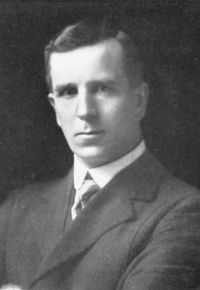
Portrait of Robert J. C. Stead Robert J. C. Stead Dennison Grant: A Novel of To-day

It was as though his soul, like the elements about him, caught in a paroxysm of elemental passion, had been swept clean and pure in the fire of its own upheaval.
“What little incidents turn our lives!” he thought. “That boy; in some strange way he has been the means of bringing me to see things as they are—which not even Linder could do. The mind has to be fertilized for the thought, or it can’t think it. He brought the necessary influence to bear. It was like the night at Murdoch’s house, the night when the Big Idea was born. Surely I owe that to Murdoch, and his wife, and Phyllis Bruce.”
Source: Gutenberg

Portrait of Robert J. C. Stead Robert J. C. Stead Dennison Grant: A Novel of To-day

Four years of war add only four years to the life of a man according to the record in the family Bible, if he happen to spring from stock in which that sacred document is preserved. But four years of war add twenty years to the grey matter behind the eyes—eyes which learn to dream and ponder strangely, and sometimes to shine with a hardness that has no part with youth. When Captain Grant and Sergeant Linder stepped off the train at Grant’s old city there was, however, little to suggest the ageing process that commonly went on among the soldiers in the Great War.
Source: Gutenberg

Portrait of Robert J. C. Stead Robert J. C. Stead Dennison Grant: A Novel of To-day

But why, of all the houses in the world, should it have been Zen Transley’s house? Why, of all the little boys in the world, should this have been the son of his rival and the only girl he had ever—the girl he had loved most in all his life? Surely events are ordered to some purpose; surely everything is not mere haphazard chance! The fatalism of the trenches forbade any other conclusion; and if this was so, why had he been thrown into the orbit of Zen Transley?
Source: Gutenberg

Get perspective with Kwize: daily news enlightened by great literature