Great Red Spot

Definition and stakes

David Morrison,  Voyage to Jupiter

“ The most visible cloud interactions take place in the region of the Great Red Spot. Material within the Red Spot rotates about once every six days. Infrared measurements show that the Red Spot is a region of atmospheric upwelling, which extends to very high altitudes; however, the divergent flow suggested by this upwelling seems to be very small—one bright feature was observed to circle the Red Spot for sixty days without appreciably changing its distance from the spot’s center. ”
Source: Gutenberg

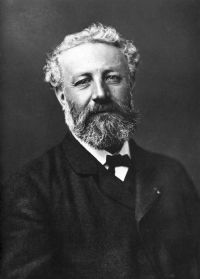
Portrait of Jules Verne Jules Verne,  20,000 Leagues Under the Seas… (1870)

“ There were many English and French steamers plowing this narrow passageway, liners going from Suez to Bombay, Calcutta, Melbourne, Réunion Island, and Mauritius; far too much traffic for the Nautilus to make an appearance on the surface. So it wisely stayed in midwater.
Finally, at noon, we were plowing the waves of the Red Sea.
The Red Sea: that great lake so famous in biblical traditions, seldom replenished by rains, fed by no important rivers, continually drained by a high rate of evaporation, its water level dropping a meter and a half every year!
”
Source: Wikisource

Harry Weston Van Dyke,  Through South America

“ There are vast palisades of dark reds and browns, slopes of purple streaked with yellow, and all sorts of other gorgeous combinations, and, down in the lower valleys, brilliant greens. The streams of melting snow pouring down the sides seem to take on tints that correspond. In some places they flow red, as with blood from the breast of a giant; in others, with the sun gleaming on them, they look like molten gold. ”
Source: Gutenberg

Get perspective with Kwize: daily news enlightened by great literature